
Curatorial notes
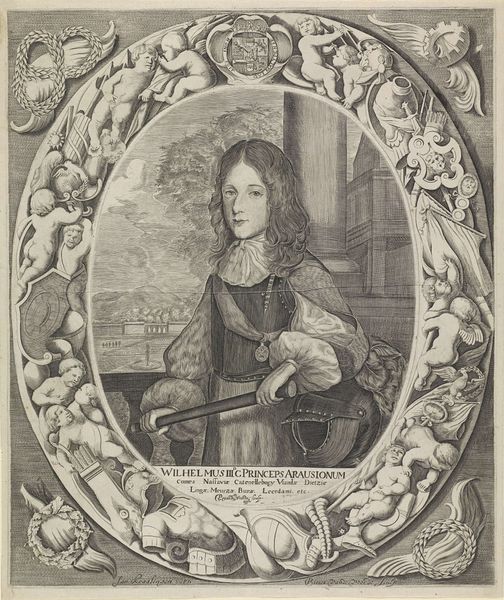
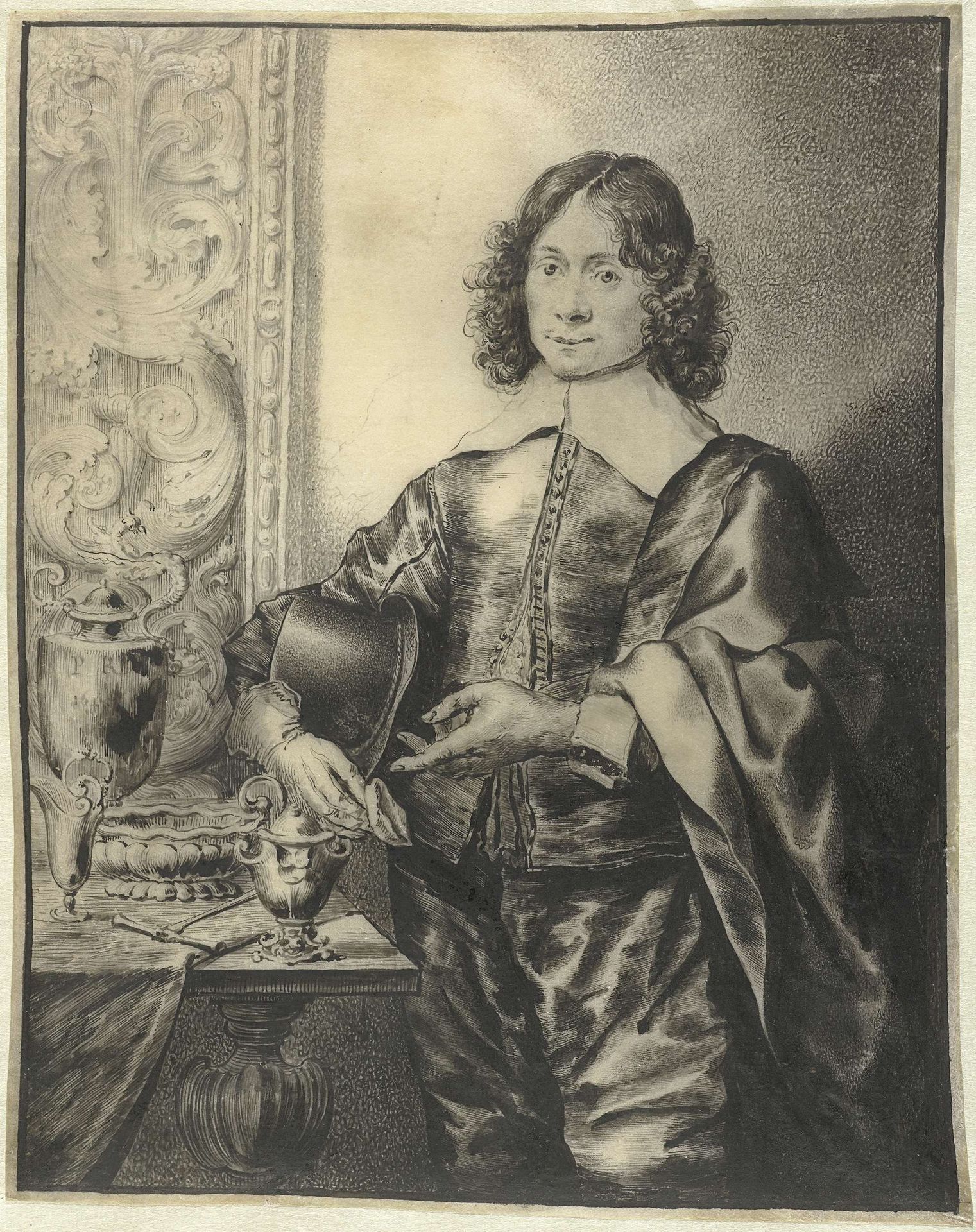
Editor: So this is "Portrait of a Goldsmith" by Pieter Rottermondt, from 1645. It's a drawing, primarily using pen and ink, but also charcoal, and the rendering is just exquisite! It has a very calm, collected feel, and I am captivated by the exquisite level of detail used to represent the materials of the goldsmith's trade. What do you see in this piece? Curator: It's fascinating how Rottermondt captures not just the likeness but also the *status* of this goldsmith. Think about the symbols: the exquisitely crafted vessels, the ornate frame hinting at a life of patronage and refinement. How does this presentation play into the viewer's perception of wealth and craftmanship at the time? Editor: I see how those elements establish status. The objects, I mean. But are you suggesting that even the *frame* in the *drawing* speaks to status? Curator: Precisely! Frames within frames, images mirroring images—this creates a psychological depth, subtly implying a world of inherited privilege and skill. It reinforces the cultural narrative of a successful guild member. It also emphasizes social class. Notice the clothing, which marks status, and the carefully positioned hands – symbols themselves. Editor: It's like Rottermondt isn't just depicting an individual but crafting a whole statement about profession, prosperity, and cultural identity through the art itself! Thanks for helping me unpack the different layers here. Curator: And thank *you* for prompting this dive. The beauty of such pieces lies in this ongoing symbolic dialogue between artist, subject, and viewer across centuries.