About this artwork
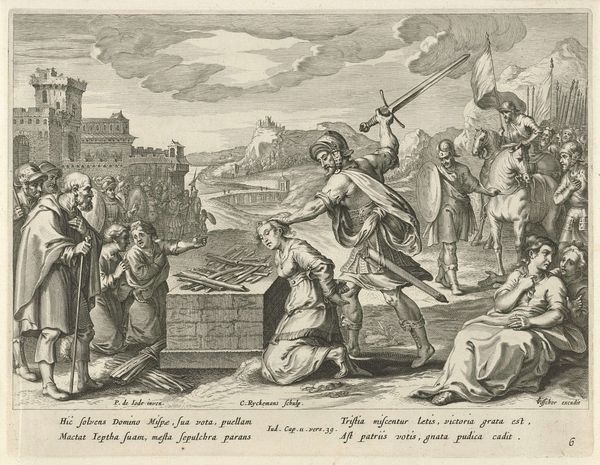
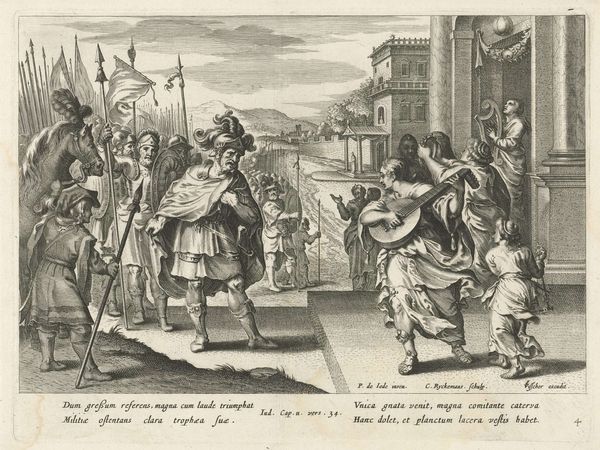
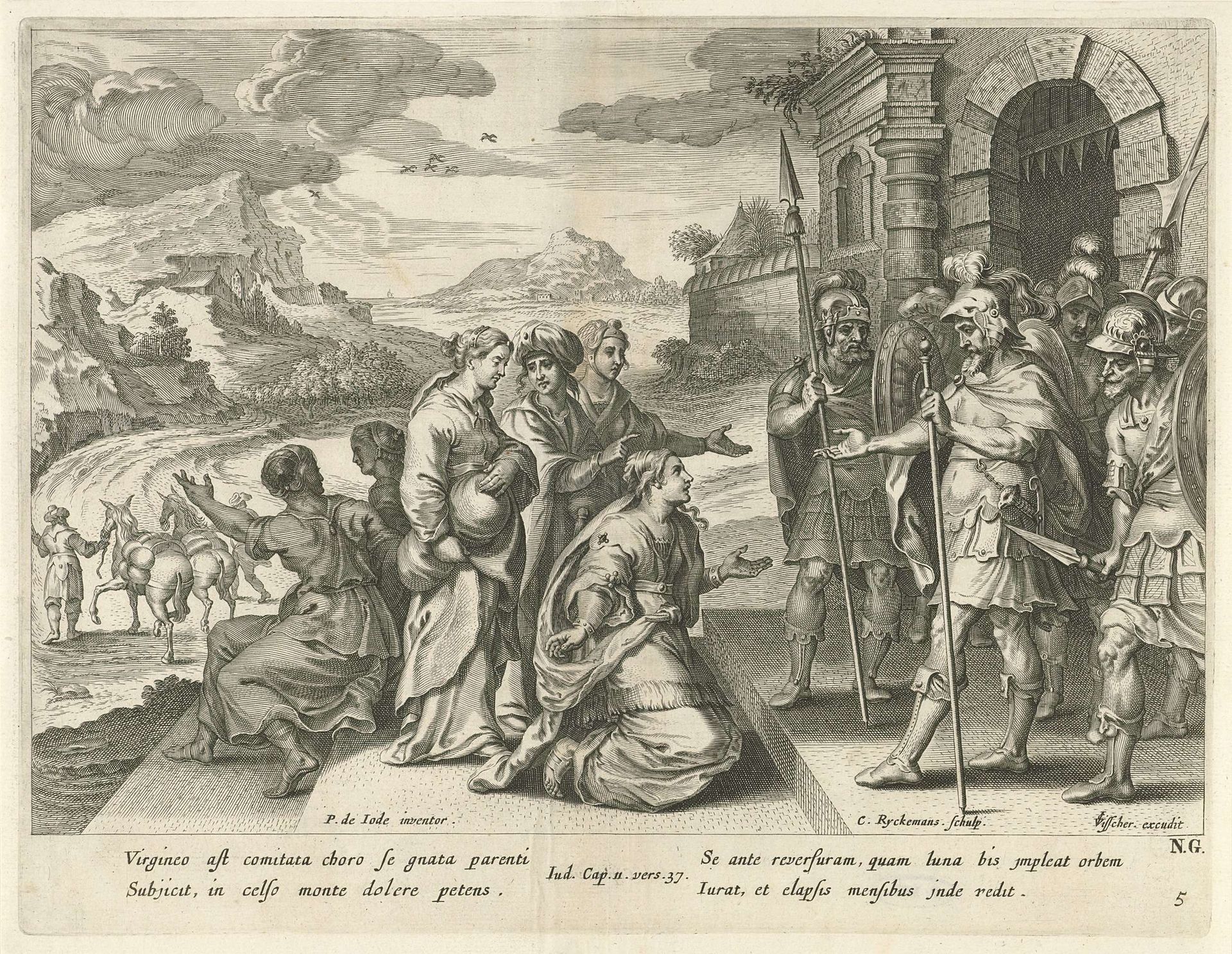
Nicolaes Ryckmans created this engraving, "Jephthah Giving His Daughter Permission to Go into the Mountains," sometime in the early 17th century. The composition is strikingly divided, both thematically and spatially. On the right, we see Jephthah and his armed retinue, depicted with rigid, almost geometric forms, signifying order and authority. Their stance is formal, reflecting the weight of Jephthah's vow to sacrifice whatever comes first out of his house. This contrasts sharply with the left side, where Jephthah's daughter and her companions are arranged in dynamic, flowing lines, expressing vulnerability and sorrow. The landscape behind them is open, suggesting a temporary escape from the rigid social structures. Ryckman’s use of line and space guides our reading of the image, setting up a dialectic between duty and freedom, public and private, the weight of a vow and individual sorrow.
Jefta geeft zijn dochter toestemming om de bergen in te gaan
1643

Nicolaes Ryckmans
1595Location
RijksmuseumArtwork details
- Medium
- print, engraving
- Dimensions
- height 215 mm, width 280 mm
- Location
- Rijksmuseum
- Copyright
- Rijks Museum: Open Domain
Tags
narrative-art
baroque
landscape
figuration
history-painting
engraving
Comments
Be the first to share your thoughts about this work.
About this artwork
Nicolaes Ryckmans created this engraving, "Jephthah Giving His Daughter Permission to Go into the Mountains," sometime in the early 17th century. The composition is strikingly divided, both thematically and spatially. On the right, we see Jephthah and his armed retinue, depicted with rigid, almost geometric forms, signifying order and authority. Their stance is formal, reflecting the weight of Jephthah's vow to sacrifice whatever comes first out of his house. This contrasts sharply with the left side, where Jephthah's daughter and her companions are arranged in dynamic, flowing lines, expressing vulnerability and sorrow. The landscape behind them is open, suggesting a temporary escape from the rigid social structures. Ryckman’s use of line and space guides our reading of the image, setting up a dialectic between duty and freedom, public and private, the weight of a vow and individual sorrow.
Comments
Be the first to share your thoughts about this work.