About this artwork
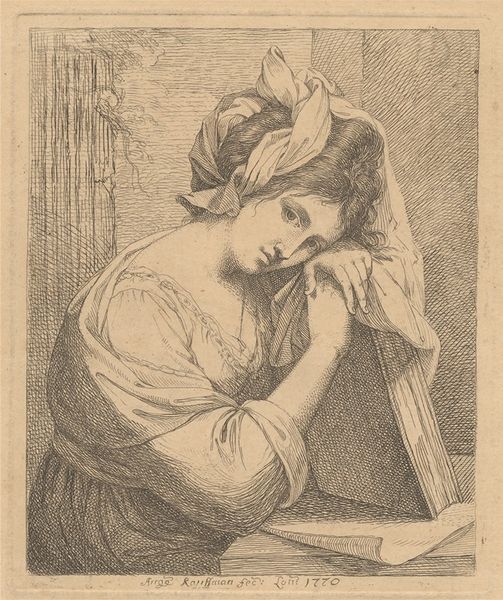
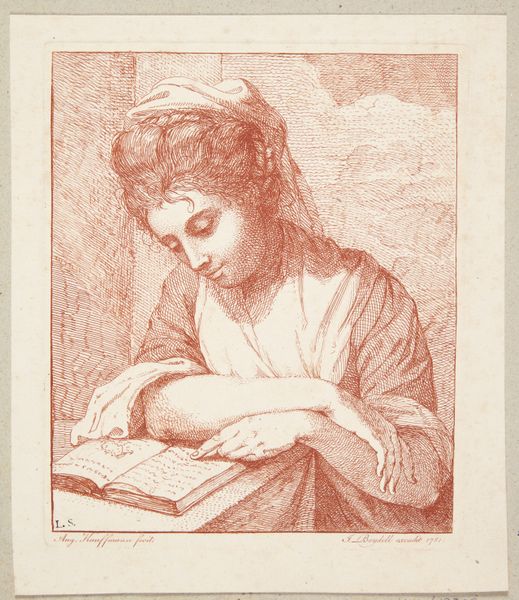
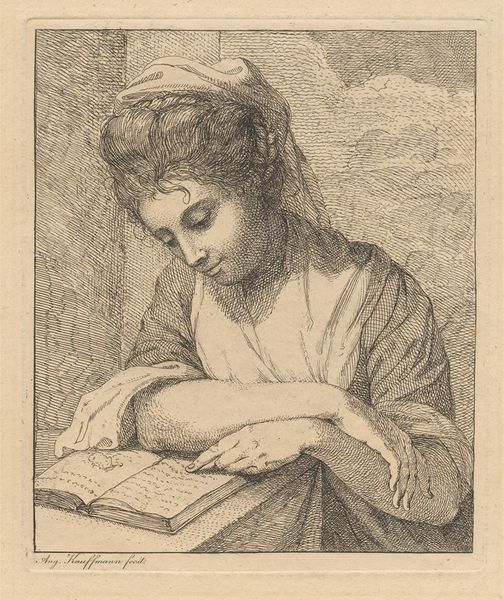
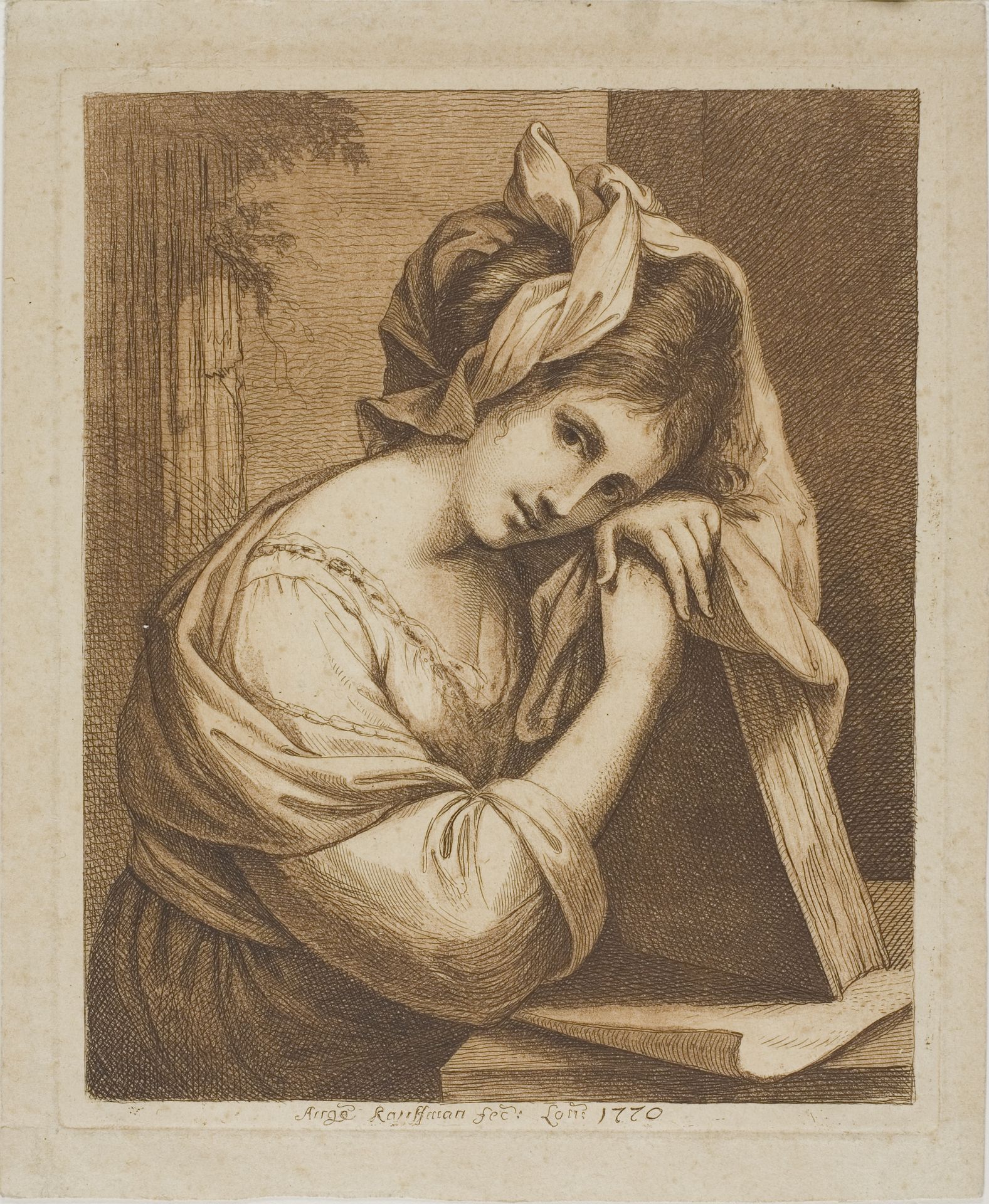
Angelica Kauffmann created this etching, "Woman Resting Her Head on a Book," in 1770. The print presents a figure in repose, its sepia tones creating a contemplative mood. The woman's posture and the book serve as visual cues to read the work. Note how the composition is structured around contrasting textures. The smooth skin of the woman and the rough texture of the etched lines create visual interest and depth. Kauffmann was a prominent figure in the Neoclassical movement, which drew inspiration from classical antiquity. The book, the woman's classical drapery, and the architectural elements are all semiotic signs that reflect the values of reason and order. However, her posture suggests a tension between intellectual pursuit and emotional experience. Ultimately, the etching invites contemplation on the relationship between intellect, emotion, and representation in the late 18th century. Its enduring appeal lies in its ability to evoke a sense of introspection and connection with the viewer.
Woman Resting Her Head on a Book
1770


Artwork details
- Dimensions
- 192 × 158 mm (plate); 216 × 176 mm (sheet)
- Location
- The Art Institute of Chicago
- Copyright
- Public Domain
Comments
Share your thoughts
About this artwork
Angelica Kauffmann created this etching, "Woman Resting Her Head on a Book," in 1770. The print presents a figure in repose, its sepia tones creating a contemplative mood. The woman's posture and the book serve as visual cues to read the work. Note how the composition is structured around contrasting textures. The smooth skin of the woman and the rough texture of the etched lines create visual interest and depth. Kauffmann was a prominent figure in the Neoclassical movement, which drew inspiration from classical antiquity. The book, the woman's classical drapery, and the architectural elements are all semiotic signs that reflect the values of reason and order. However, her posture suggests a tension between intellectual pursuit and emotional experience. Ultimately, the etching invites contemplation on the relationship between intellect, emotion, and representation in the late 18th century. Its enduring appeal lies in its ability to evoke a sense of introspection and connection with the viewer.
Comments
Share your thoughts