drawing, pencil
#
portrait
#
drawing
#
imaginative character sketch
#
light pencil work
#
pencil sketch
#
incomplete sketchy
#
figuration
#
personal sketchbook
#
idea generation sketch
#
character sketch
#
ink drawing experimentation
#
pencil
#
line
#
sketchbook drawing
#
nude
#
initial sketch
Dimensions: height 207 mm, width 311 mm
Copyright: Rijks Museum: Open Domain
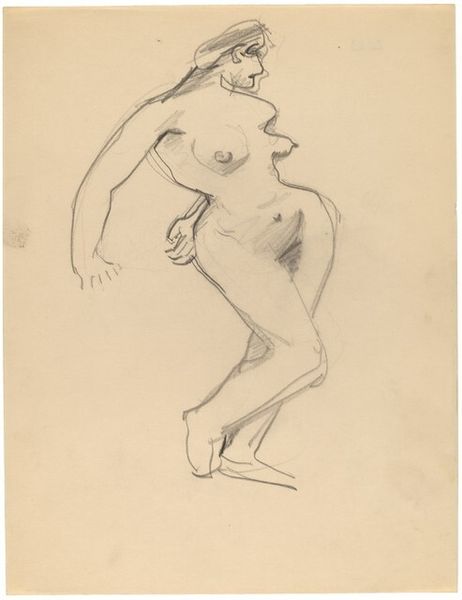
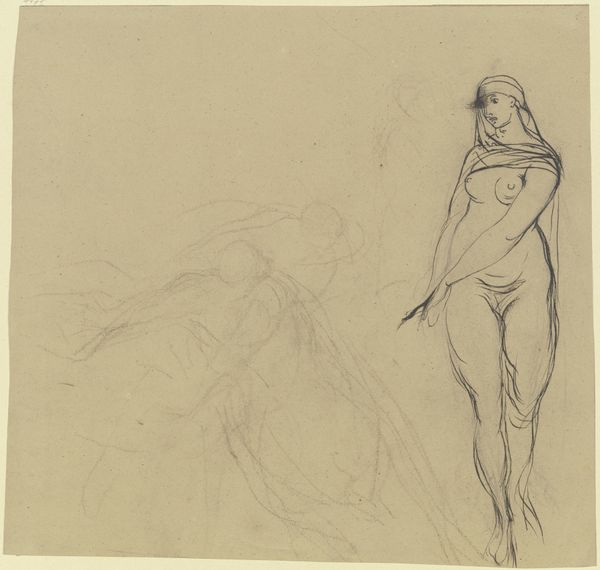
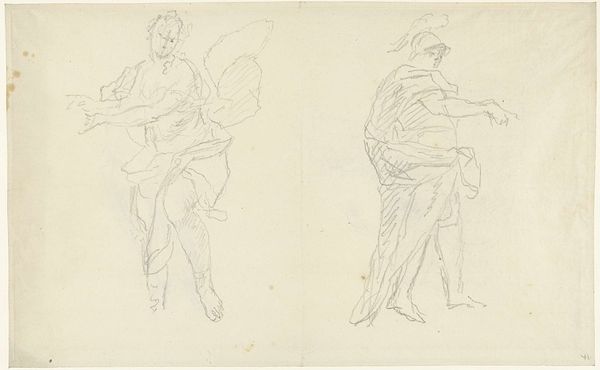
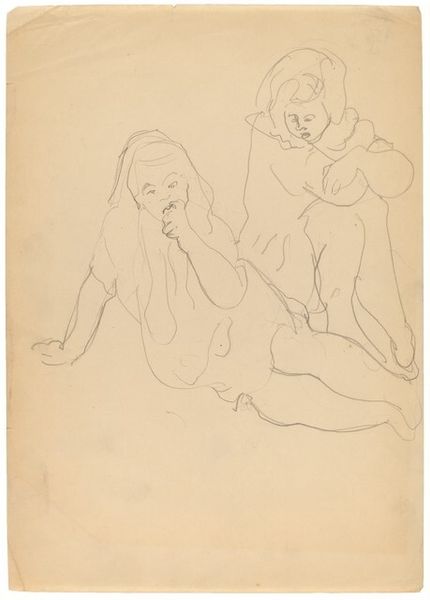
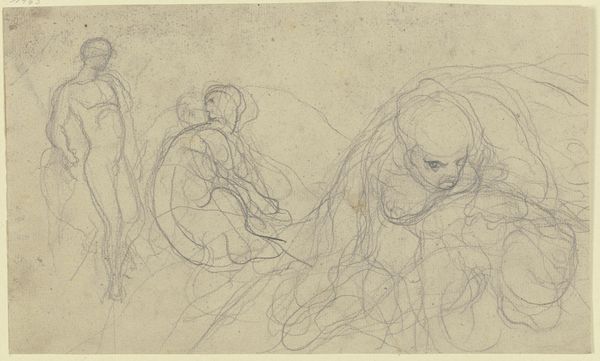
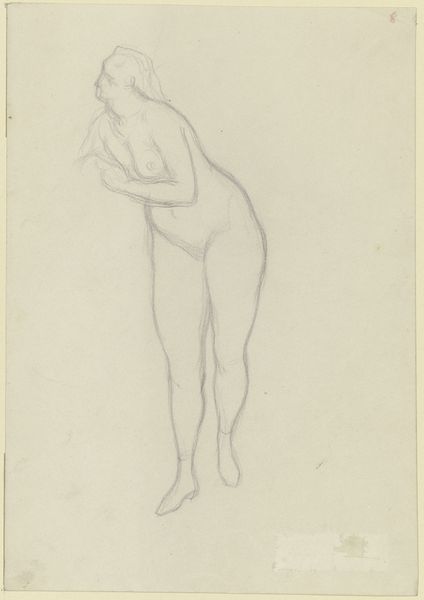
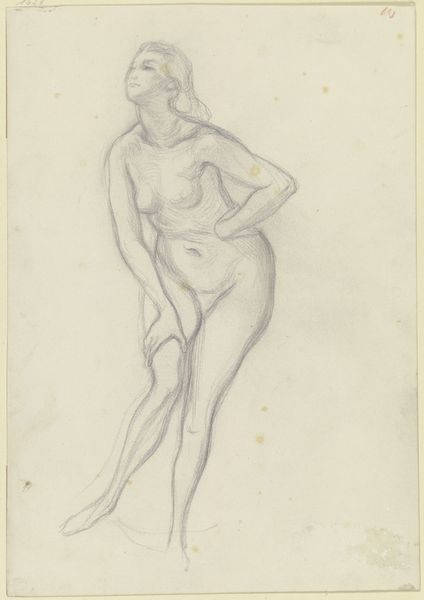
Curator: Here at the Rijksmuseum, we're fortunate to house a compelling drawing by Henk Henriët, titled "Twee staande reuzinnen met hoofddeksel"—"Two Standing Giantesses with Headgear"—created between 1936 and 1940. What are your initial impressions? Editor: Well, my first reaction is to the bold lines! They articulate a very specific body, but almost seem to resist an aesthetic of idealization or conformity to conventional standards. I find it quite refreshing, almost defiantly celebratory of larger bodies. Curator: I concur. Henriët’s technique focuses more on gestural marks; those rapidly sketched contours are really communicating mass, volume, and form, but the overall impression is more ephemeral. It exists almost solely as line; we perceive two large figures that seem, compositionally, unfinished, and yet they remain undeniably present. Editor: And, thinking about these figures inhabiting a world on paper just before and during the second world war, there is also a certain resilience or freedom in these sketched forms. Women, particularly plus size women, had to navigate very rigid gender roles in that time. So I cannot help but interpret Henriët's approach as almost daring, even subversive, for that historical moment. These lines don't shy away! Curator: That's fascinating. You're interpreting their forms within the social climate of the era; it's compelling to view art as cultural defiance, as you point out here. And within the image itself, you're presented with a dialogue between solid, continuous shapes and the absence thereof. Notice how areas appear empty while simultaneously implying the curve of an arm, a breast, or the line of a cheek. This push and pull emphasizes their construction and form. Editor: Absolutely. Henriët has this initial vision—perhaps influenced by prevalent stereotypes. By exaggerating their sizes, he might also subvert mainstream ideals. Do they mock or embrace femininity in the gaze of that period? Their ambiguity, rendered through those stark lines, challenges fixed notions about feminine archetypes and artistic representation. Curator: A thought-provoking interpretation, particularly given the socio-political context of the Netherlands during the late 1930s. His pencil line, for all its minimalist impact, captures a great deal of subtle and nuanced information. Editor: Agreed! This has offered such valuable insight into a piece that at first glance seems like only a modest work. Curator: Indeed; looking again has reshaped my understanding.
Comments
No comments
Be the first to comment and join the conversation on the ultimate creative platform.
 Collect
 React
React Comment
More like this