About this artwork
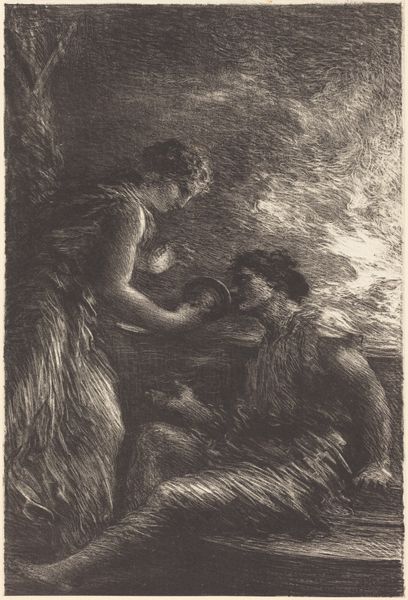
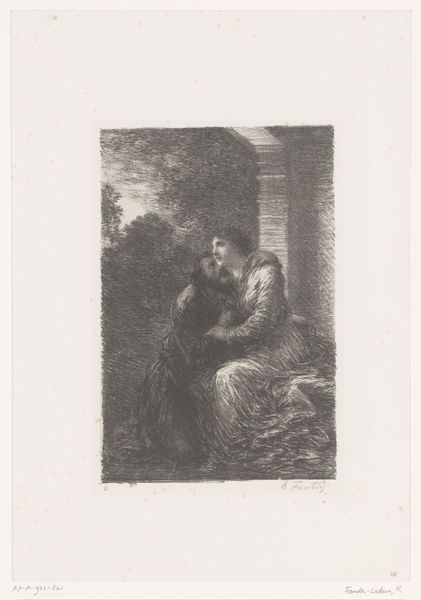
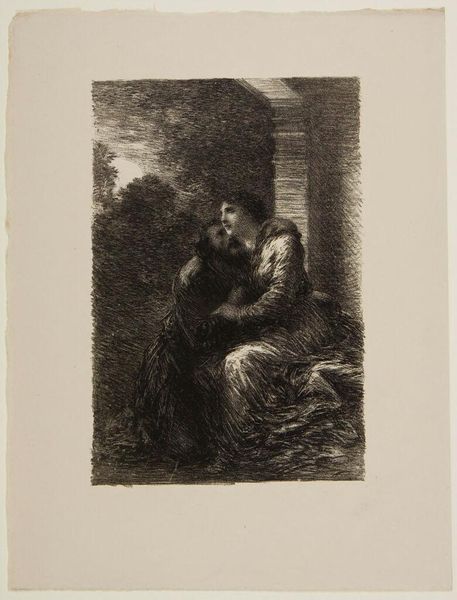
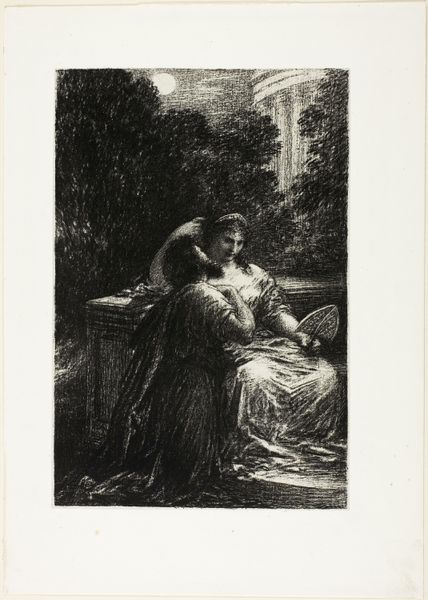
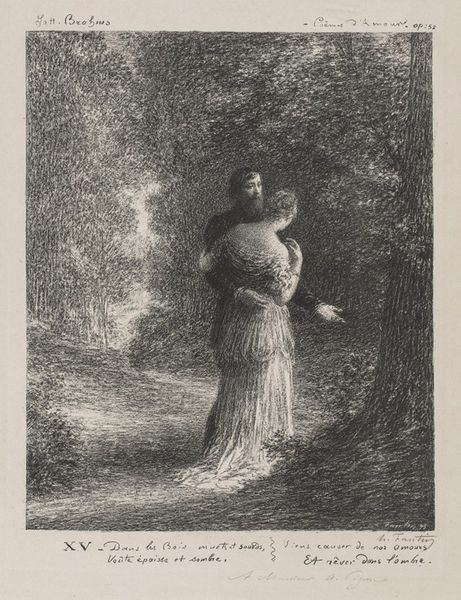
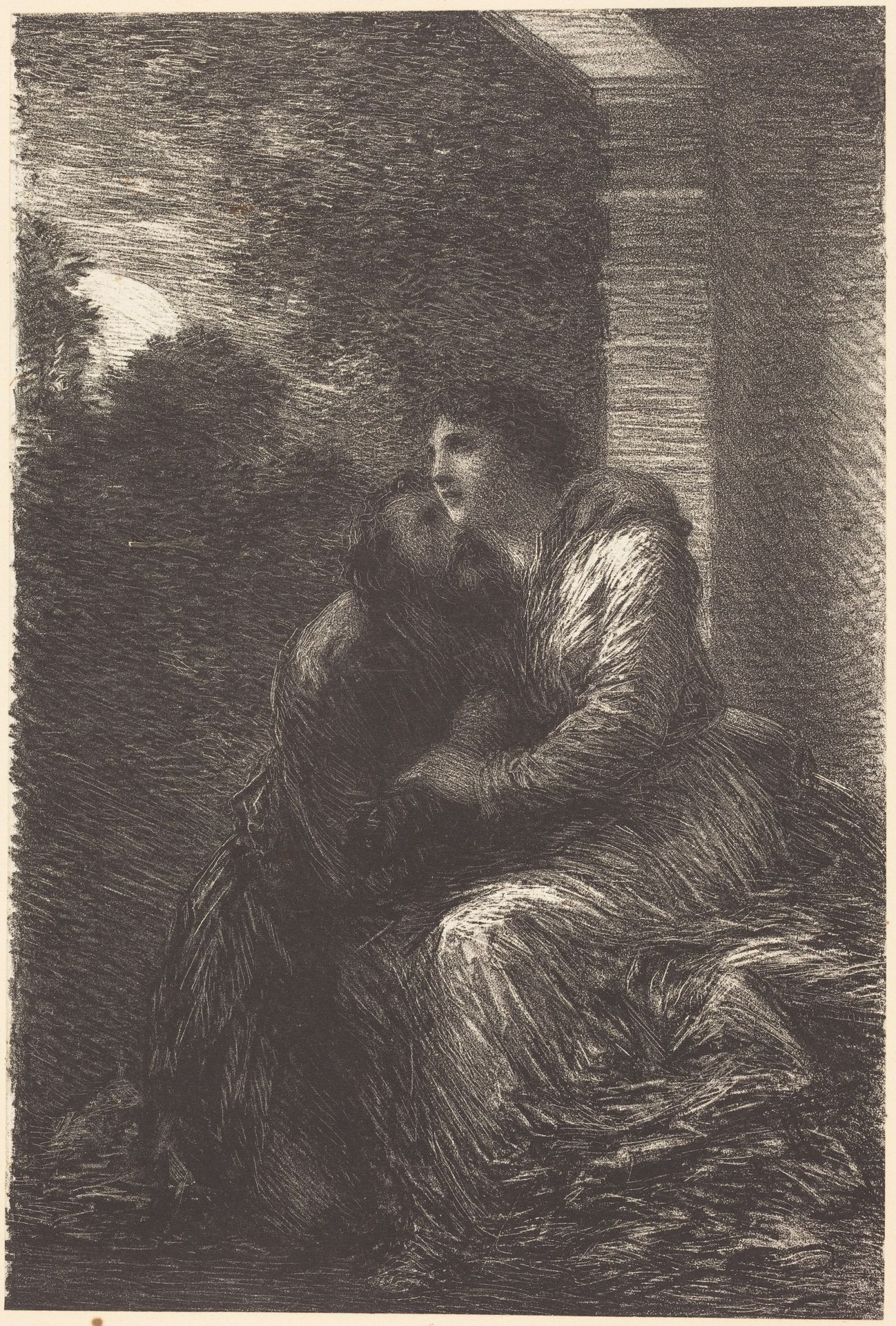
Henri Fantin-Latour created this lithograph depicting a love scene from Act III of Richard Wagner's opera "Lohengrin" sometime in the 19th century. Fantin-Latour was part of a vibrant Parisian art scene, where Wagner's music was both celebrated and controversial. The image captures a tender moment between the characters Elsa and Lohengrin. Fantin-Latour, deeply inspired by Wagner’s vision of dramatic intensity, creates a dreamy, romantic atmosphere. But let’s consider the narratives at play here. In Wagner’s opera, Elsa’s identity is rooted in her purity and innocence, while Lohengrin remains an enigmatic figure. This scene, full of love and promise, exists only moments before doubt and societal pressure lead to tragedy. Fantin-Latour’s print, with its delicate lines and intimate portrayal, invites us to reflect on the complex interplay between love, identity, and the often tragic constraints imposed by society. It’s a powerful reminder of how personal emotions are always interwoven with broader cultural narratives.
Love Scene from Act III of "Lohengrin"
1886


Artwork details
- Copyright
- National Gallery of Art: CC0 1.0
Comments
Share your thoughts
About this artwork
Henri Fantin-Latour created this lithograph depicting a love scene from Act III of Richard Wagner's opera "Lohengrin" sometime in the 19th century. Fantin-Latour was part of a vibrant Parisian art scene, where Wagner's music was both celebrated and controversial. The image captures a tender moment between the characters Elsa and Lohengrin. Fantin-Latour, deeply inspired by Wagner’s vision of dramatic intensity, creates a dreamy, romantic atmosphere. But let’s consider the narratives at play here. In Wagner’s opera, Elsa’s identity is rooted in her purity and innocence, while Lohengrin remains an enigmatic figure. This scene, full of love and promise, exists only moments before doubt and societal pressure lead to tragedy. Fantin-Latour’s print, with its delicate lines and intimate portrayal, invites us to reflect on the complex interplay between love, identity, and the often tragic constraints imposed by society. It’s a powerful reminder of how personal emotions are always interwoven with broader cultural narratives.
Comments
Share your thoughts