About this artwork
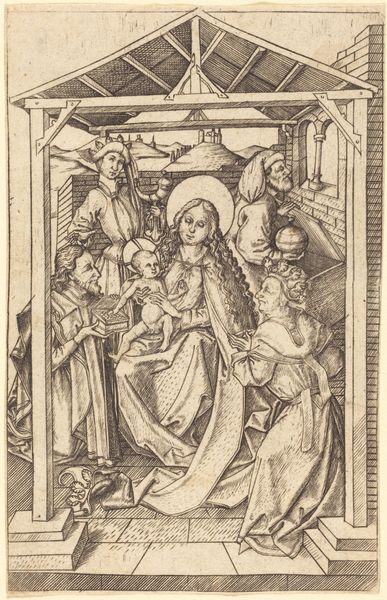
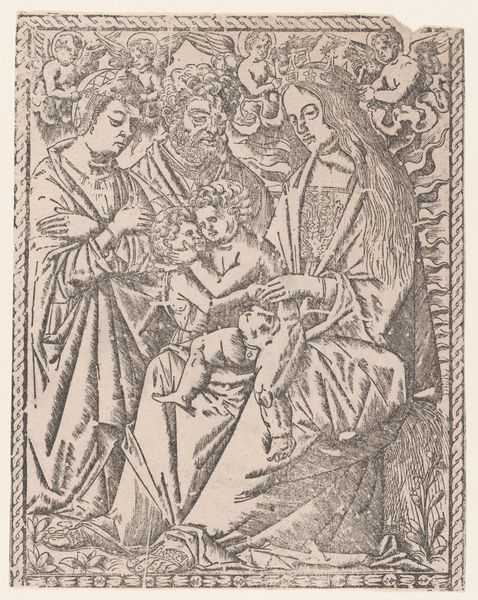
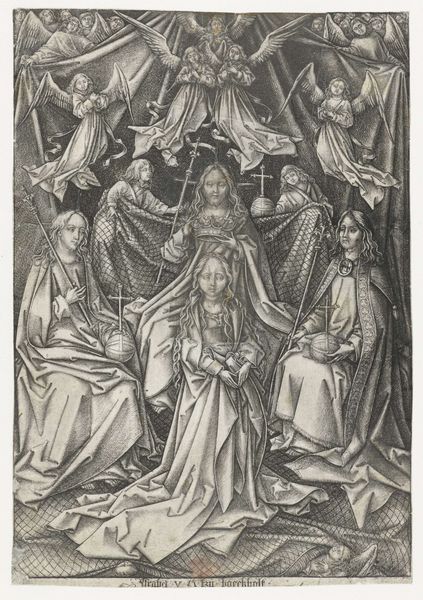
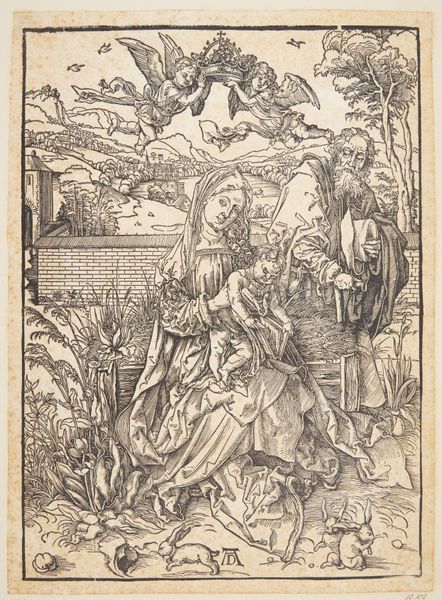
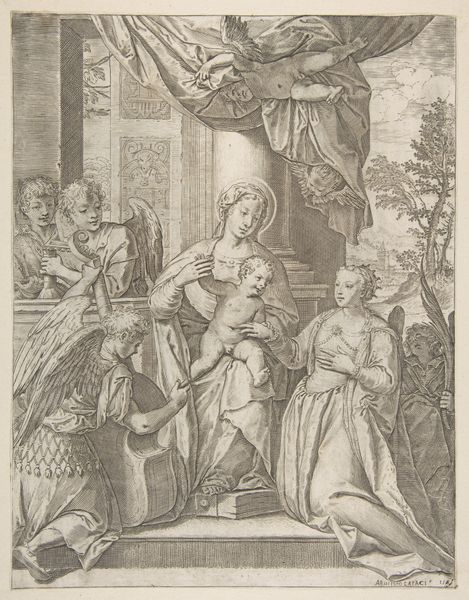
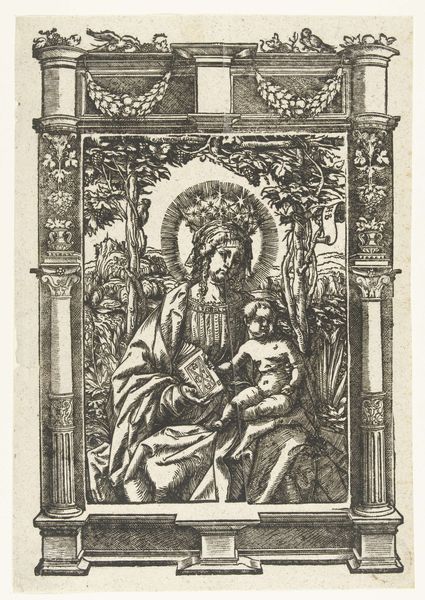
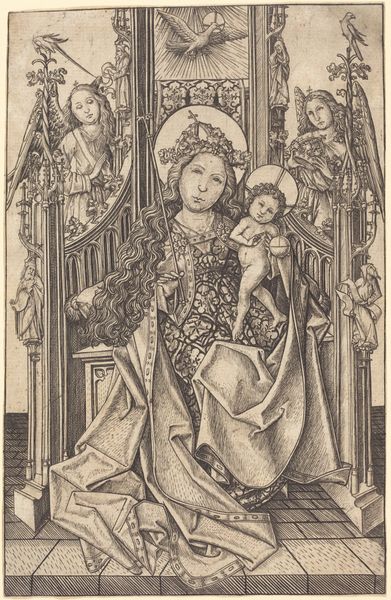
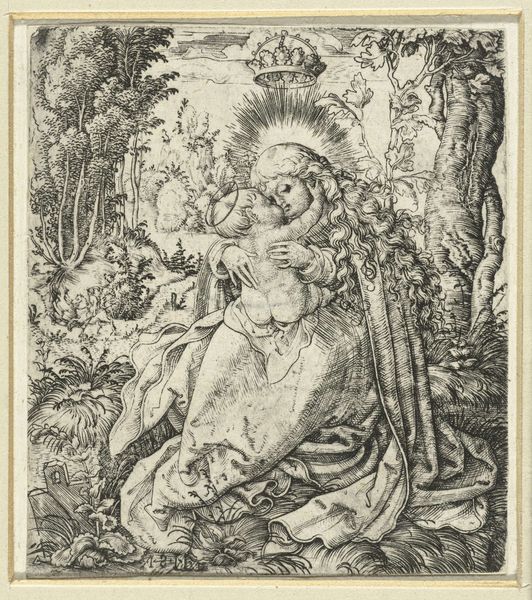
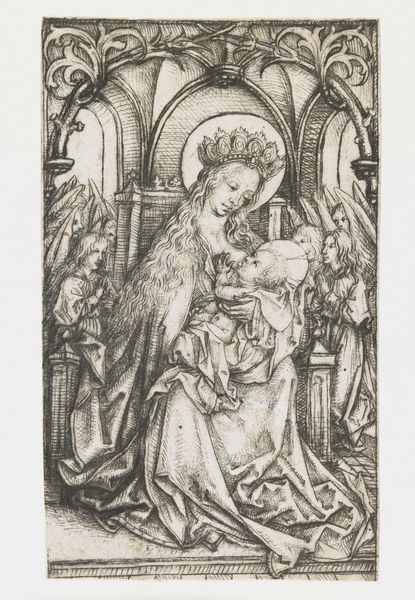
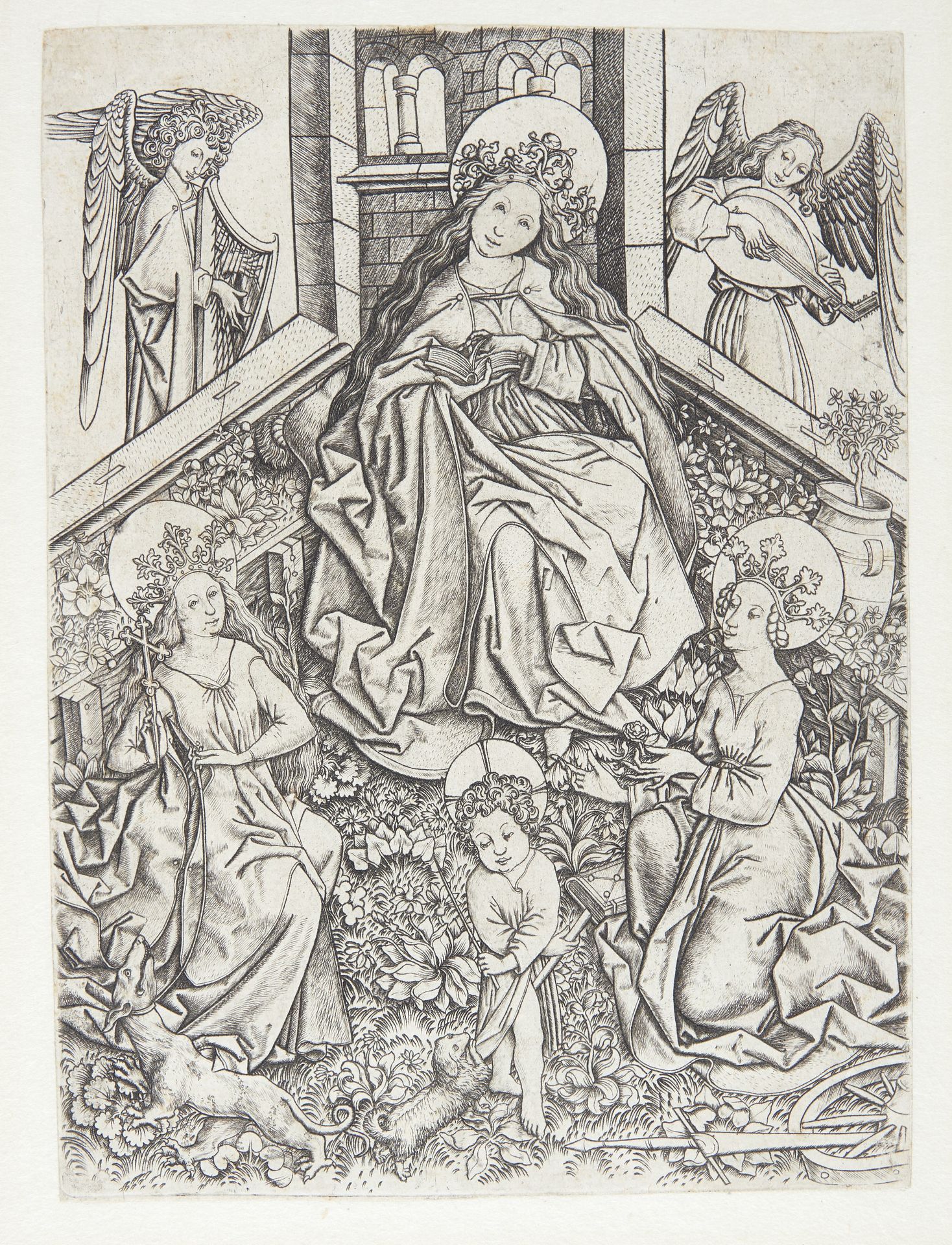
This engraving of The Virgin and Child with Saints Margaret and Catherine was made by the artist known as Master E.S. in the mid-15th century. The work embodies the religious sensibilities of its time, but it also marks a pivotal moment in the history of art as printmaking was then a relatively new medium. The print depicts the Virgin Mary enthroned with the infant Jesus, flanked by Saint Margaret, recognizable by the dragon at her feet, and Saint Catherine, holding a wheel, a reference to her martyrdom. Angels playing musical instruments accompany the central figures. Created in Germany, this piece reflects the late medieval religious culture, where the cult of the Virgin Mary was central. Master E.S., whose identity remains a mystery, was one of the first to explore the artistic possibilities of engraving. We can see his dedication to fine detail in this work. By studying the production and distribution of prints like these, we can learn about the evolving art market and the rise of a middle class with an appetite for devotional imagery. Historians draw on a range of resources, from account books to inventories, to understand this shift. The interpretation of art is always contingent on social and institutional context.
Maria med Jesusbarnet, Den Hellige Margrete og Den Hellige Katarina
1430 - 1467


Artwork details
- Medium
- print, ink, engraving
- Dimensions
- 219 mm (height) x 162 mm (width) (bladmaal)
- Location
- SMK - Statens Museum for Kunst
Tags
Comments
Share your thoughts
About this artwork
This engraving of The Virgin and Child with Saints Margaret and Catherine was made by the artist known as Master E.S. in the mid-15th century. The work embodies the religious sensibilities of its time, but it also marks a pivotal moment in the history of art as printmaking was then a relatively new medium. The print depicts the Virgin Mary enthroned with the infant Jesus, flanked by Saint Margaret, recognizable by the dragon at her feet, and Saint Catherine, holding a wheel, a reference to her martyrdom. Angels playing musical instruments accompany the central figures. Created in Germany, this piece reflects the late medieval religious culture, where the cult of the Virgin Mary was central. Master E.S., whose identity remains a mystery, was one of the first to explore the artistic possibilities of engraving. We can see his dedication to fine detail in this work. By studying the production and distribution of prints like these, we can learn about the evolving art market and the rise of a middle class with an appetite for devotional imagery. Historians draw on a range of resources, from account books to inventories, to understand this shift. The interpretation of art is always contingent on social and institutional context.
Comments
Share your thoughts