

1651 - 1652
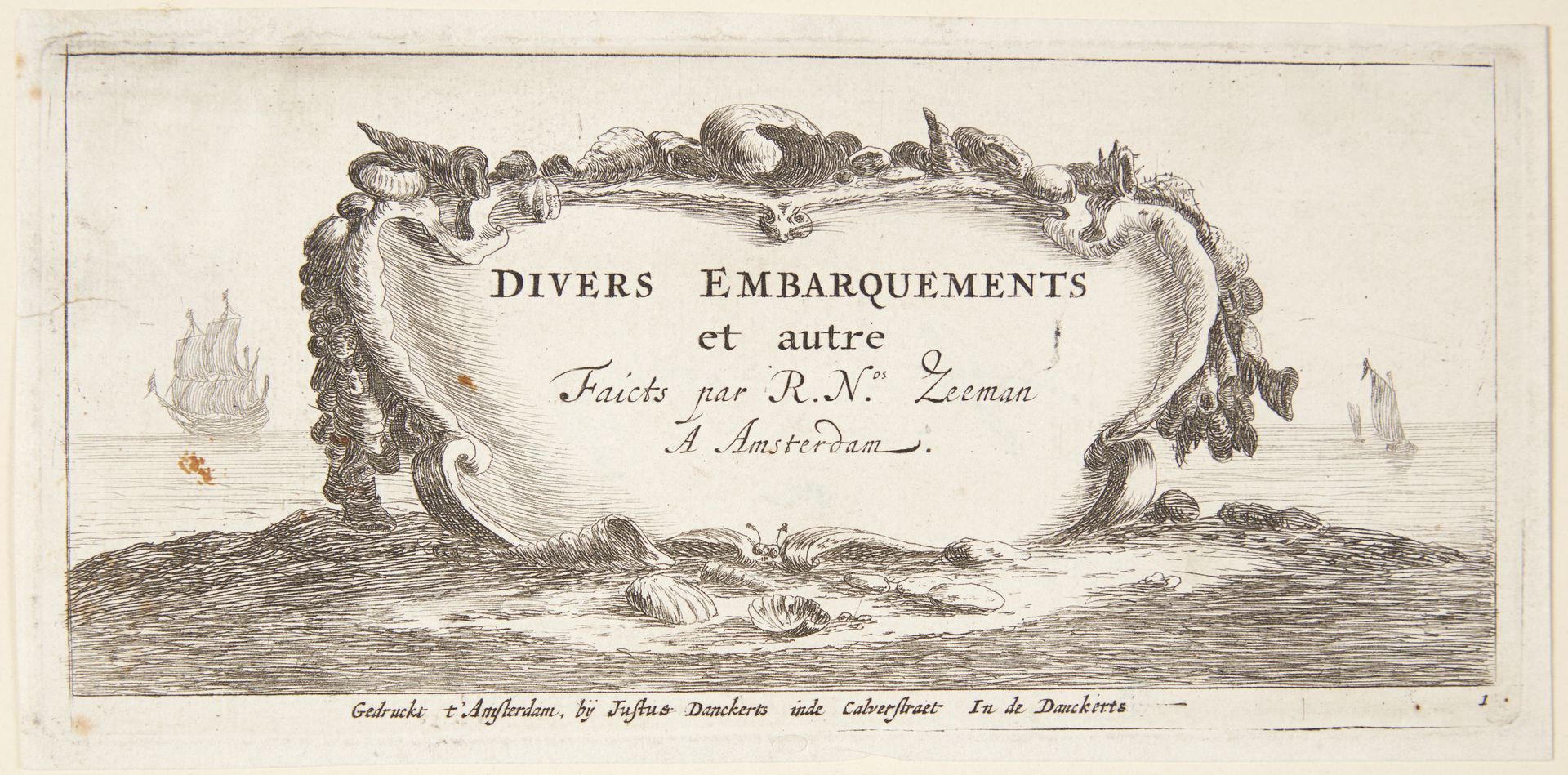
Kartouche med konkylier og muslingeskaller. Titelblad til "Indskibninger og andre scener med skibe"


Listen to curator's interpretation
Curatorial notes
Curator: I’m immediately drawn to the almost ghostly quality of the ships in the background. There's a sense of melancholy in this quiet seascape. Editor: You’ve described it perfectly. What we are viewing here is “Cartouche with shells and mussels. Title page for ‘Embarkations and other scenes with ships’” by Reinier Nooms, dating from 1651-1652. It’s an etching, currently held in the collection of the Statens Museum for Kunst. Curator: Etchings are amazing at capturing detail and texture. Just look at the frame! The artist creates a cartouche of carefully observed seashells and rocks. But even the texture is marine, calling forth a kind of horizon of time itself. Editor: Yes, the collection of shells and marine life is fascinating. In Dutch Golden Age painting, seashells often symbolized transience, or even vanity, recalling "memento mori" themes prevalent at the time. Does that resonance affect how you experience the visual organization? Curator: Absolutely. Formally, I notice how Nooms arranges these natural forms in a deliberate, almost architectural way, providing the central text, "Divers Embarquements", a framed context. It really speaks to a kind of composed and cultivated world-view. The composition has a stabilizing effect despite the themes you are uncovering. Editor: Precisely. These title pages offer a literal frame but, moreover, serve as cultural touchstones to the narratives found within, imbuing daily harbor scenes with deeper meaning for contemporary audiences. They highlight human involvement but almost as observers, no? The real narrative weight always drifts slightly further out... on those ships. Curator: Yes, that framing also acts as a repoussoir drawing our eyes to the ships in the distance. Ultimately, this reminds us that everything, even these “still life” objects, participates in a continuous flux. Editor: And to imagine viewers then handling the series, each sheet accruing its own personal story. Perhaps some of our listeners might now consider Reinier Nooms’ own journey and relationship to the imagery that so inspired him.