About this artwork
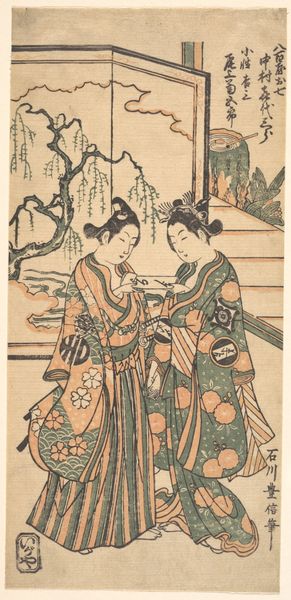
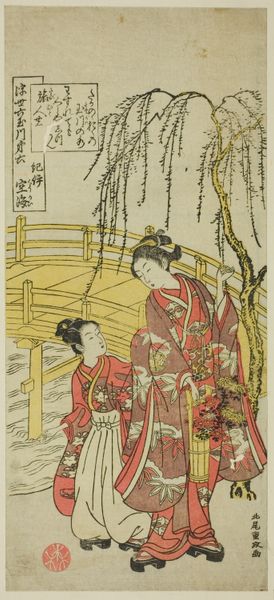
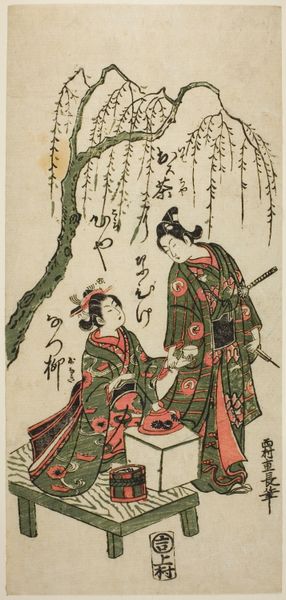
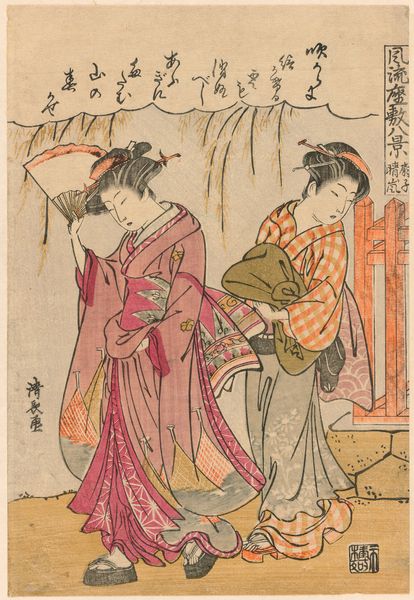
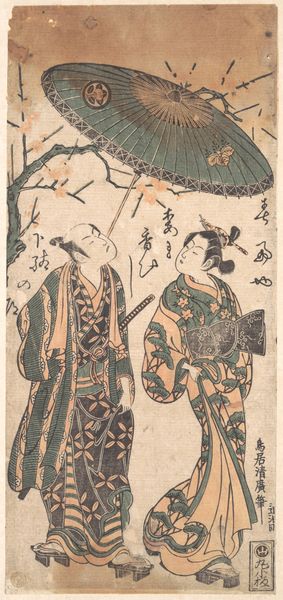
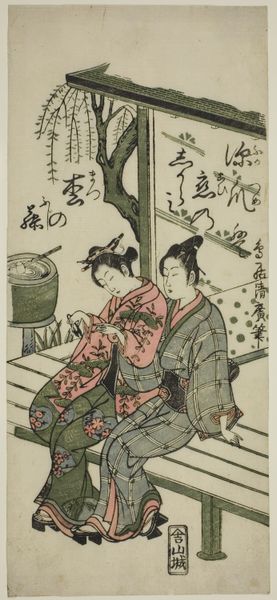
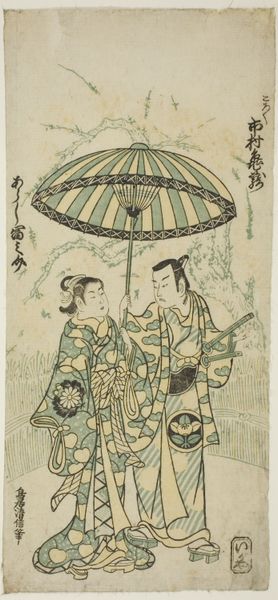
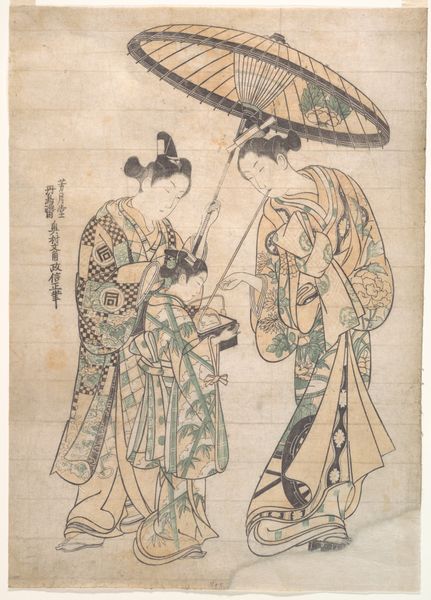
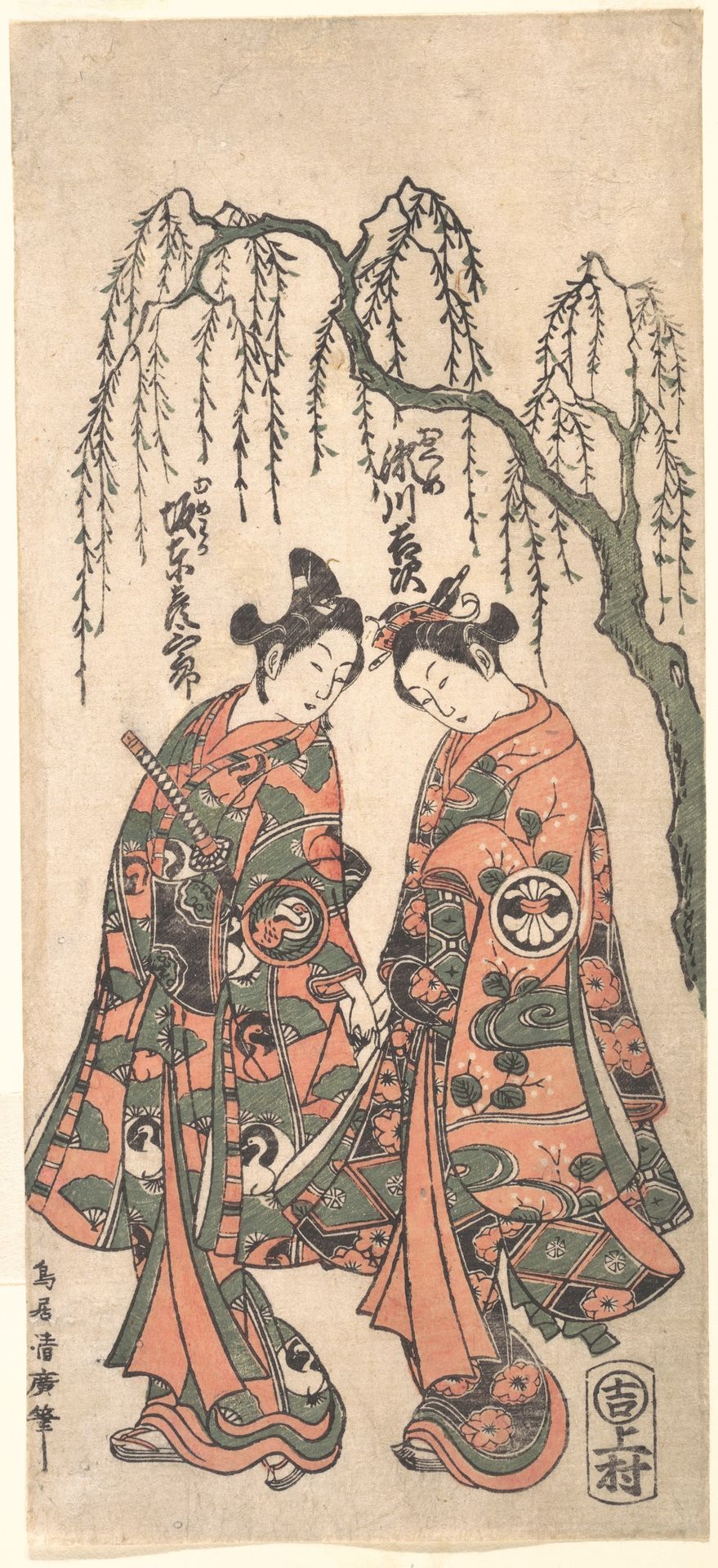
This is a woodblock print made by Torii Kiyohiro in 18th century Japan. Look closely, and you will see that the image is created through a painstaking process of carving wood, applying ink, and pressing paper. These techniques were not fine art processes, but were deeply embedded in the commercial culture of the Edo period. Woodblock prints like this one met a growing demand for accessible art. The materials are simple, but the labor is intense. Each color required a separate block, carefully aligned to create the final image, imbuing the artwork with social and cultural significance. Think about the immense skill required to carve such delicate lines, and the collaborative effort of the artisans involved. Woodblock printing democratized art production. It allowed for wider distribution of images, but also depended on a system of labor that often went unacknowledged. By understanding the materials, processes, and social context, we can appreciate the full meaning of this seemingly simple image, challenging traditional distinctions between fine art and craft.
Young Lovers under a Drooping Willow, Their Hands Clasped, Their Heads Bent
1754
Artwork details
- Medium
- print, woodcut
- Dimensions
- 12 x 5 1/2 in. (30.5 x 14 cm)
- Location
- Metropolitan Museum of Art, New York, NY
- Copyright
- Public Domain
Tags
Comments
Share your thoughts
About this artwork
This is a woodblock print made by Torii Kiyohiro in 18th century Japan. Look closely, and you will see that the image is created through a painstaking process of carving wood, applying ink, and pressing paper. These techniques were not fine art processes, but were deeply embedded in the commercial culture of the Edo period. Woodblock prints like this one met a growing demand for accessible art. The materials are simple, but the labor is intense. Each color required a separate block, carefully aligned to create the final image, imbuing the artwork with social and cultural significance. Think about the immense skill required to carve such delicate lines, and the collaborative effort of the artisans involved. Woodblock printing democratized art production. It allowed for wider distribution of images, but also depended on a system of labor that often went unacknowledged. By understanding the materials, processes, and social context, we can appreciate the full meaning of this seemingly simple image, challenging traditional distinctions between fine art and craft.
Comments
Share your thoughts