About this artwork
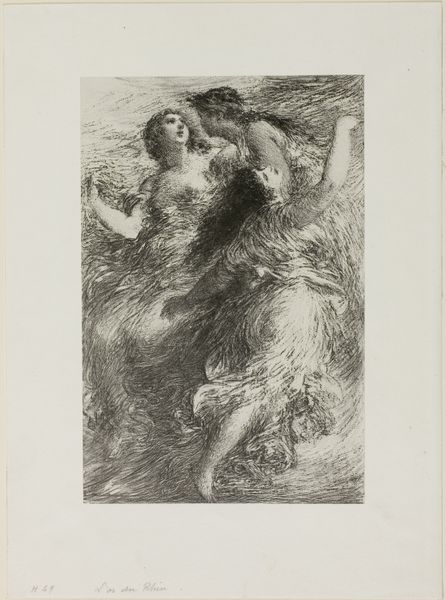
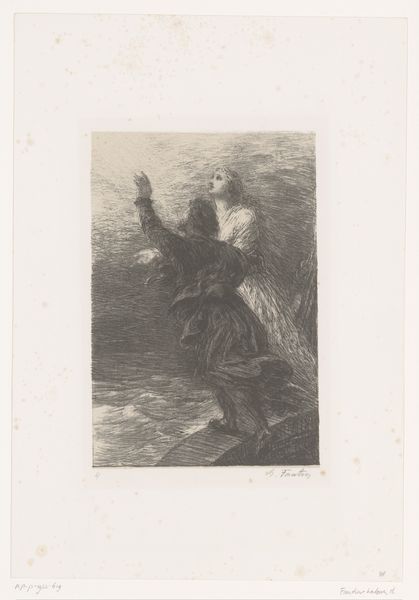
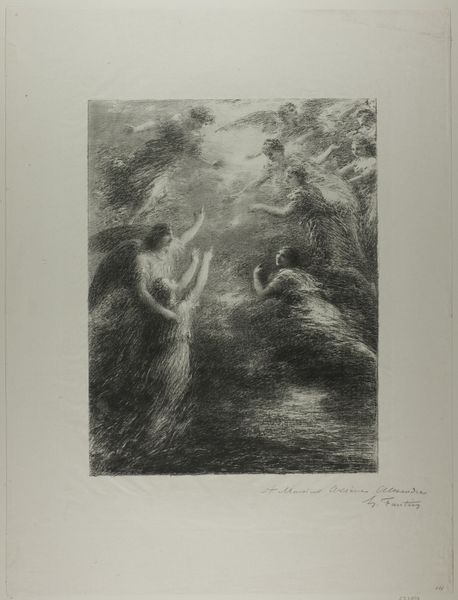
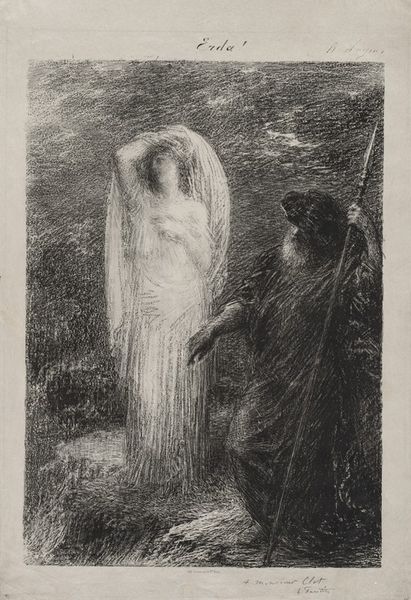
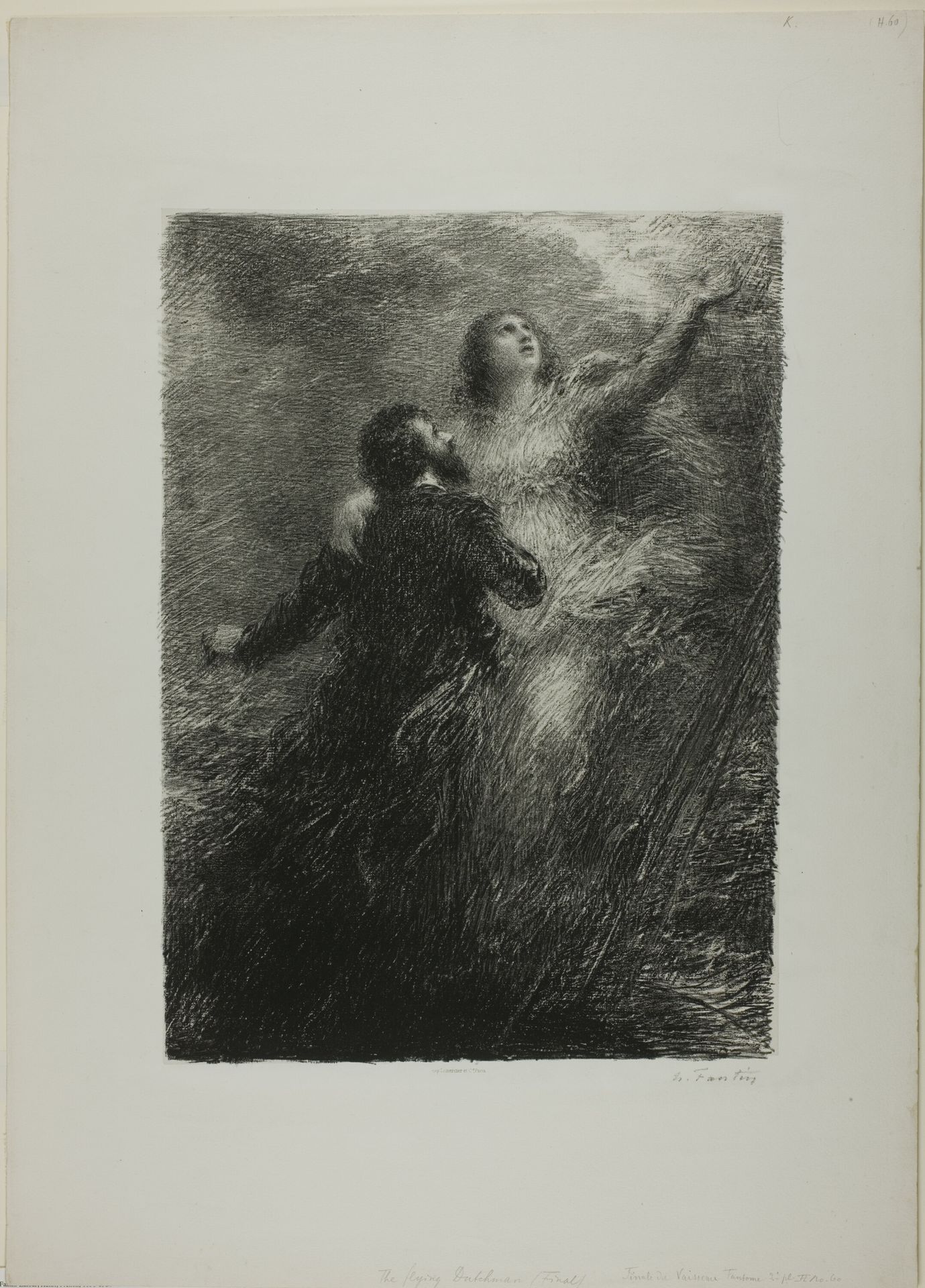
Henri Fantin-Latour rendered this lithograph, "Finale of the Flying Dutchman, second plate," in the late 19th century. Here, we see two figures amidst a turbulent scene. The Dutchman, cloaked in darkness, faces the ethereal Senta, who gazes upward, her arms outstretched towards salvation. Senta’s pose, with her face turned towards the light, is reminiscent of the "Ecstasy of Saint Teresa." But instead of divine love, here the gesture symbolizes redemption through mortal love. Consider the figure of Orpheus, whose upward gaze allowed him to leave the Underworld. Senta's act carries similar weight. This symbolic gesture transcends time, reappearing in different guises across centuries. It is a potent manifestation of hope and longing. Each time it appears, the gesture resonates with the collective memory of humanity's eternal quest for deliverance. This is the cyclical, ever-evolving nature of symbols, their meanings perpetually shaped by the shifting currents of history and the deep, subconscious desires of the human spirit.
Finale of the Flying Dutchman, second plate
1885


Artwork details
- Dimensions
- 418 × 305 mm (image); 627 × 450 mm (sheet)
- Location
- The Art Institute of Chicago
- Copyright
- Public Domain
Comments
Share your thoughts
About this artwork
Henri Fantin-Latour rendered this lithograph, "Finale of the Flying Dutchman, second plate," in the late 19th century. Here, we see two figures amidst a turbulent scene. The Dutchman, cloaked in darkness, faces the ethereal Senta, who gazes upward, her arms outstretched towards salvation. Senta’s pose, with her face turned towards the light, is reminiscent of the "Ecstasy of Saint Teresa." But instead of divine love, here the gesture symbolizes redemption through mortal love. Consider the figure of Orpheus, whose upward gaze allowed him to leave the Underworld. Senta's act carries similar weight. This symbolic gesture transcends time, reappearing in different guises across centuries. It is a potent manifestation of hope and longing. Each time it appears, the gesture resonates with the collective memory of humanity's eternal quest for deliverance. This is the cyclical, ever-evolving nature of symbols, their meanings perpetually shaped by the shifting currents of history and the deep, subconscious desires of the human spirit.
Comments
Share your thoughts