About this artwork
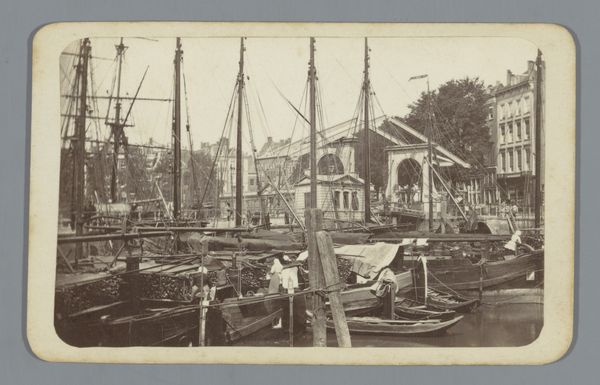
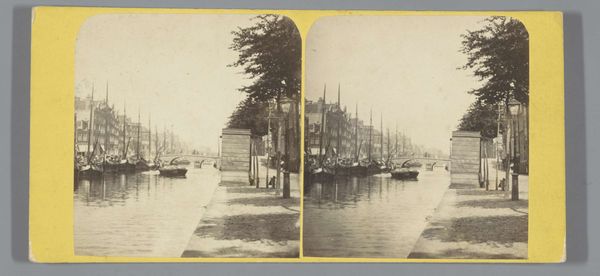
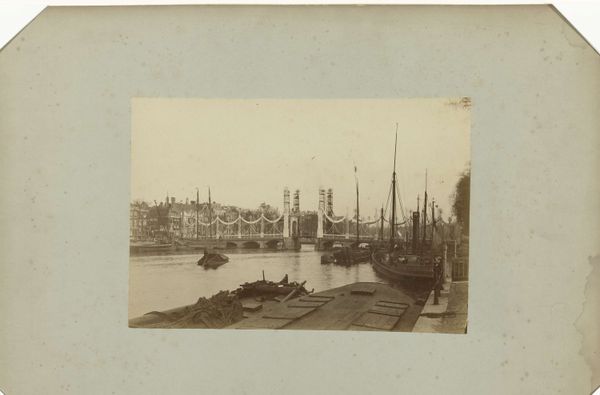
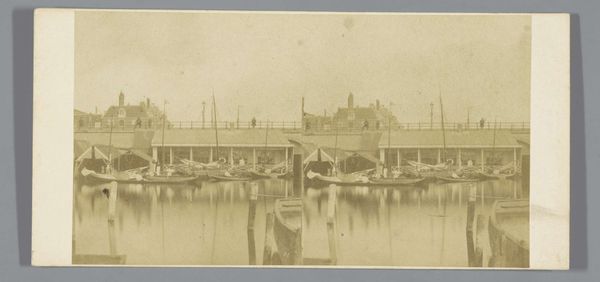
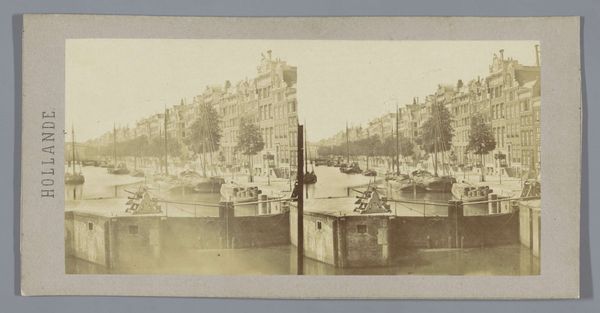
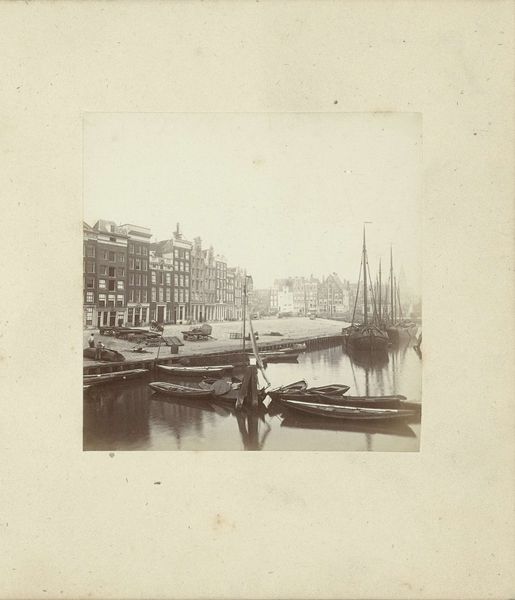
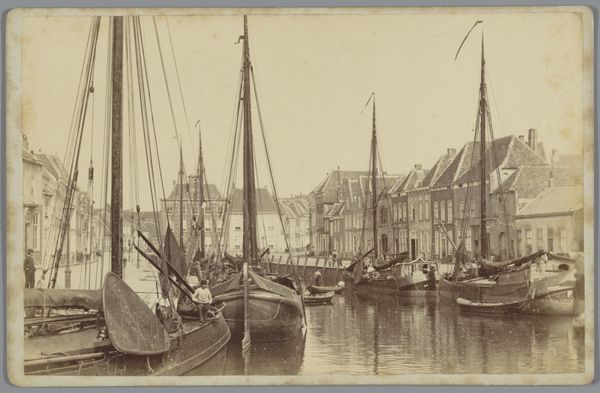
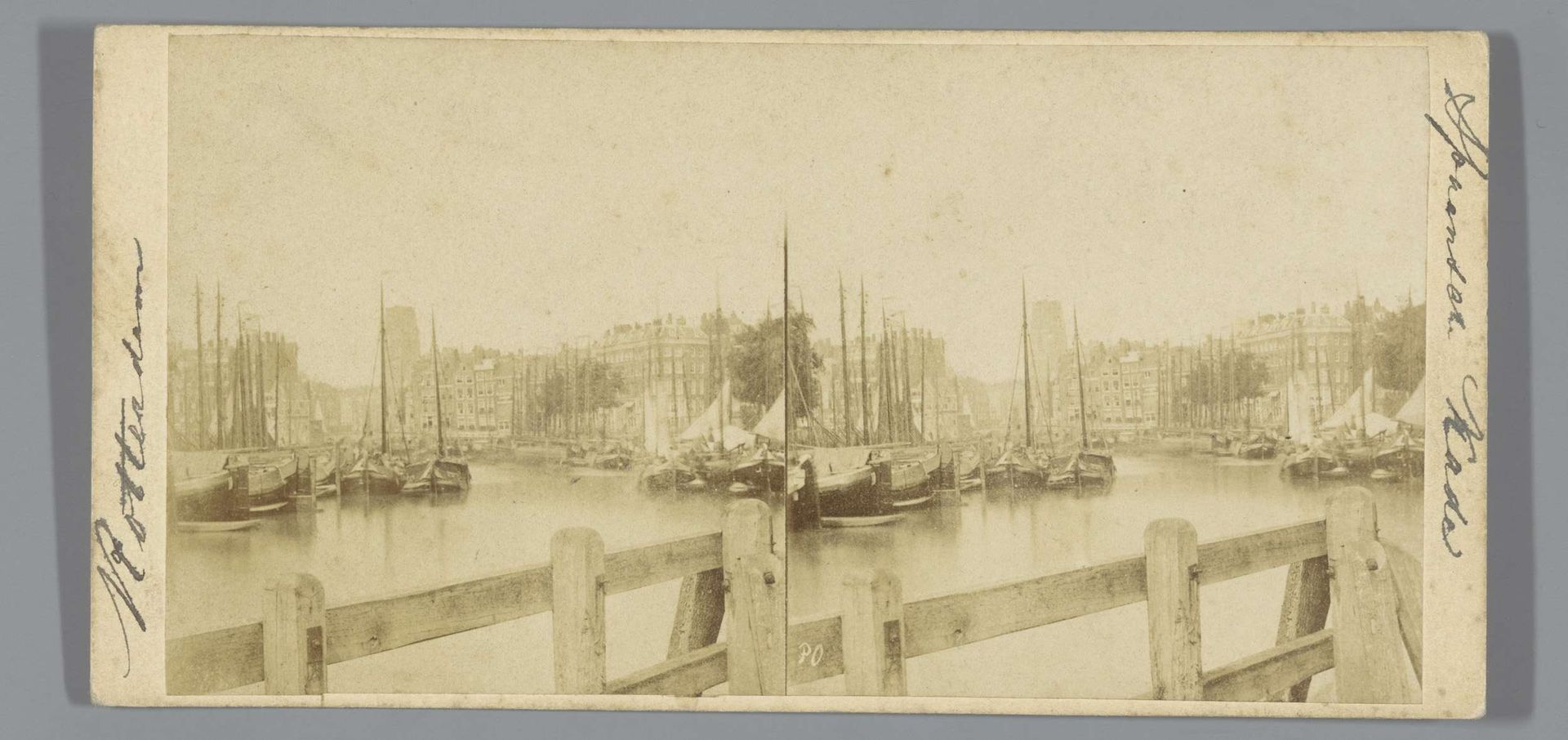
Pieter Oosterhuis captured this image of Spaansekade en de Oudehaven in Rotterdam using photography. The sepia tones lend a nostalgic air, while the composition invites our eye to drift between the wooden fence in the foreground, the tranquil water, and the detailed skyline of Rotterdam. Look closely at the rhythmic interplay of vertical masts and the buildings. Oosterhuis uses these lines to create a visual structure that both organizes the space and draws us into it. The photograph's surface, smooth yet subtly textured, highlights the materiality of early photographic processes. What we see here isn't just a depiction of a harbor; it's an arrangement of forms that evokes a particular mood. By focusing on the formal elements – the lines, tones, and textures – Oosterhuis subtly engages with broader questions about how we perceive and structure our world through images. The choice of sepia adds another layer, hinting at the passage of time and the way history informs our understanding of place.
Spaansekade en de Oudehaven, Rotterdam
1859 - 1865

Pieter Oosterhuis
1816 - 1885Location
RijksmuseumArtwork details
- Medium
- photography, gelatin-silver-print
- Dimensions
- height 84 mm, width 172 mm
- Location
- Rijksmuseum
- Copyright
- Rijks Museum: Open Domain
Tags
Comments
Share your thoughts
About this artwork
Pieter Oosterhuis captured this image of Spaansekade en de Oudehaven in Rotterdam using photography. The sepia tones lend a nostalgic air, while the composition invites our eye to drift between the wooden fence in the foreground, the tranquil water, and the detailed skyline of Rotterdam. Look closely at the rhythmic interplay of vertical masts and the buildings. Oosterhuis uses these lines to create a visual structure that both organizes the space and draws us into it. The photograph's surface, smooth yet subtly textured, highlights the materiality of early photographic processes. What we see here isn't just a depiction of a harbor; it's an arrangement of forms that evokes a particular mood. By focusing on the formal elements – the lines, tones, and textures – Oosterhuis subtly engages with broader questions about how we perceive and structure our world through images. The choice of sepia adds another layer, hinting at the passage of time and the way history informs our understanding of place.
Comments
Share your thoughts