
Curatorial notes
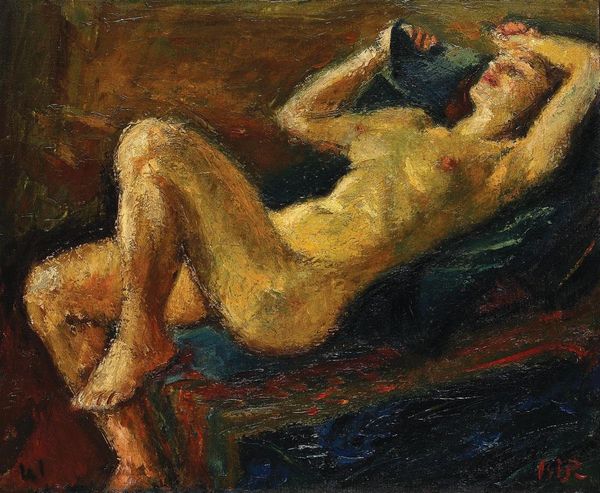
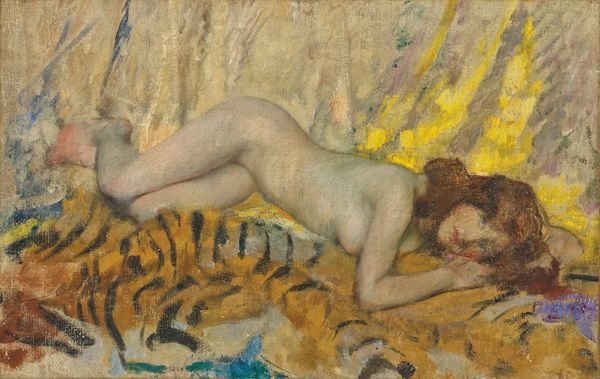
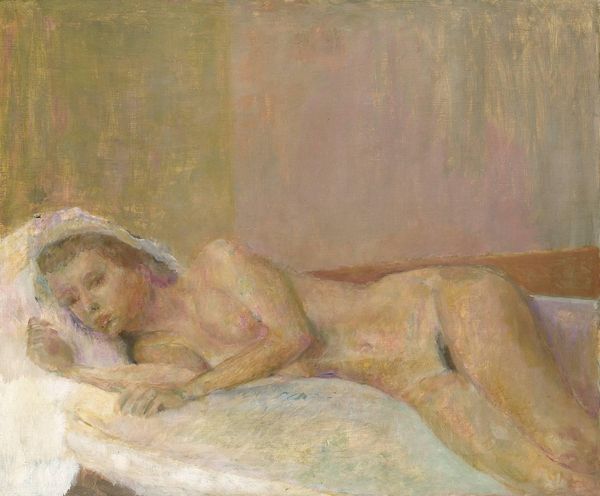
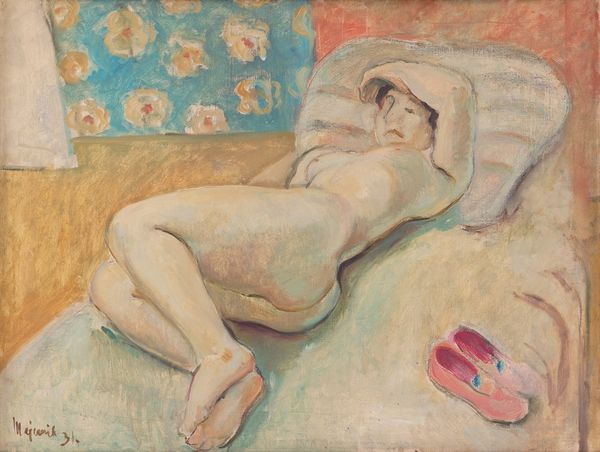
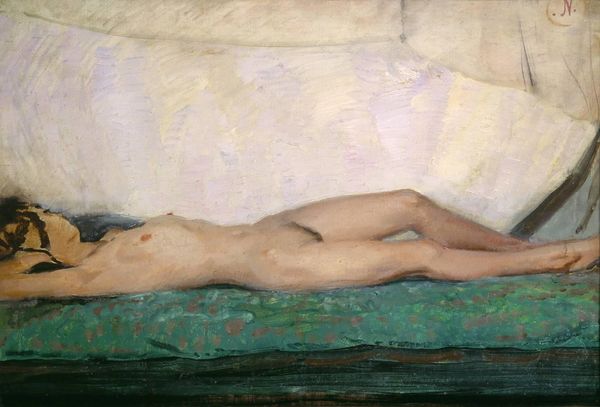
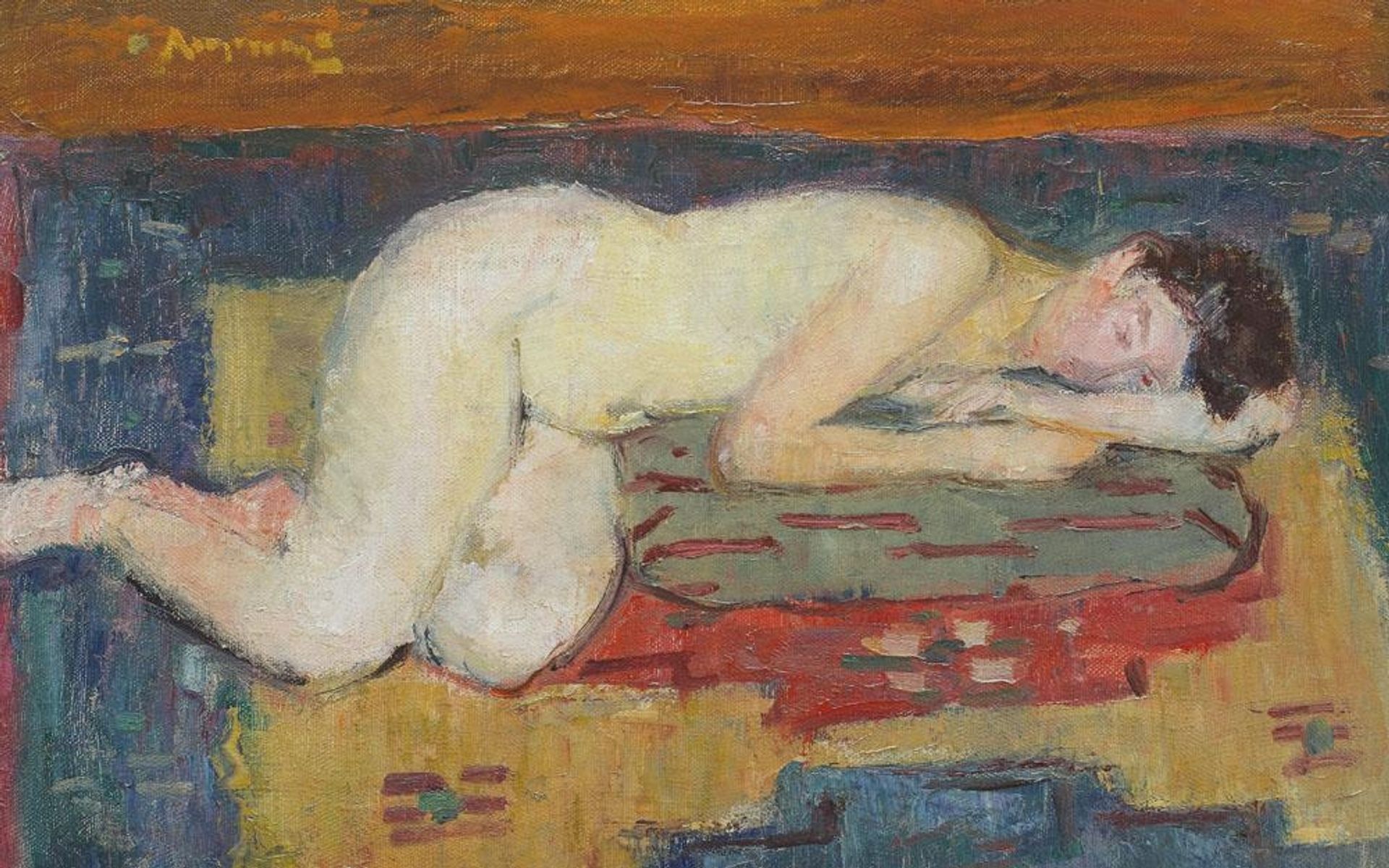
Editor: Here we have “Nud ghemuit,” an oil painting, most likely on canvas, by Octav Angheluta. It presents a reclining nude figure. There’s a feeling of intimacy, a vulnerability in the pose, and the impasto style gives it a tangible, almost sculptural, quality. How do you interpret this work, especially in relation to its use of visual symbols? Curator: The symbolism here is fascinating precisely because it seems so simple. The reclining nude has centuries of cultural memory attached to it, from Venus to odalisques. But consider what’s absent: an idealized landscape, mythological attributes, a sense of voyeurism. Instead, she is placed on a patterned rug, rendered with thick paint, rooting the figure in a very tactile, domestic space. Editor: So you’re suggesting the rug is as significant as the figure itself? Curator: Absolutely. The rug, as a grounding element, acts as a symbol of comfort and the everyday, contrasting the grand historical tradition of nude paintings. It encourages a more psychologically intimate reading. Does the color palette evoke a particular feeling in you? Editor: I find it quite muted, almost melancholic. It's not a sensual celebration of the body. More a quiet contemplation. Curator: Precisely! And the woman’s face is hidden. She’s turned inwards, perhaps asleep, perhaps dreaming. This internal focus moves it away from being simply an objectified gaze. Editor: That’s really fascinating. I hadn’t considered the interplay between the tradition of nudes and the artist’s seeming subversion of that. It reframes how we engage with the piece. Curator: Indeed. This image offers not an external display, but an invitation into an interior world. This artwork leaves you pondering on where our gaze leads us, what it reveals and conceals.