1702
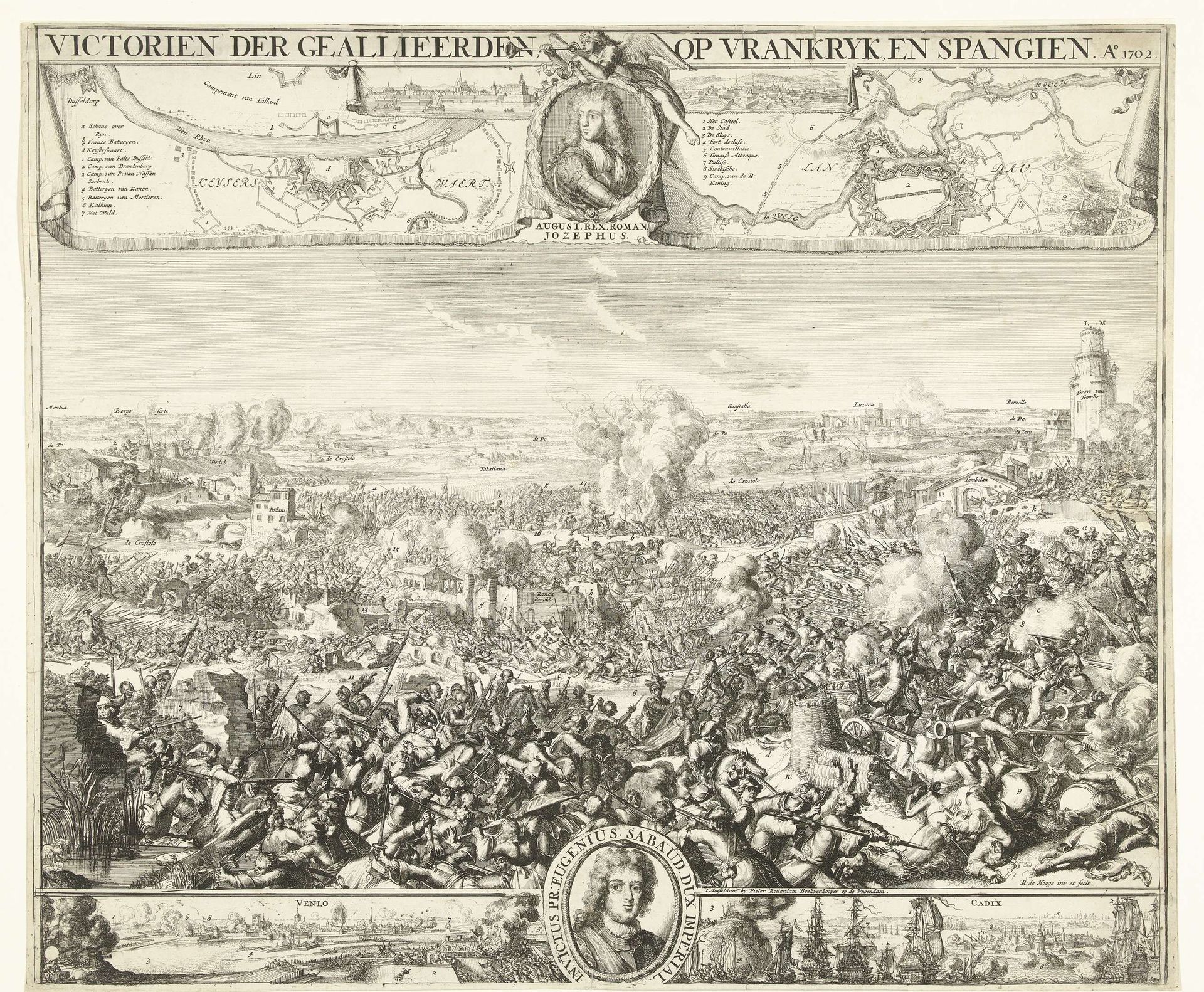
Slag bij Luzzara, 1702

Romeyn de Hooghe
1645 - 1708Location
RijksmuseumListen to curator's interpretation
Curatorial notes
This detailed etching, created by Romeyn de Hooghe in 1702, depicts the Battle of Luzzara. Note the portraits of the commanding figures above and below the chaotic scene. The allegorical use of portraiture, framing the tumultuous battle scene, hearkens back to classical Roman triumphs, where emperors were immortalized amidst victorious campaigns. Yet here, these figures are not merely celebrated; they are presented almost as detached observers, a subtle commentary on the distance between leadership and the brutal reality of war. Consider how these symbols, once emblems of glory, have evolved. In ancient times, the victorious leader was a god among men; here, the portrayal seems more grounded, perhaps even questioning. This evolution reflects a shift in cultural consciousness, a gradual peeling away of the layers of romanticism that once veiled the realities of conflict. The collective memory of past conflicts perhaps subconsciously influenced the production and interpretation of this motif, engaging viewers on a deep, subconscious level. And so, the symbol resurfaces, evolved, and imbued with new meanings, continuing its cyclical journey through the annals of art.