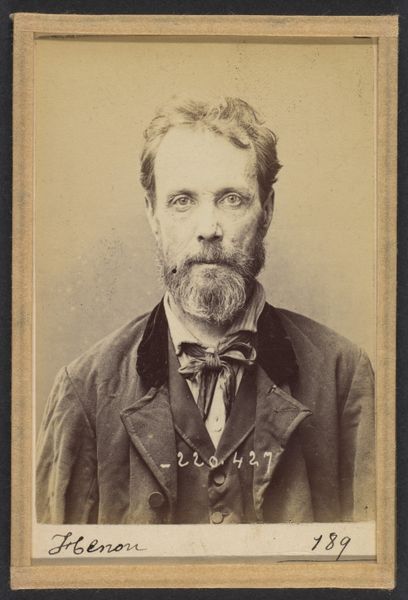
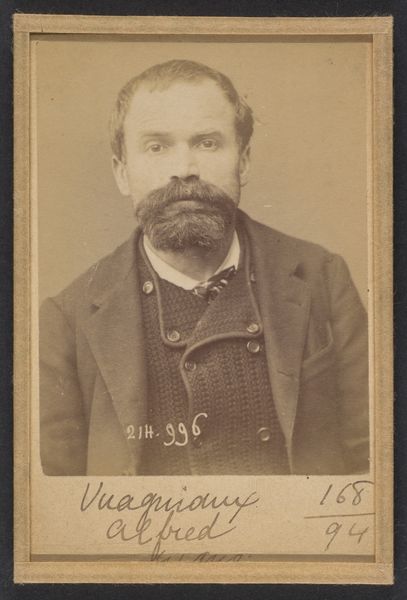
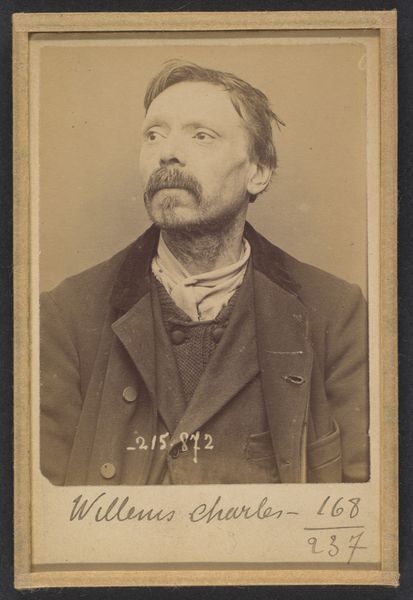
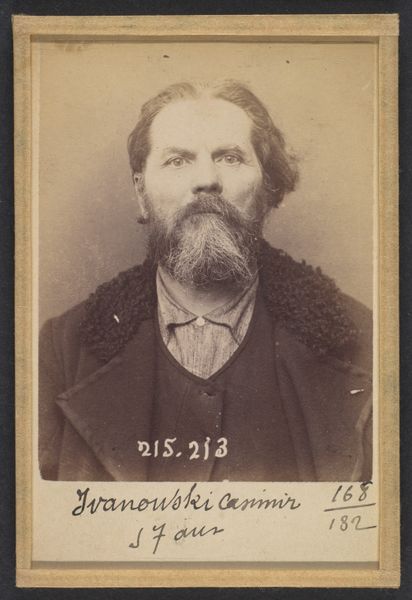
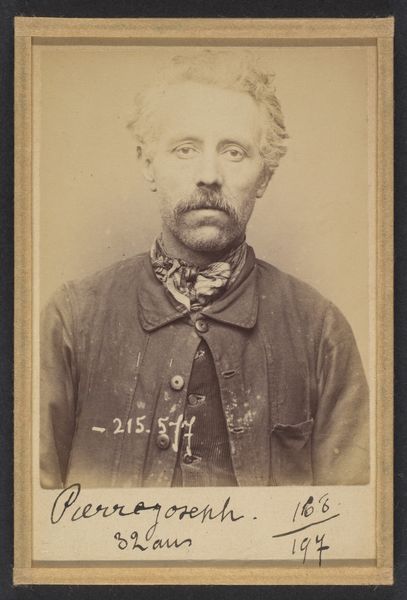
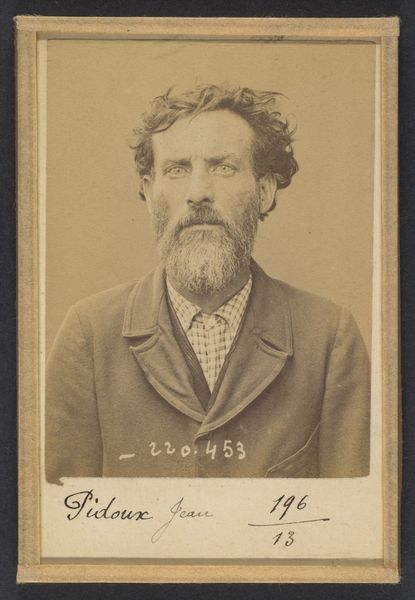
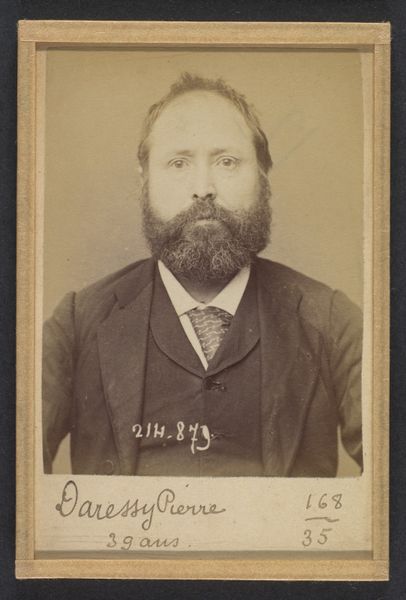
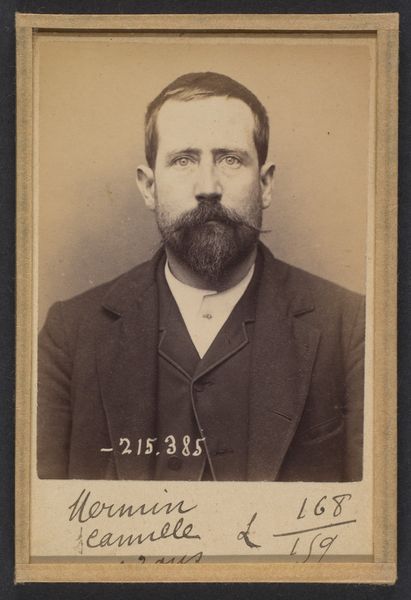
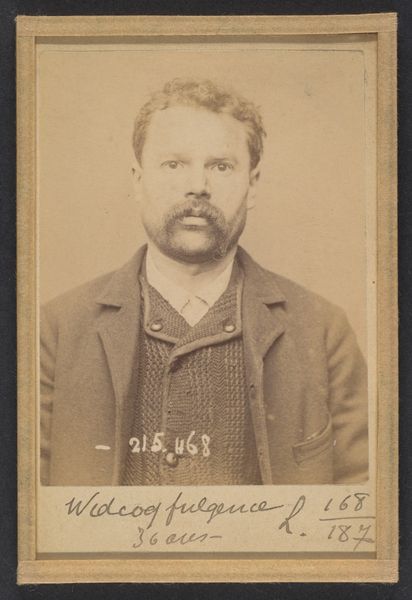
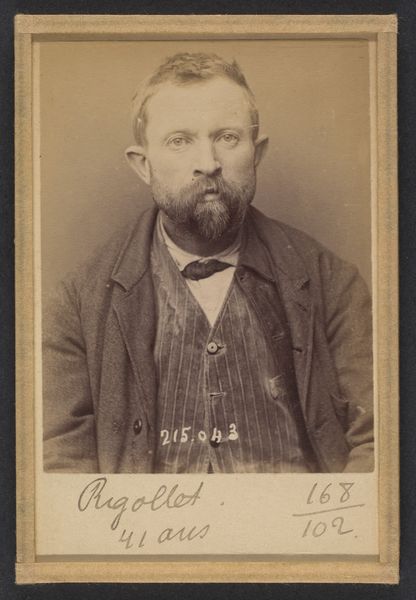
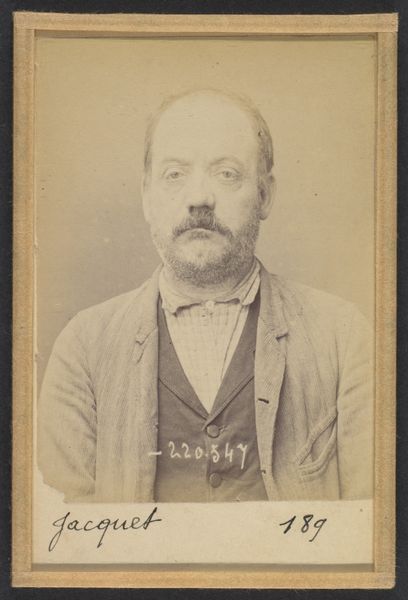
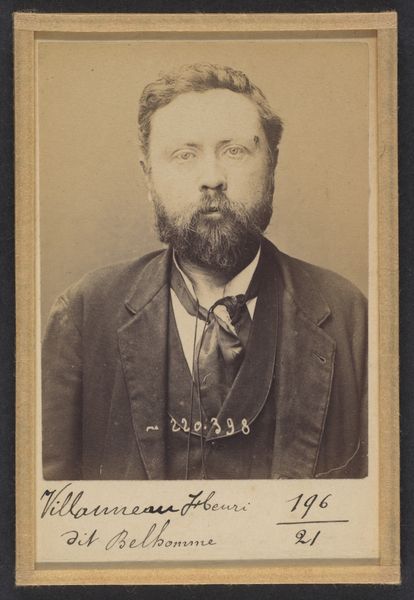
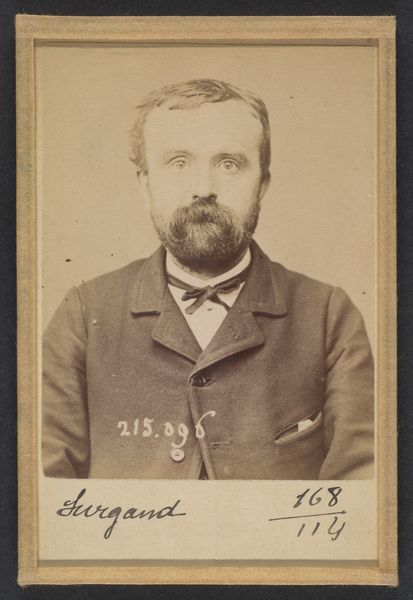
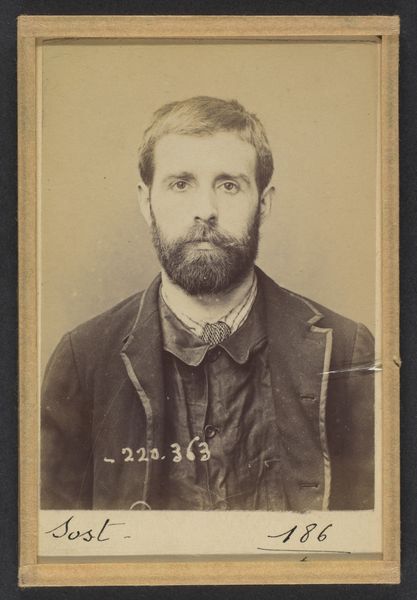
Moreau. François. 47 ans, né le 19/11/46 à Nevers (Nièvre). Menuisier: Anarchiste. 2/7/94. 1894


photography, gelatin-silver-print, albumen-print
portrait
photography
historical photography
gelatin-silver-print
19th century
men
albumen-print
Dimensions: 10.5 x 7 x 0.5 cm (4 1/8 x 2 3/4 x 3/16 in.) each
Copyright: Public Domain
Curator: This albumen print, now at the Metropolitan Museum of Art, is titled "Moreau. François. 47 ans, né le 19/11/46 à Nevers (Nièvre). Menuisier: Anarchiste. 2/7/94." It was created in 1894 by Alphonse Bertillon. My initial impression is one of somber quietude; the sepia tones lend a melancholic air to the man's visage. Editor: Absolutely. The gaze is intense, yet something about his eyes also conveys resignation. Given Bertillon's history of documenting criminals and the "Anarchiste" note in the title, the piece immediately brings to mind discussions about criminality, labeling, and power. Who was this man, really? And what did “anarchist” even mean at the time? Curator: Exactly! Bertillon's photographic series were deeply enmeshed in late 19th-century criminological theories. Photography became a tool of the state, employed for surveillance and control. It was believed these photographs could identify 'deviant' types, often relying on pseudo-scientific notions of physiognomy. Editor: So it’s not simply a neutral portrait; it’s loaded with socio-political baggage. We are invited to consider the role of photography as a system of oppression, one that served to reify dominant class structures. It speaks volumes about who gets to control the narrative, and whose images are used against them. Curator: He wasn’t necessarily ‘proven’ a criminal in the way we understand it today. Anarchism, and this framing, could speak more to the sociopolitical fears of the time, than to specific misdeeds. Editor: Precisely, and understanding the specific sociopolitical context in France in 1894 is crucial. The French Third Republic was marked by political instability, the rise of socialist and anarchist movements, and a pervasive fear of social unrest. The label "anarchist" itself was a loaded term, often applied broadly to anyone perceived as a threat to the established order. I find the details - his profession of “Menuisier," or carpenter - so intriguing in this light. How his everyday work might conflict with the stereotype imposed on him. Curator: I agree completely. Looking at this now, what's powerful is considering how these historical images still affect contemporary perceptions of identity and deviance, the power that images still wield in controlling narratives. Editor: This single photograph urges us to consider the relationship between art, power, and the ongoing struggle for social justice. I'm glad for its presence in our collection, a constant reminder of the ever-present importance of nuanced representation.
Comments
No comments
Be the first to comment and join the conversation on the ultimate creative platform.
 React
React Comment