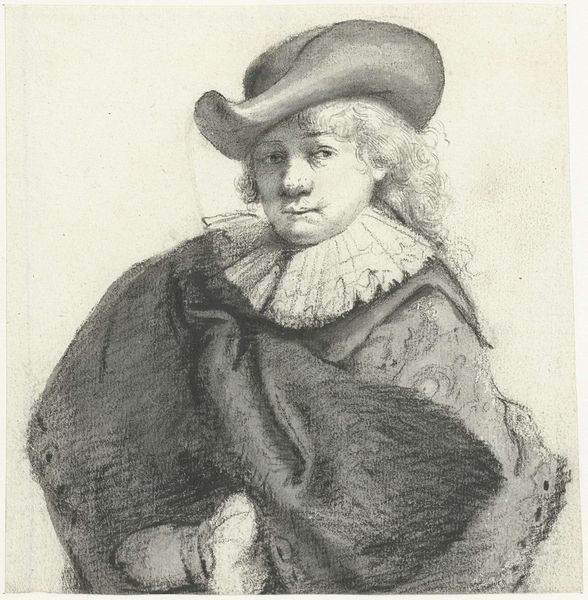
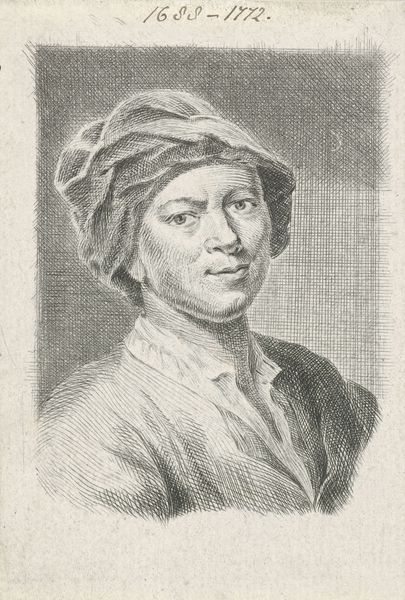
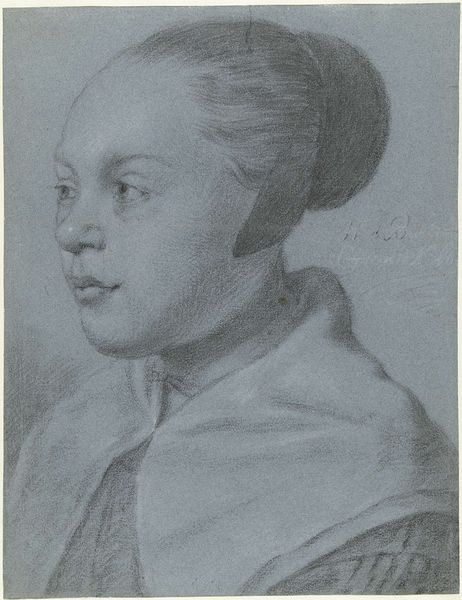
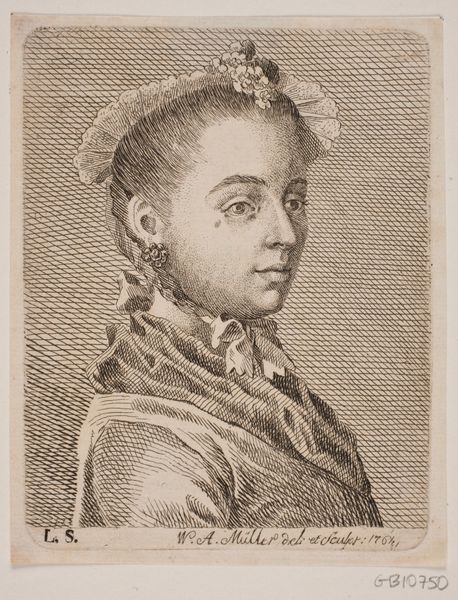
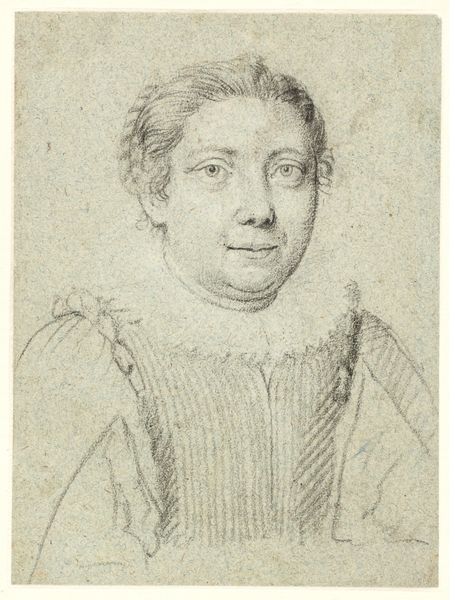
drawing, pencil
portrait
pencil drawn
drawing
pencil sketch
charcoal drawing
pencil drawing
pencil
portrait drawing
pencil work
academic-art
realism
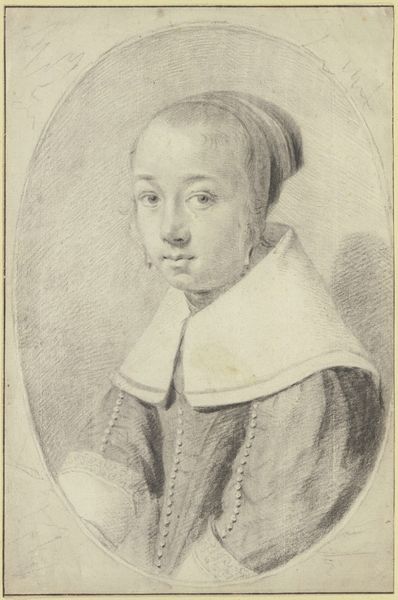
Dimensions: height 88 mm, width 78 mm
Copyright: Rijks Museum: Open Domain
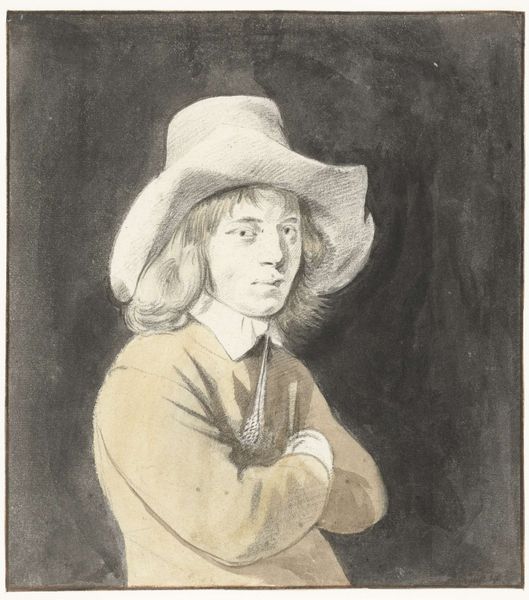
Editor: So, this is Cornelis van Noorde's "Portrait of an Unknown Boy," dating from 1741 to 1795. It's a pencil drawing, quite simple and yet the texture makes it feel very tangible. What do you make of this work? Curator: It is interesting to consider this portrait from a materialist perspective. Van Noorde’s choice of pencil, a relatively inexpensive and accessible material, democratizes portraiture to some degree. How does this choice affect our understanding of art patronage and consumption during this period? Editor: That's a great point! Pencil would definitely make portraits more accessible than oil paintings, reserved only for the elite. Curator: Precisely! Consider the labor involved. Pencil drawing, unlike painting, is often associated with sketching, preliminary work, or even amateur practice. Does the artist's commitment to this "humble" material challenge established hierarchies within the art world itself? Where drawing may be seen as preparatory and "lower", while oil paintings represented final product and the labor was masked. Editor: It's true, there’s an immediacy to the line work that makes it feel more like a study than a finished masterpiece. Did using pencil also perhaps, change the relationship between the artist, the patron and the artwork itself? Curator: Absolutely. Think about the social context: the increasing availability of paper, pencils manufactured through early industrial means... these developments shift the dynamics of artistic production and access to art making, which can provide an insight into understanding class and consumption at the time. Does it imply greater involvement for those other than royalty, gentry or the super wealthy? Editor: So, it is not just *who* is represented, but *how* and with *what* they are represented, that can broaden art consumption at the time? Curator: Exactly! And to add to that: how these shifts blur the lines between "high art" and more "accessible" forms of visual representation, even to today. Editor: I never thought about the choice of medium having such broader implications about production and access to art. It opens a whole new dimension to how I will look at art now.
Comments
No comments
Be the first to comment and join the conversation on the ultimate creative platform.
 React
React Comment