About this artwork
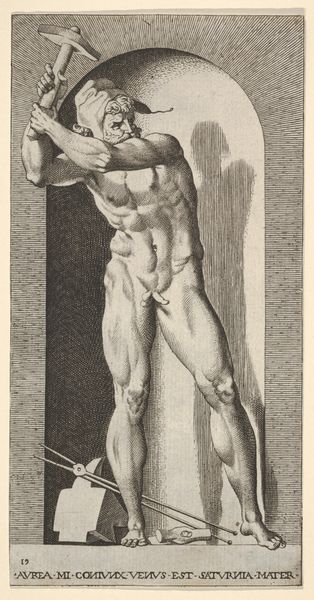
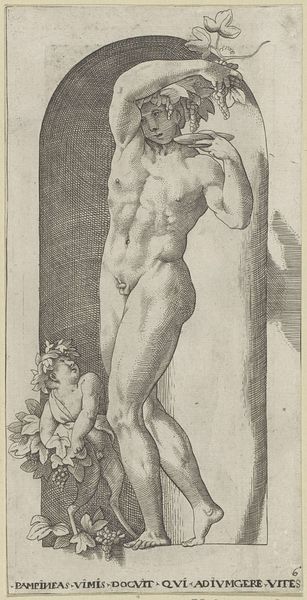
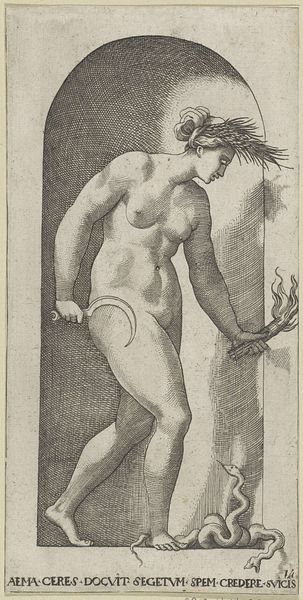
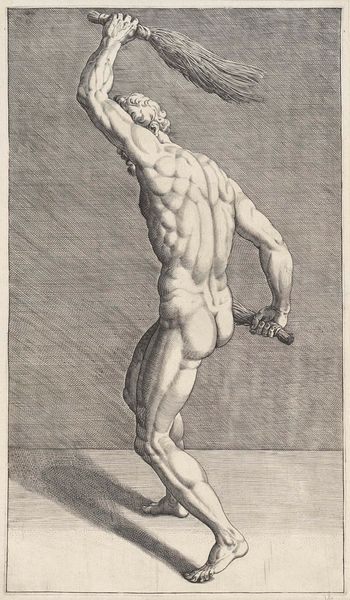
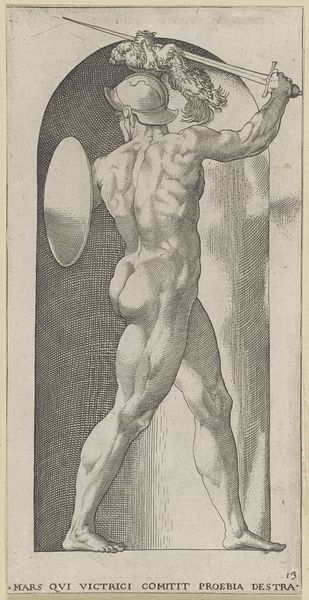
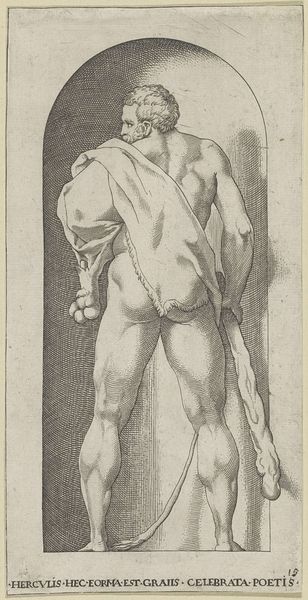
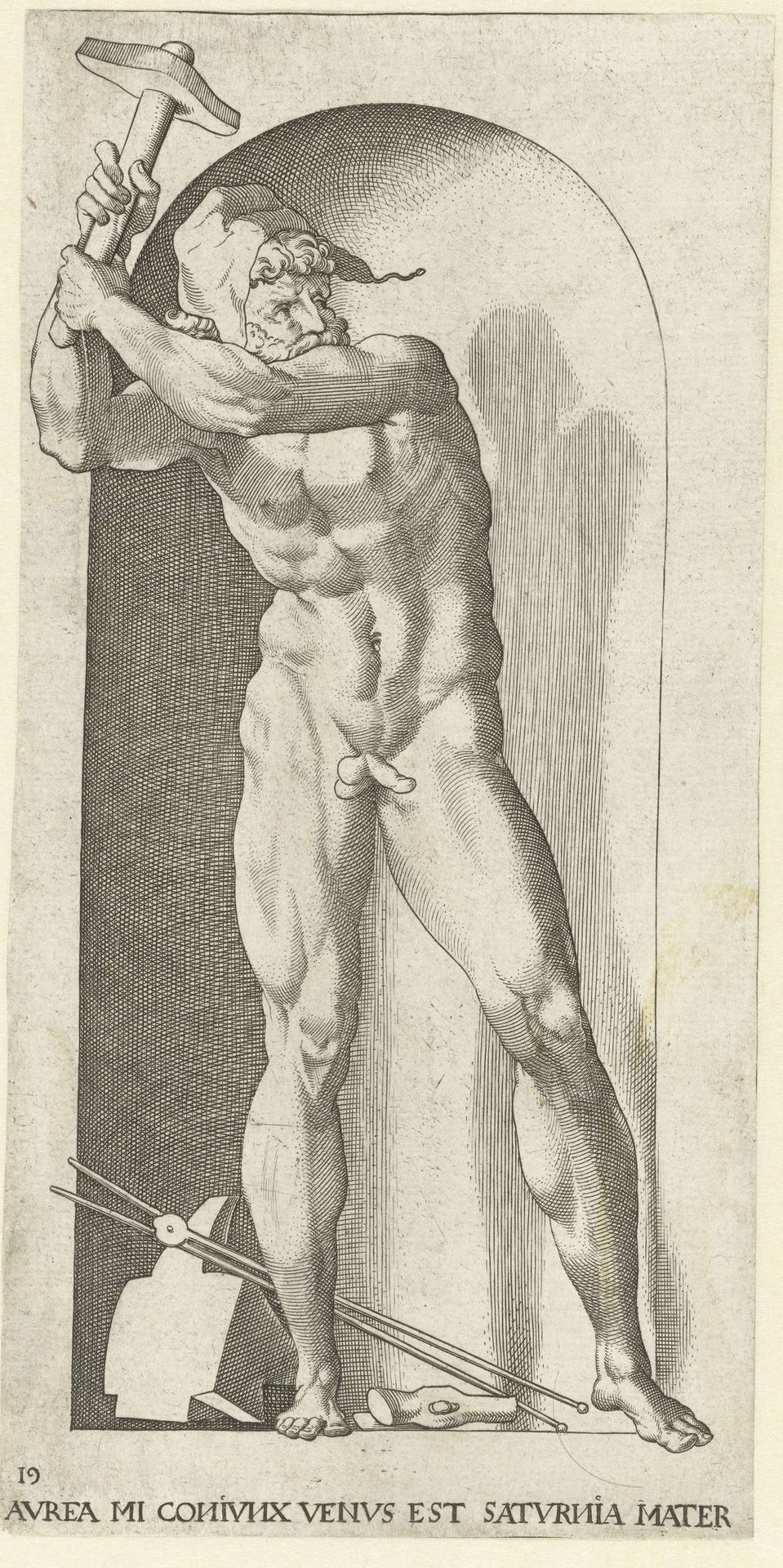
Jacob Binck created this engraving of Vulcanus, the Roman god of fire and metalworking, during the Northern Renaissance. Note the muscular figure of Vulcanus, hammer in hand, poised over his anvil. The hammer, a symbol of creative and destructive power, resonates across cultures. We see its echo in Thor’s hammer Mjolnir, a protective force, or even in the crude stone axes of prehistoric societies, each a testament to humanity’s impulse to shape the world. This act of striking, of forging, is deeply embedded in our collective memory. Consider how the rhythmic hammering becomes a primal act of creation. It's a manifestation of raw energy, a psychological expression of willpower and transformation. The depiction of intense concentration on Vulcanus’ face also reflects that creative process. Through epochs, the hammer evolves, yet retains its core essence: a tool of both making and unmaking. It is a potent symbol, one that continues to strike at our subconscious.

Artwork details
- Medium
- print, engraving
- Dimensions
- height 212 mm, width 108 mm
- Location
- Rijksmuseum
- Copyright
- Rijks Museum: Open Domain
Tags
Comments
Share your thoughts
About this artwork
Jacob Binck created this engraving of Vulcanus, the Roman god of fire and metalworking, during the Northern Renaissance. Note the muscular figure of Vulcanus, hammer in hand, poised over his anvil. The hammer, a symbol of creative and destructive power, resonates across cultures. We see its echo in Thor’s hammer Mjolnir, a protective force, or even in the crude stone axes of prehistoric societies, each a testament to humanity’s impulse to shape the world. This act of striking, of forging, is deeply embedded in our collective memory. Consider how the rhythmic hammering becomes a primal act of creation. It's a manifestation of raw energy, a psychological expression of willpower and transformation. The depiction of intense concentration on Vulcanus’ face also reflects that creative process. Through epochs, the hammer evolves, yet retains its core essence: a tool of both making and unmaking. It is a potent symbol, one that continues to strike at our subconscious.
Comments
Share your thoughts