1932
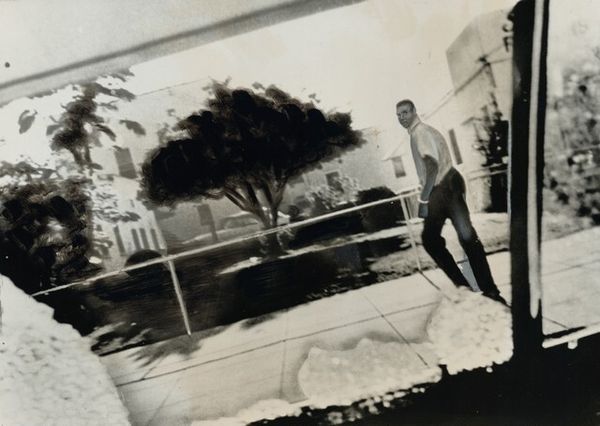
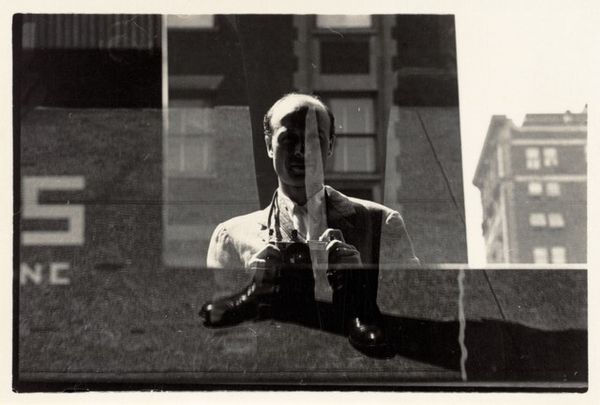
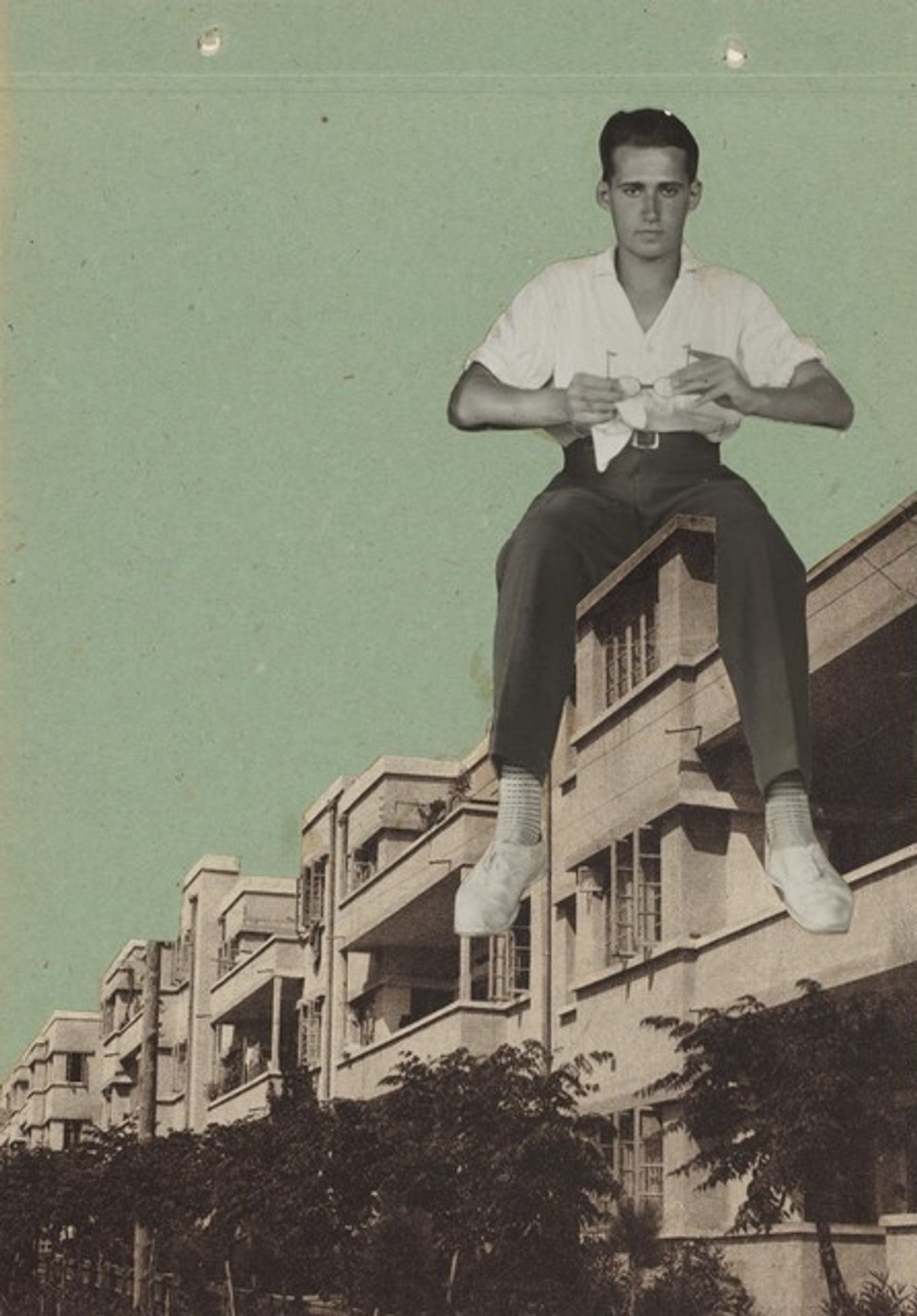
Self-Portrait on Building


Listen to curator's interpretation
Curatorial notes
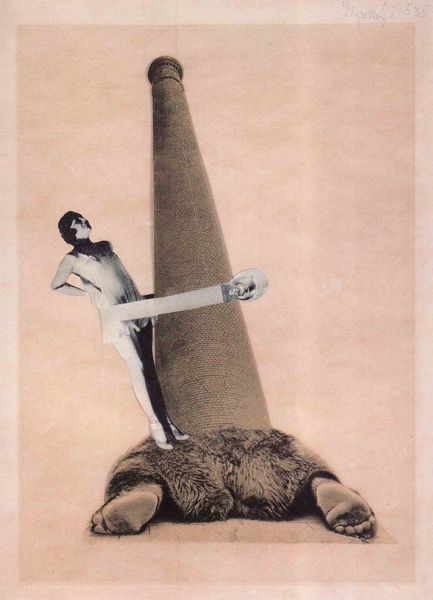
Curator: This photo immediately throws me. It feels both intimate and incredibly staged, like a dream perched on the edge of reality. There's a kind of quiet absurdity to it. Editor: Indeed. What we have here is Alexander Zhitomirsky’s “Self-Portrait on Building,” created in 1932. Zhitomirsky, a Soviet artist, cleverly combines photography with elements of photomontage. We see a man – presumably the artist himself – seemingly levitating, or perhaps perched precariously, on the edge of a building. Curator: That's it, "perched precariously." It's like a modern Icarus who decided to chill instead of falling. His clothes are creased, and he seems focused on fixing his glasses. So human amidst all the possible narratives! Editor: Exactly. And the architecture itself, it’s a fantastic example of modernist cityscape, the clean lines offering a stark contrast to the individual's…domestic struggle. He’s suspended between public aspiration and personal experience. Zhitomirsky often blended these public and private spheres. Curator: It feels political but gentle. There is such intimacy but also a narrative of social and political commentary. Like maybe this fellow is finding that sweet spot in a turbulent time. And all done with such… economy! No flash, no histrionics, just pure image, juxtaposed with a faded pistachio green background. Editor: Precisely, this colour heightens the sense of unreality, detaching it from simple documentation and placing it firmly in the realm of artistic statement. Zhitomirsky’s photojournalism and photomontage aimed to capture, not just present reality but also critique social norms through visual juxtaposition. Curator: He makes me ponder. I wonder what he wanted people to feel when looking at his self-portrait back then. He is sitting, levitating, in this place from my grandfathers era. It speaks volumes and feels very playful, with very deep things involved. Editor: The power of visual wit is everpresent. Ultimately, Zhitomirsky uses the "self-portrait" to discuss identity against the backdrop of a transforming society. And its message still strikes me deeply today.