

1862
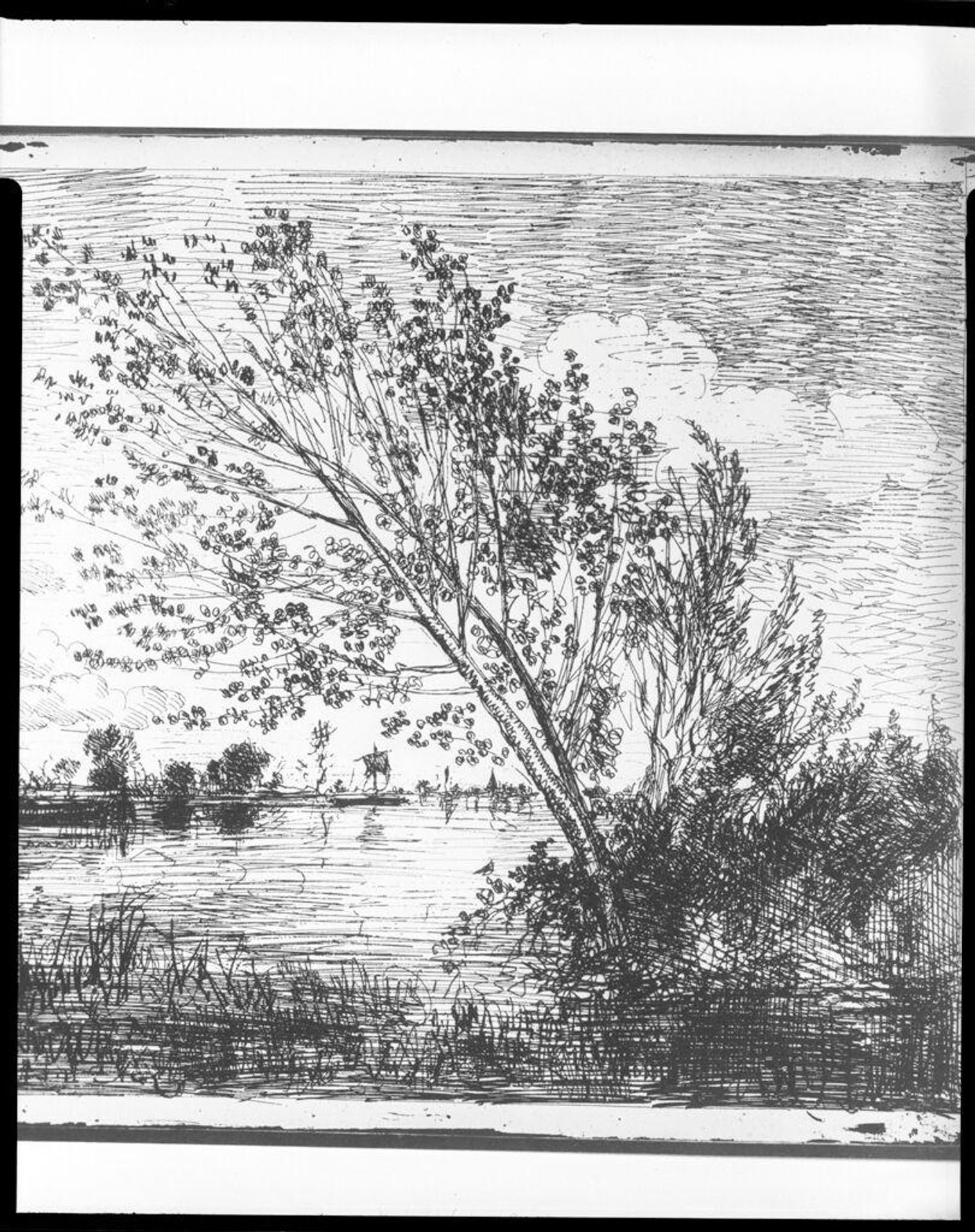
The Clump of Alders


Listen to curator's interpretation
Curatorial notes
Editor: Daubigny’s "The Clump of Alders" is a striking, monochromatic piece. The stark contrasts create a sense of isolation, almost like a landscape devoid of human touch, despite its subtle inclusion of a figure in the background. What can you tell me about it? Curator: This work speaks to Daubigny’s engagement with the Barbizon School's ideals, but also challenges traditional notions of landscape. Consider the socio-political context. France at the time was undergoing massive industrialization. How might Daubigny's focus on the untouched, seemingly "natural" landscape be a commentary on that? Editor: So, it’s not just a pretty picture; it's a statement. A way to reclaim an idea of purity or escape industrialization? Curator: Precisely. The very act of depicting this scene elevates it, suggesting a value system that prioritizes nature over progress, perhaps a critique of the societal forces at play. Editor: That gives the work a whole new dimension. Thanks for sharing your insights. Curator: My pleasure. It's crucial to examine art through the lens of its time, questioning the narratives it both upholds and challenges.