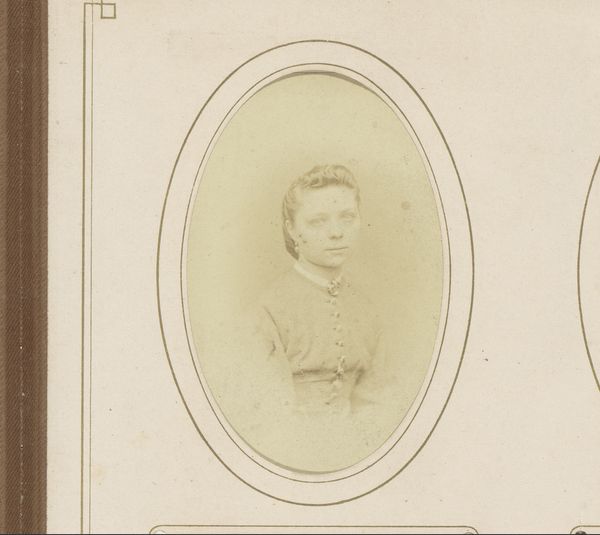
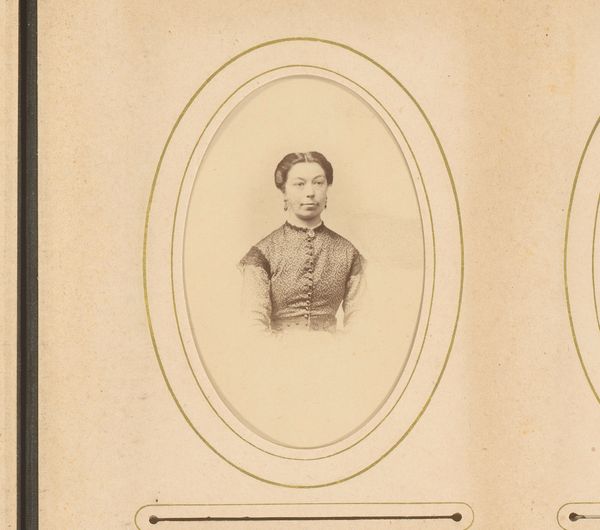
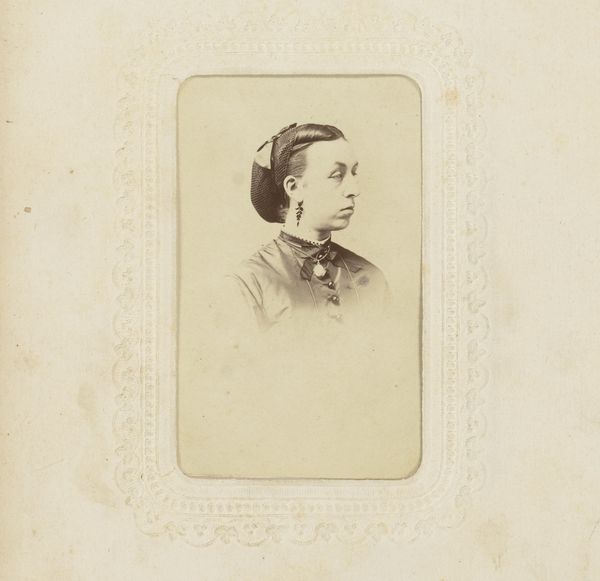
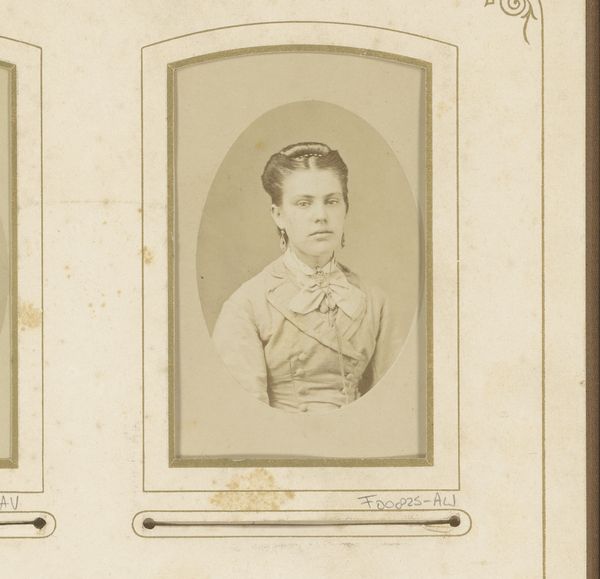
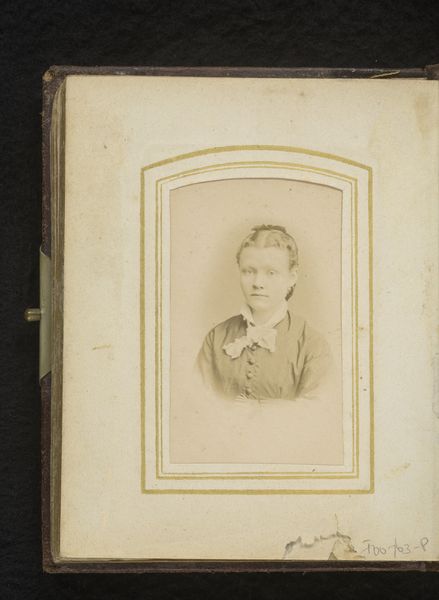
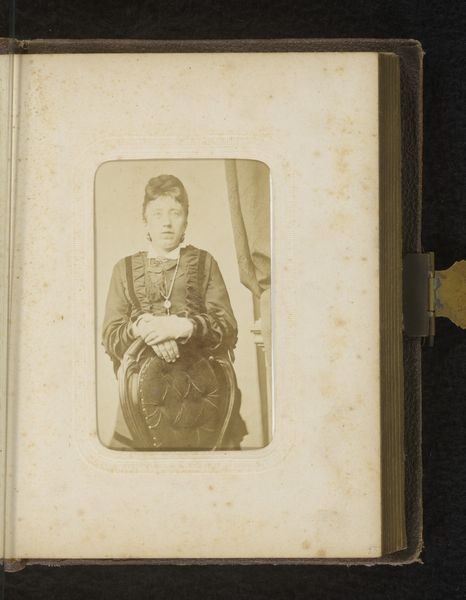
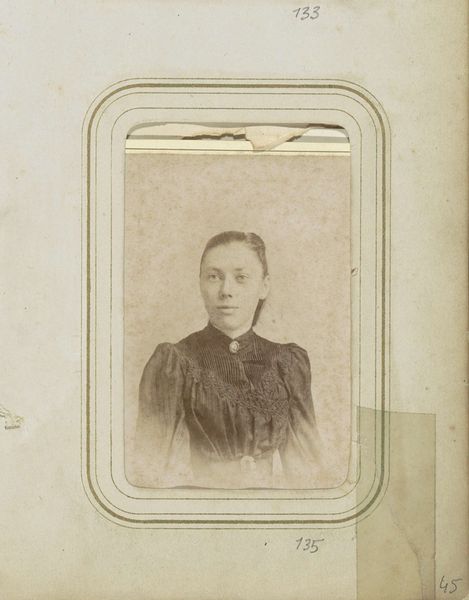
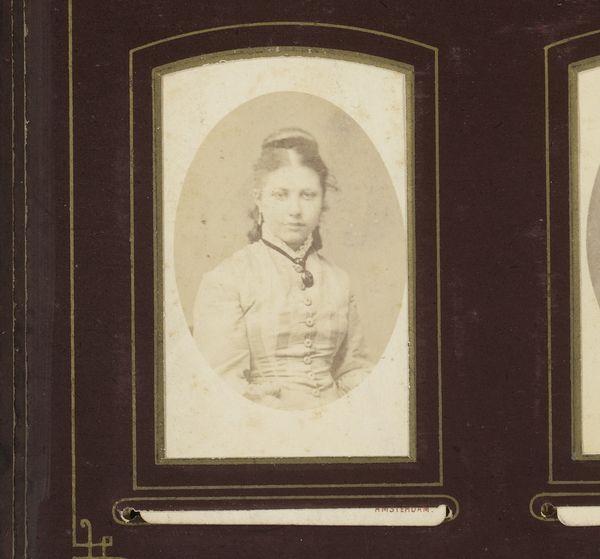
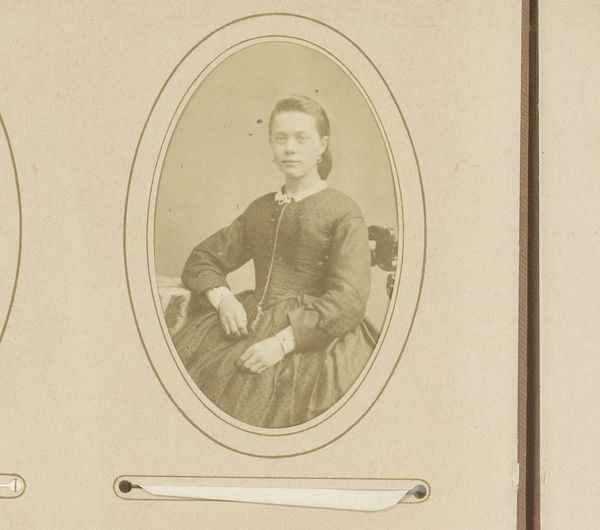
Portret van een jonge vrouw, aangeduid als Mlle. Pesimple 1869 - 1881
0:00
0:00

photography, albumen-print
#
portrait
#
photography
#
albumen-print
Dimensions: height 105 mm, width 63 mm
Copyright: Rijks Museum: Open Domain
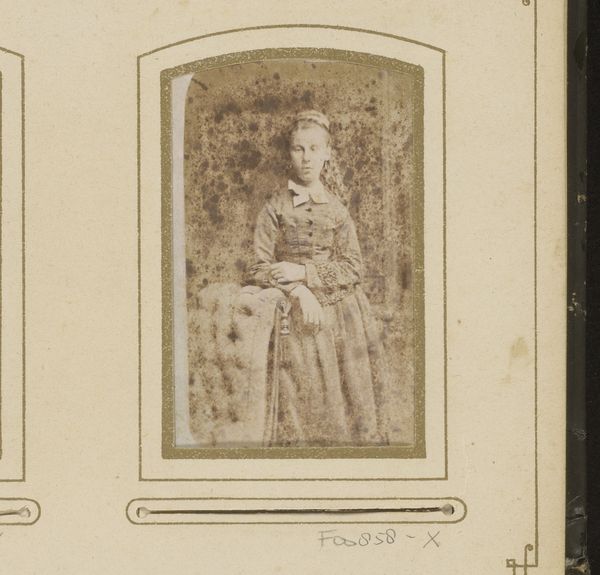
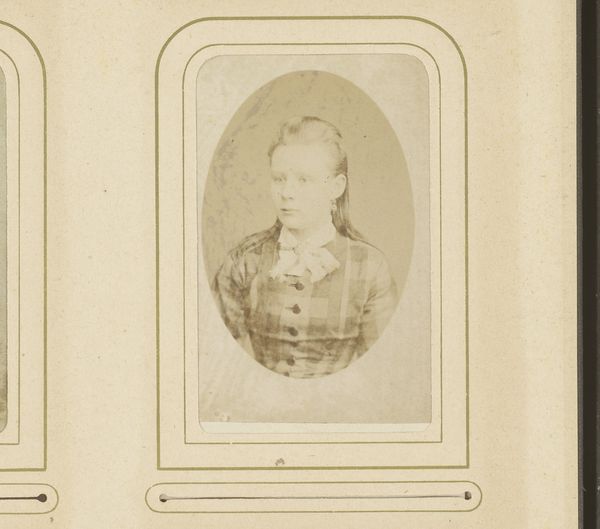
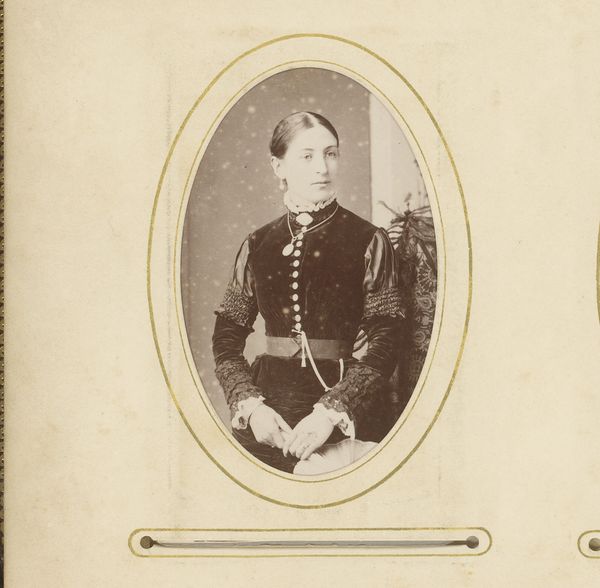
Pierre Auguste Etienne Burgaud made this portrait of a young woman, possibly named Mlle. Pesimple, using photography in France sometime in the late 19th century. The image's meaning comes from its social context as much as its visual elements. Photography at this time was becoming more accessible, extending the possibility of portraiture beyond the wealthy elite. The composition, with its oval frame and formal pose, echoes traditional painted portraits but at a fraction of the cost. It's interesting to consider who Mlle. Pesimple was, what her social standing was, and why she had her photograph taken. Was this an aspirational image, mimicking the aristocracy? Or was it a more personal memento? Historians can use sources such as studio records, social registers, and fashion archives to understand the cultural significance of photographs like these. By understanding the social and institutional conditions of its creation, we can better understand the meaning and cultural relevance of this seemingly simple portrait.
Comments
No comments
Be the first to comment and join the conversation on the ultimate creative platform.
 Collect
 React
React Comment
More like this