1615
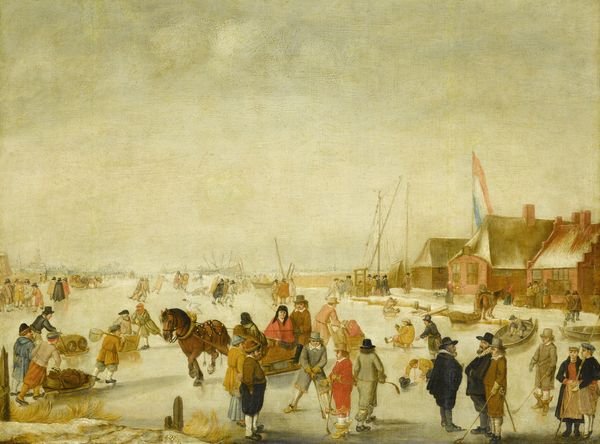
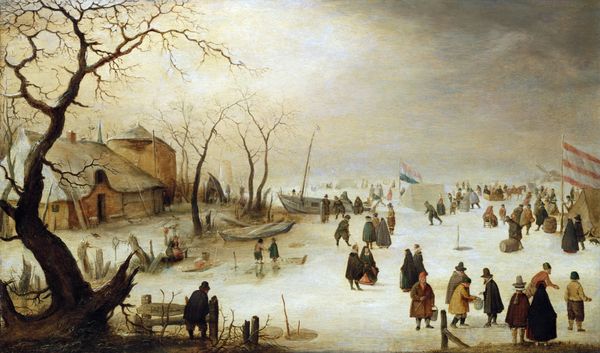
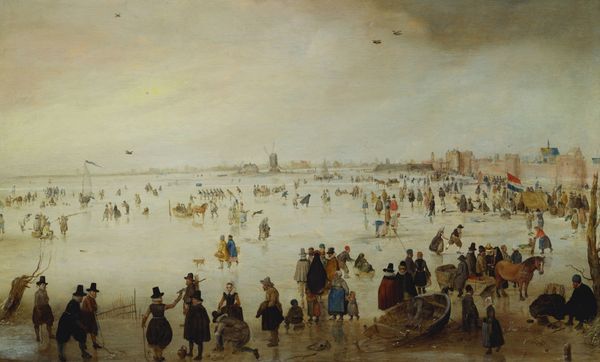
Winter Landscape on the River Ijesel near Kampen in the Netherlands

Listen to curator's interpretation
Curatorial notes
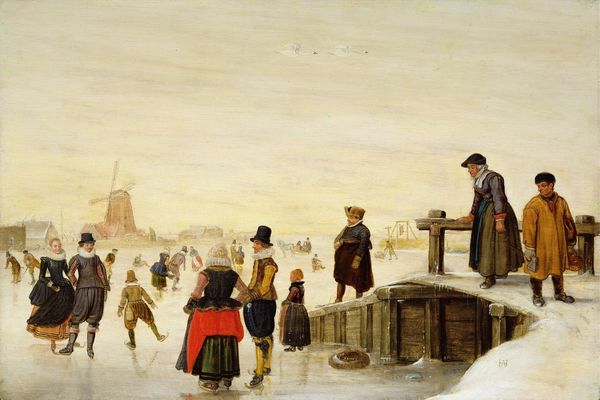
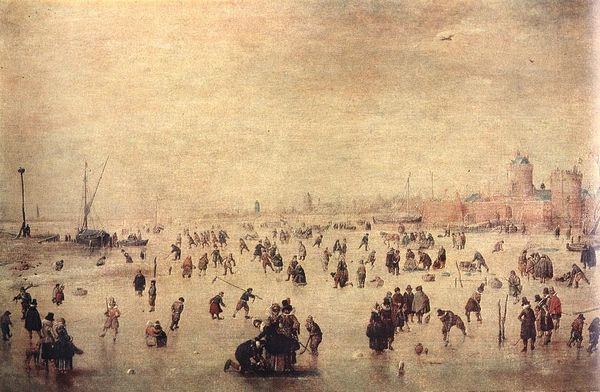
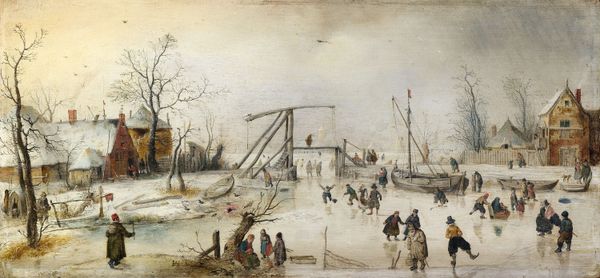
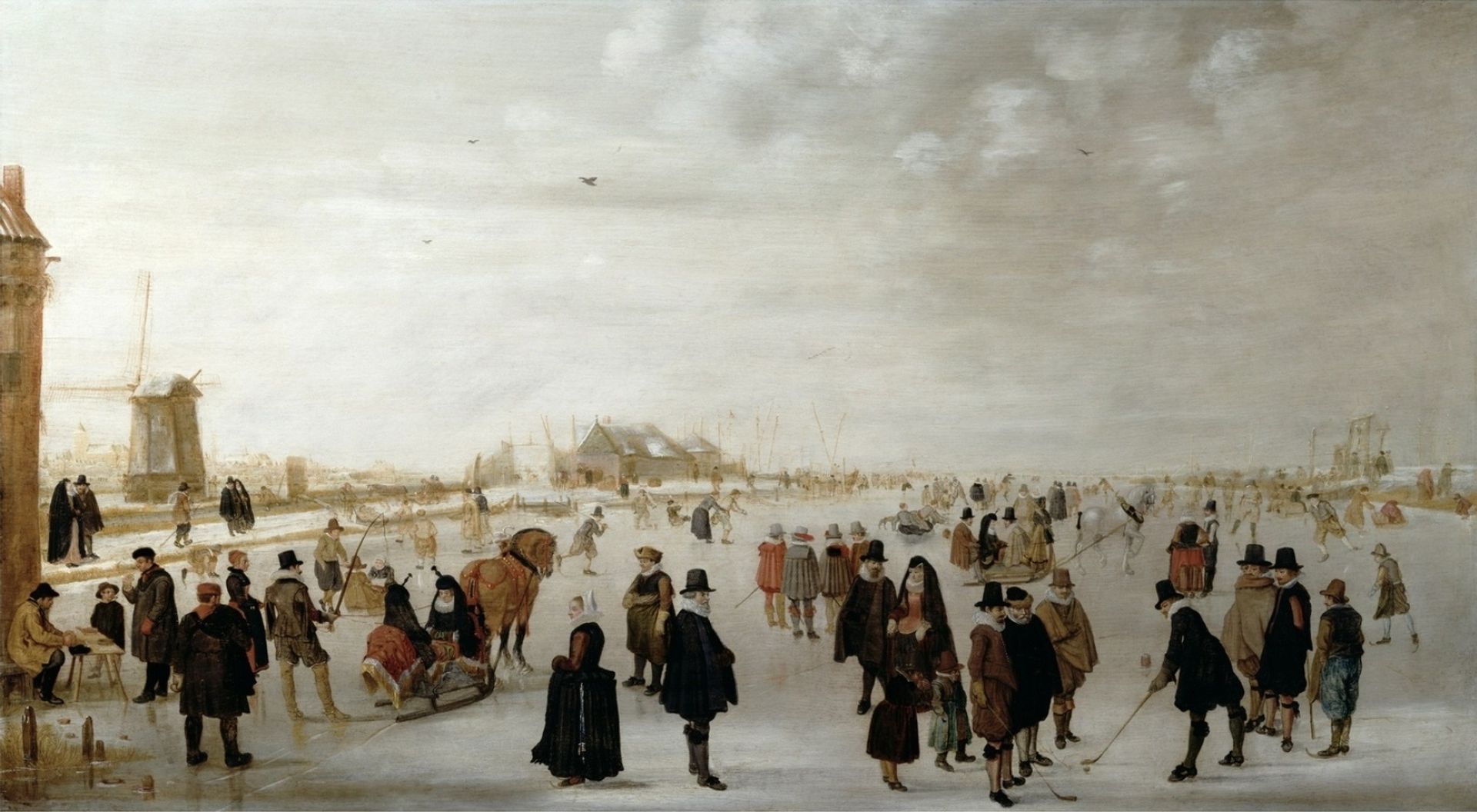
Editor: So, this is Hendrick Avercamp's "Winter Landscape on the River Ijsel near Kampen in the Netherlands," painted in 1615 using oil on panel. It's so detailed! It gives the impression of a bustling town square, except it's all taking place on a frozen river. What draws your attention when you look at this scene? Curator: The frozen river serves almost as a mirror reflecting not only the day-to-day activities of the Dutch Golden Age but also echoes of deeper, primal human impulses. Note how Avercamp uses the visual language of everyday life. Skating, games – these become symbols of both social cohesion and individual expression within a community facing a shared environment. What does the image evoke for you on an emotional level? Editor: It feels very lively and communal. The painting makes winter look like an occasion. I’m thinking about how we isolate ourselves now. Was it really like this? Curator: Avercamp uses winter not just as a backdrop but as a catalyst, a container for all sorts of interactions that bind society. Think of the frozen river as a stage, setting the scene for an almost carnivalesque event where social strata mix in this icy theatre. Can you spot figures from different social classes mingling? Editor: Yes, I see that! Some are well-dressed, and others appear to be laborers. It’s like he’s intentionally bringing them together. What about the windmill? Is there a meaning behind its inclusion? Curator: Indeed. The windmill symbolizes the ingenuity and industriousness of the Dutch people. But it is a powerful presence in the landscape, showing not only their progress but also the relationship between humanity and its environment. What emotional tension do you see there, if any? Editor: That's fascinating! I suppose there's a tension between nature's power to freeze the river and humanity's attempt to control and utilize it and the land for their benefit. I see so much more now, seeing beyond the idyllic scene of the Dutch Golden Age. Curator: And so, art history offers a glimpse into the collective conscious and cultural memory. Seeing an old painting differently by unlocking how symbols can shape history helps see the present clearly.