drawing, pencil
#
portrait
#
drawing
#
charcoal drawing
#
figuration
#
pencil drawing
#
pencil
#
genre-painting
#
realism
Dimensions: height 435 mm, width 280 mm
Copyright: Rijks Museum: Open Domain
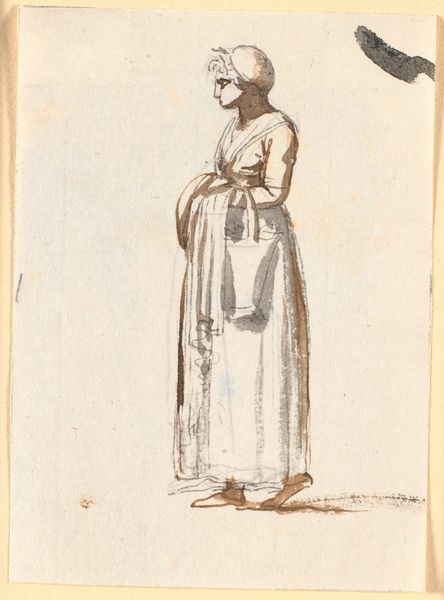
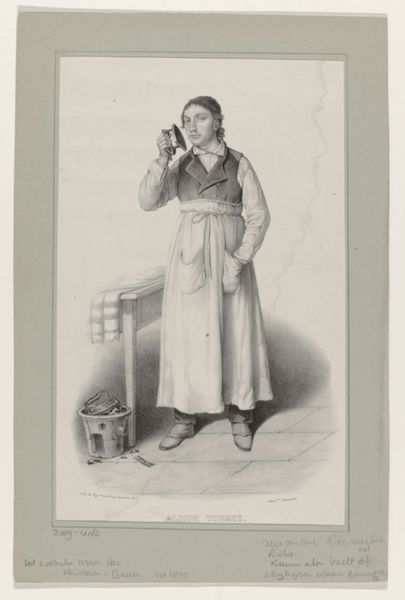
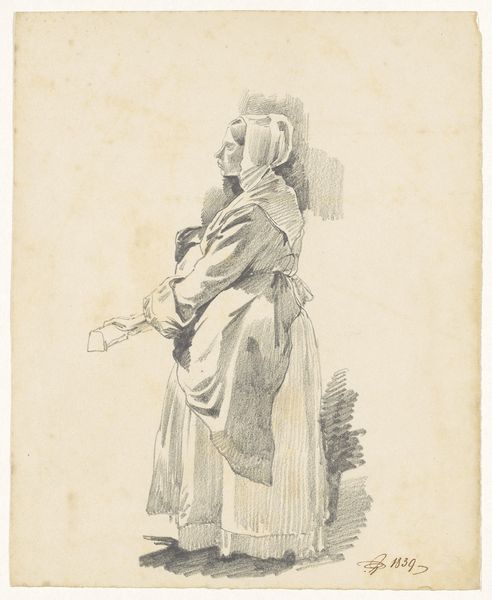
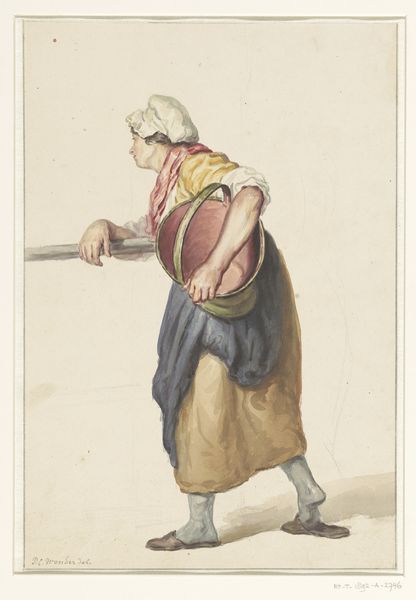
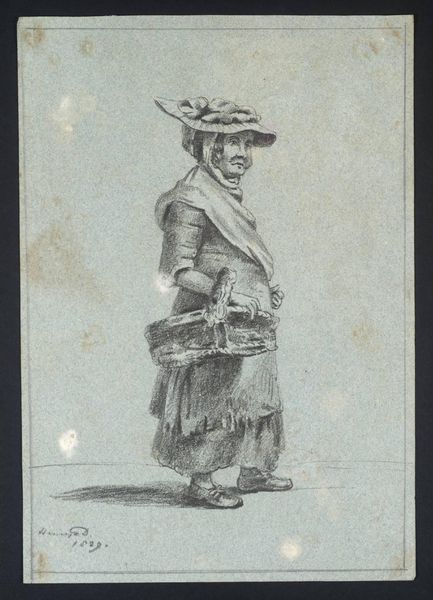
Editor: This drawing, "Standing Woman Emptying a Bucket," dating roughly from 1809 to 1869, is by Alexander Cranendoncq. It’s rendered in pencil and other drawing media. I find myself focusing on the textures – the rough material of her clothes, the cool, smooth metal of the bucket. What stands out to you? Curator: I'm drawn to the way Cranendoncq represents labor. The woman’s body, her stance, the very act of emptying that bucket speaks to the physical demands placed on working-class individuals. We have to consider the bucket, the water, the clothes—each a product of material processes and available technology of the time. Editor: That makes me think about the absence of a specific narrative. She’s just…emptying a bucket. Does the everyday nature of the task lessen its significance? Curator: Not at all! It amplifies it. Genre painting like this offers a glimpse into the lived experience. Consider the production of the materials, the cloth of her dress, perhaps even where the water comes from. This is all tied to resources, industry, and ultimately, social structures. The drawing is not just an image, but also evidence of the artist’s labour and materials and those depicted within it. What kind of social access and labour conditions might Cranendoncq experienced while creating this drawing? Editor: I see your point. It’s easy to overlook the sheer amount of effort involved in obtaining basic necessities like water. Looking closely at the drawing of the bucket itself I imagine how those details required technical skill and many attempts with graphite. Curator: Precisely! We see the intersection of the woman’s physical work and the artist’s skillful labour on display here. Focusing on those connections changes how we appreciate both. Editor: I definitely will never look at these "simple" genre scenes in the same way now. Thanks.
Comments
No comments
Be the first to comment and join the conversation on the ultimate creative platform.
 Collect
 React
React Comment
More like this