About this artwork
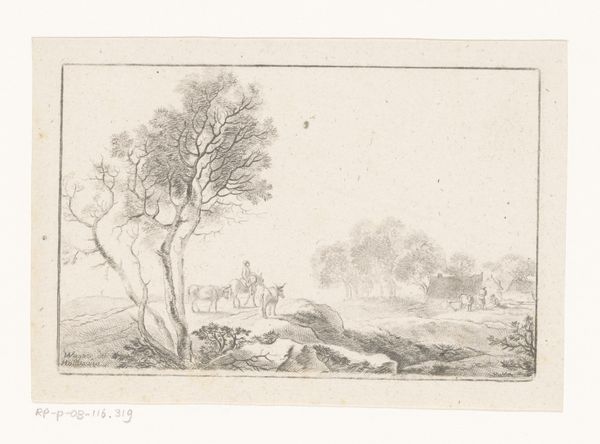
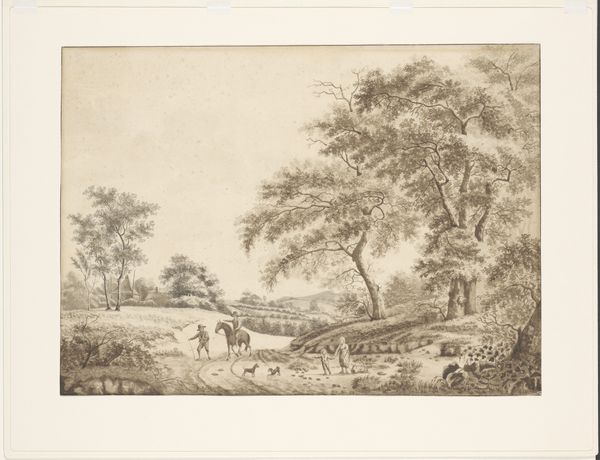
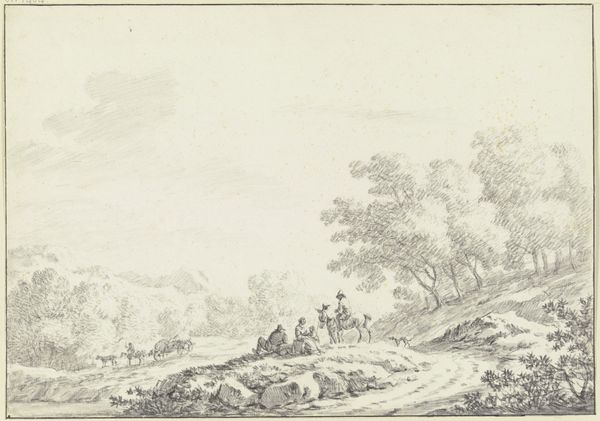
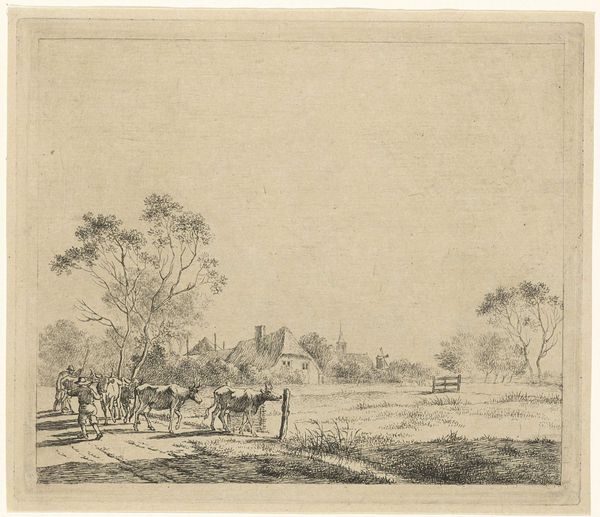
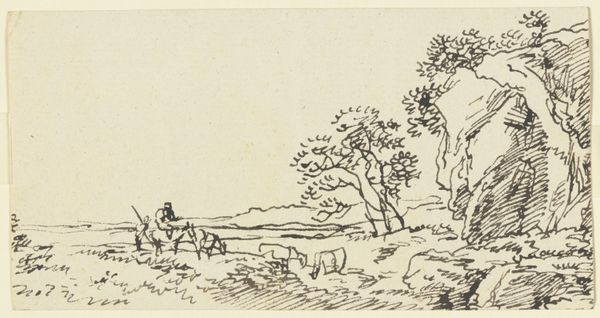
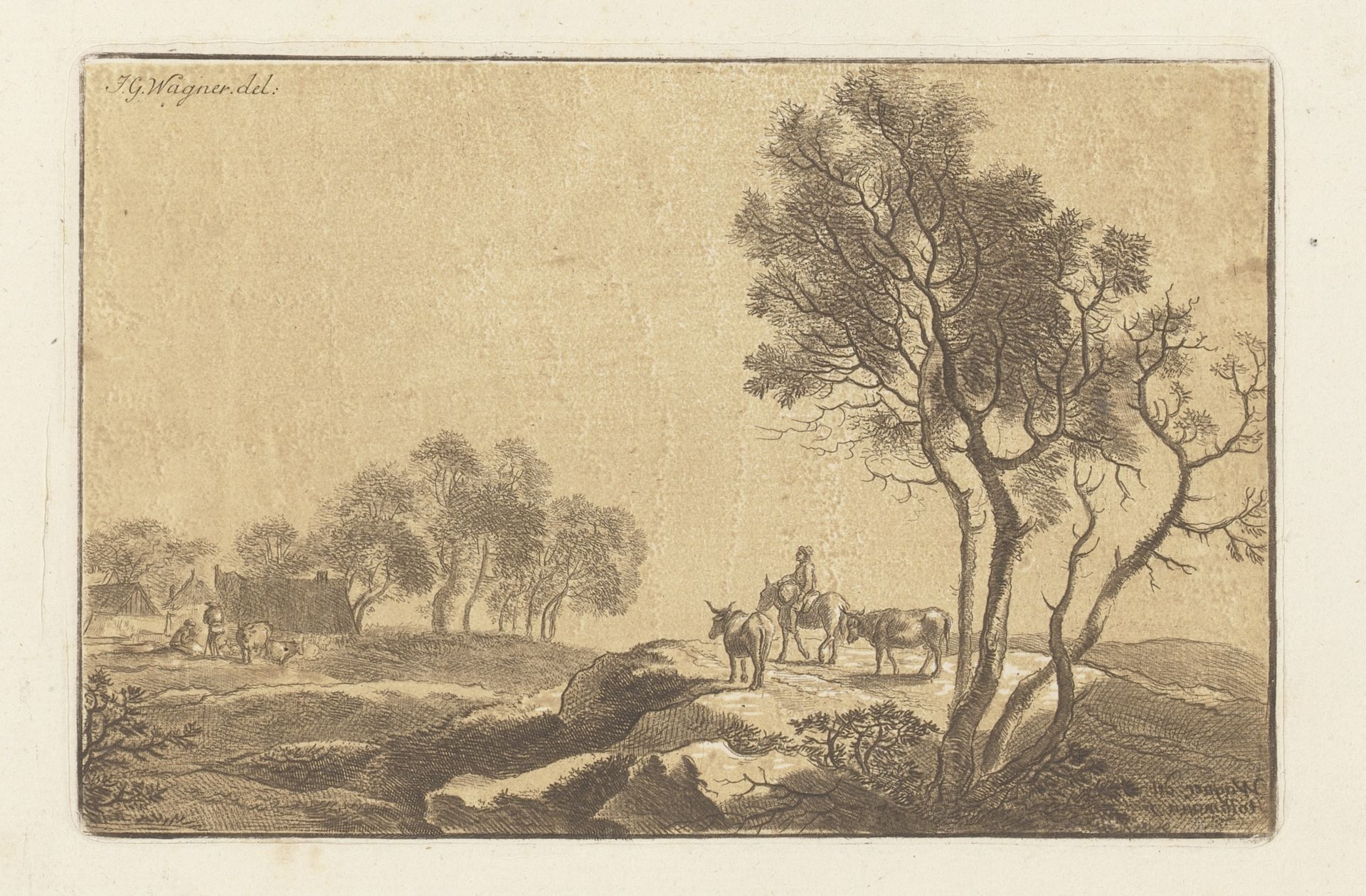
Carl Friedrich Holtzmann produced this landscape with a shepherd on horseback using etching, a printmaking technique, likely sometime in the late 18th century. This tranquil scene, typical of the period in Germany, presents a romanticized view of rural life. Consider the political context: the late 1700s were a time of upheaval, with the French Revolution challenging established hierarchies. Pictures like this, commissioned by wealthy patrons, offered an idealized, stable vision of society, where everyone knew their place. There's an institutional aspect here too: Holtzmann was part of a tradition of landscape art fostered by academies, which promoted certain styles and subjects. Was this print intended for a collector's album, or for wider circulation? By studying estate records, letters, and the publications of art academies, we can better understand how art served to reinforce or subtly question the social norms of its time. The meaning of a work like this emerges from its complex interplay with social and institutional forces.

Artwork details
- Dimensions
- height 98 mm, width 151 mm
- Copyright
- Rijks Museum: Open Domain
Comments
Share your thoughts
About this artwork
Carl Friedrich Holtzmann produced this landscape with a shepherd on horseback using etching, a printmaking technique, likely sometime in the late 18th century. This tranquil scene, typical of the period in Germany, presents a romanticized view of rural life. Consider the political context: the late 1700s were a time of upheaval, with the French Revolution challenging established hierarchies. Pictures like this, commissioned by wealthy patrons, offered an idealized, stable vision of society, where everyone knew their place. There's an institutional aspect here too: Holtzmann was part of a tradition of landscape art fostered by academies, which promoted certain styles and subjects. Was this print intended for a collector's album, or for wider circulation? By studying estate records, letters, and the publications of art academies, we can better understand how art served to reinforce or subtly question the social norms of its time. The meaning of a work like this emerges from its complex interplay with social and institutional forces.
Comments
Share your thoughts