About this artwork
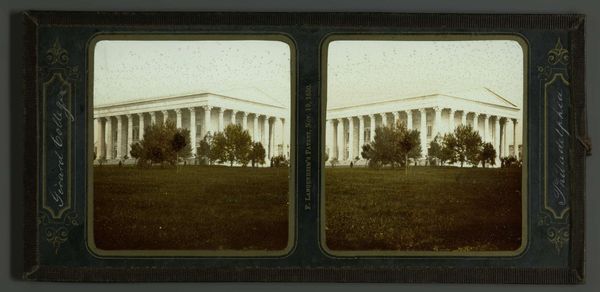
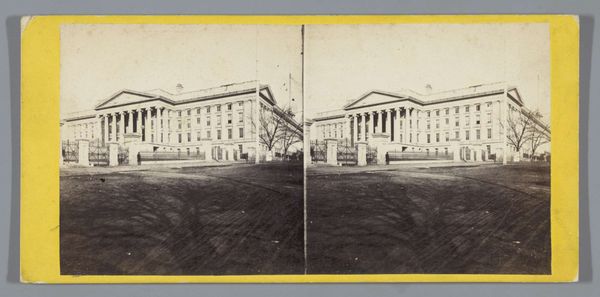
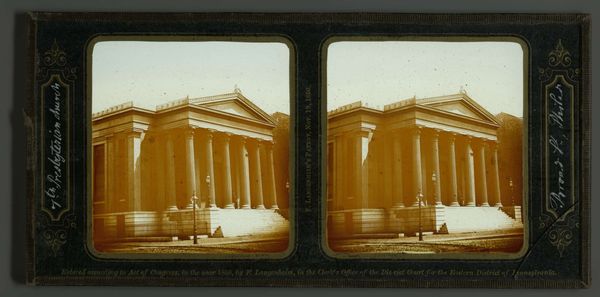
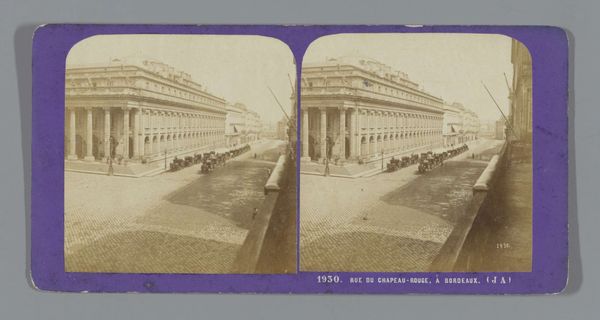
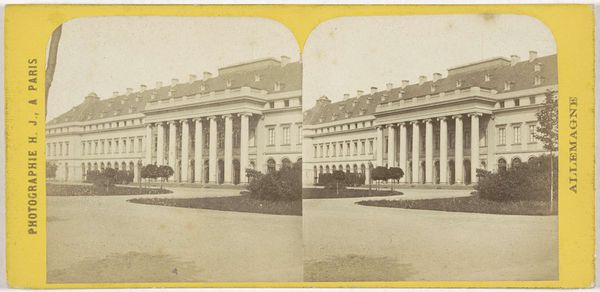
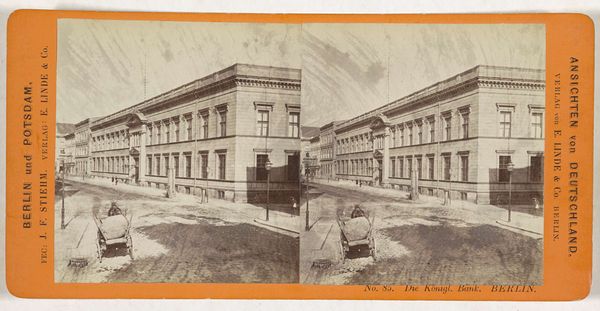
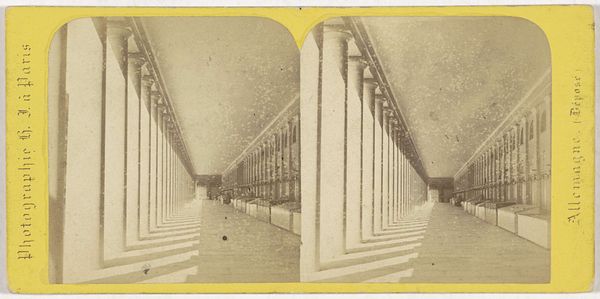
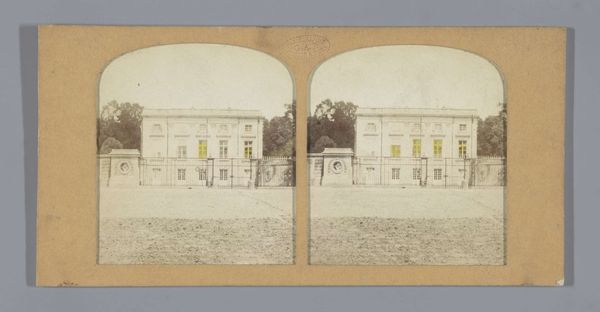
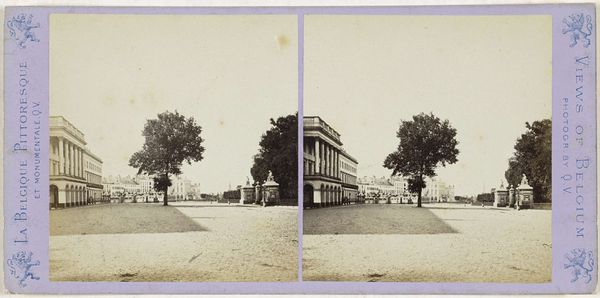
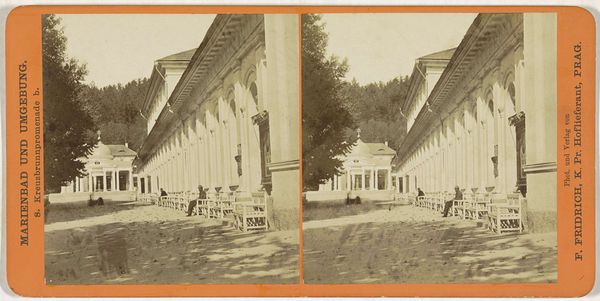
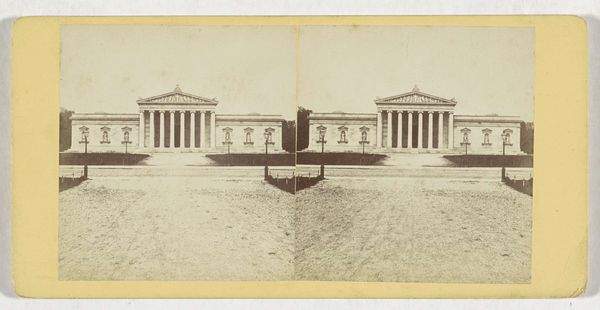
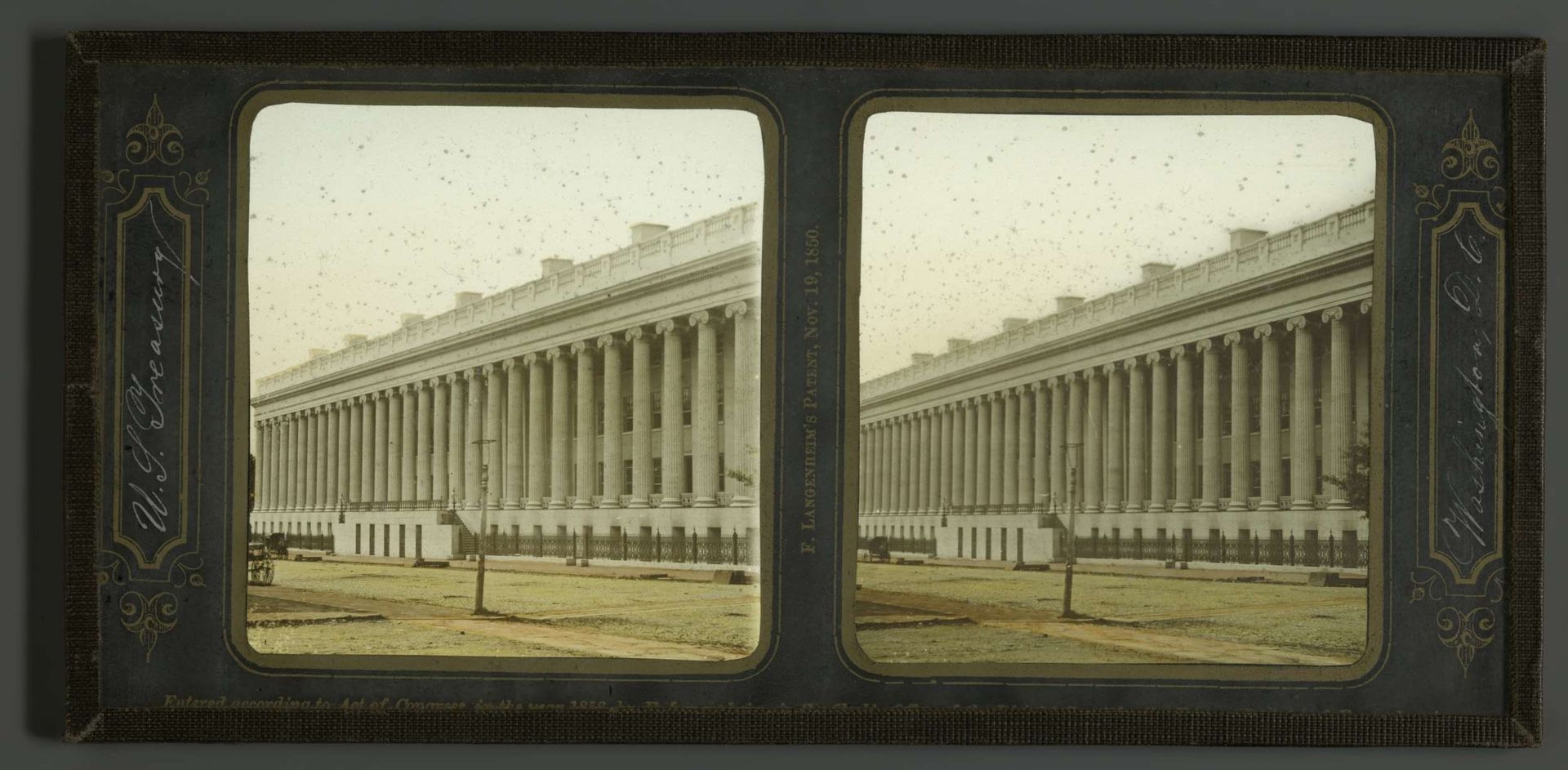
This stereoscopic image of the Treasury Building in Washington D.C. was made by Frederick Langenheim, who was among the first to produce photographs in the United States. Look closely and you’ll see two nearly identical images, presented side by side on a card. This card was then inserted into a stereoscope viewer, creating the illusion of depth. It's the Victorian version of virtual reality! Consider the relationship between Langenheim’s photographic process, and the industrial revolution, that changed the way buildings, like the Treasury, were constructed. It could be argued that photography and industrialized building construction were intrinsically linked. Mass production of steel, glass and concrete allowed for the rapid creation of these buildings. And the production of photographic images became equally widespread. The stereoscope was a kind of democratizing device, bringing the latest wonders of the world into middle class homes. By understanding the materials and techniques involved, we recognize the photograph not just as a picture, but as a potent expression of its time.
Gezicht op de Treasury Building in Washington D.C. 1856

Artwork details
- Medium
- photography, albumen-print
- Dimensions
- height 85 mm, width 175 mm
- Copyright
- Rijks Museum: Open Domain
Tags
neoclacissism
landscape
photography
cityscape
albumen-print
realism
Comments
No comments
About this artwork
This stereoscopic image of the Treasury Building in Washington D.C. was made by Frederick Langenheim, who was among the first to produce photographs in the United States. Look closely and you’ll see two nearly identical images, presented side by side on a card. This card was then inserted into a stereoscope viewer, creating the illusion of depth. It's the Victorian version of virtual reality! Consider the relationship between Langenheim’s photographic process, and the industrial revolution, that changed the way buildings, like the Treasury, were constructed. It could be argued that photography and industrialized building construction were intrinsically linked. Mass production of steel, glass and concrete allowed for the rapid creation of these buildings. And the production of photographic images became equally widespread. The stereoscope was a kind of democratizing device, bringing the latest wonders of the world into middle class homes. By understanding the materials and techniques involved, we recognize the photograph not just as a picture, but as a potent expression of its time.
Comments
No comments