About this artwork
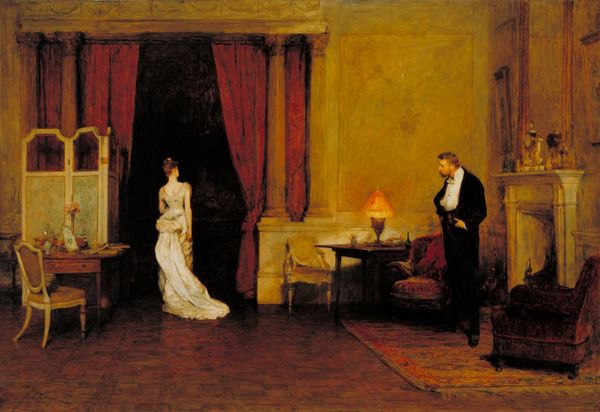
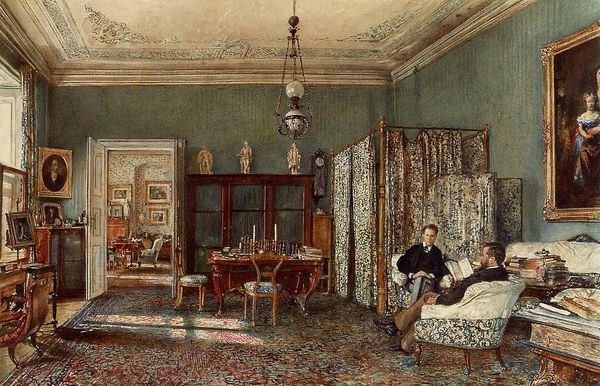
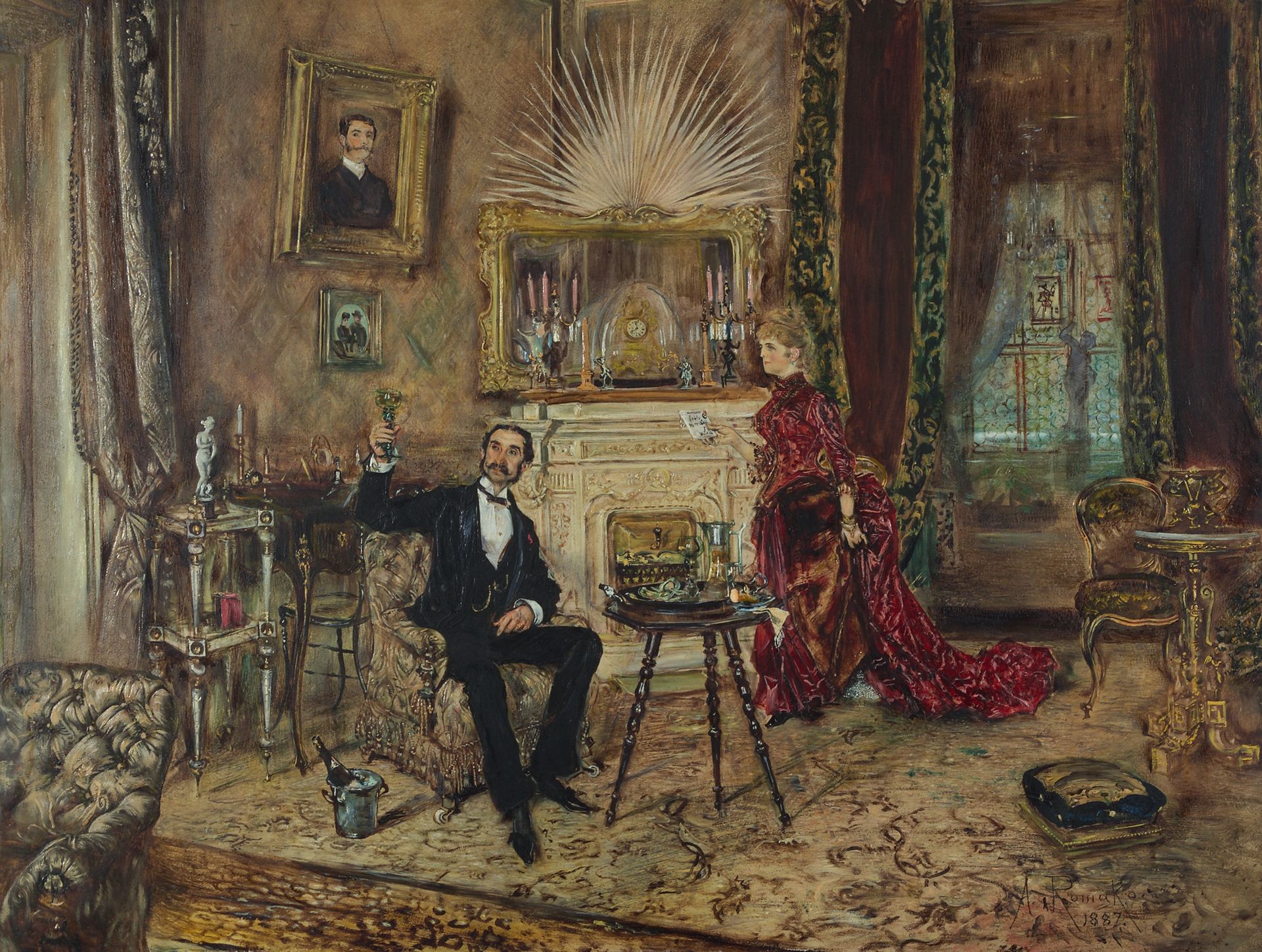
Anton Romako painted this artwork of a Makart salon interior with a lady and a seated gentleman, likely in Vienna, using oil on canvas. The painting evokes a sense of bourgeois opulence, yet with a shadowy, almost theatrical quality. The composition centres around a lavishly decorated room where light and shadow play dramatically across the figures and furnishings. Romako masterfully employs color and texture to define the forms and spaces within the painting. The rich reds of the woman’s dress contrast with the darker tones of the man's suit, creating a dynamic visual tension. The artist's brushwork is loose, contributing to a sense of movement and spontaneity that destabilizes any fixed interpretation. The composition is almost divided, with an opening between the two figures leading towards an outdoor space. The painting functions as a commentary on the era's values, questioning ideas about representation, power, and the construction of social space. By utilizing a visual semiotic system, the painting invites us to decode its cultural codes and engage in an ongoing interpretation of its meaning.
Makart salon interior, with a lady and a seated gentleman
1887

Anton Romako
1832 - 1889Location
Vienna Museum, Vienna, AustriaArtwork details
- Dimensions
- 49 x 63 cm
- Location
- Vienna Museum, Vienna, Austria
- Copyright
- Public domain
Comments
Share your thoughts
About this artwork
Anton Romako painted this artwork of a Makart salon interior with a lady and a seated gentleman, likely in Vienna, using oil on canvas. The painting evokes a sense of bourgeois opulence, yet with a shadowy, almost theatrical quality. The composition centres around a lavishly decorated room where light and shadow play dramatically across the figures and furnishings. Romako masterfully employs color and texture to define the forms and spaces within the painting. The rich reds of the woman’s dress contrast with the darker tones of the man's suit, creating a dynamic visual tension. The artist's brushwork is loose, contributing to a sense of movement and spontaneity that destabilizes any fixed interpretation. The composition is almost divided, with an opening between the two figures leading towards an outdoor space. The painting functions as a commentary on the era's values, questioning ideas about representation, power, and the construction of social space. By utilizing a visual semiotic system, the painting invites us to decode its cultural codes and engage in an ongoing interpretation of its meaning.
Comments
Share your thoughts