1913
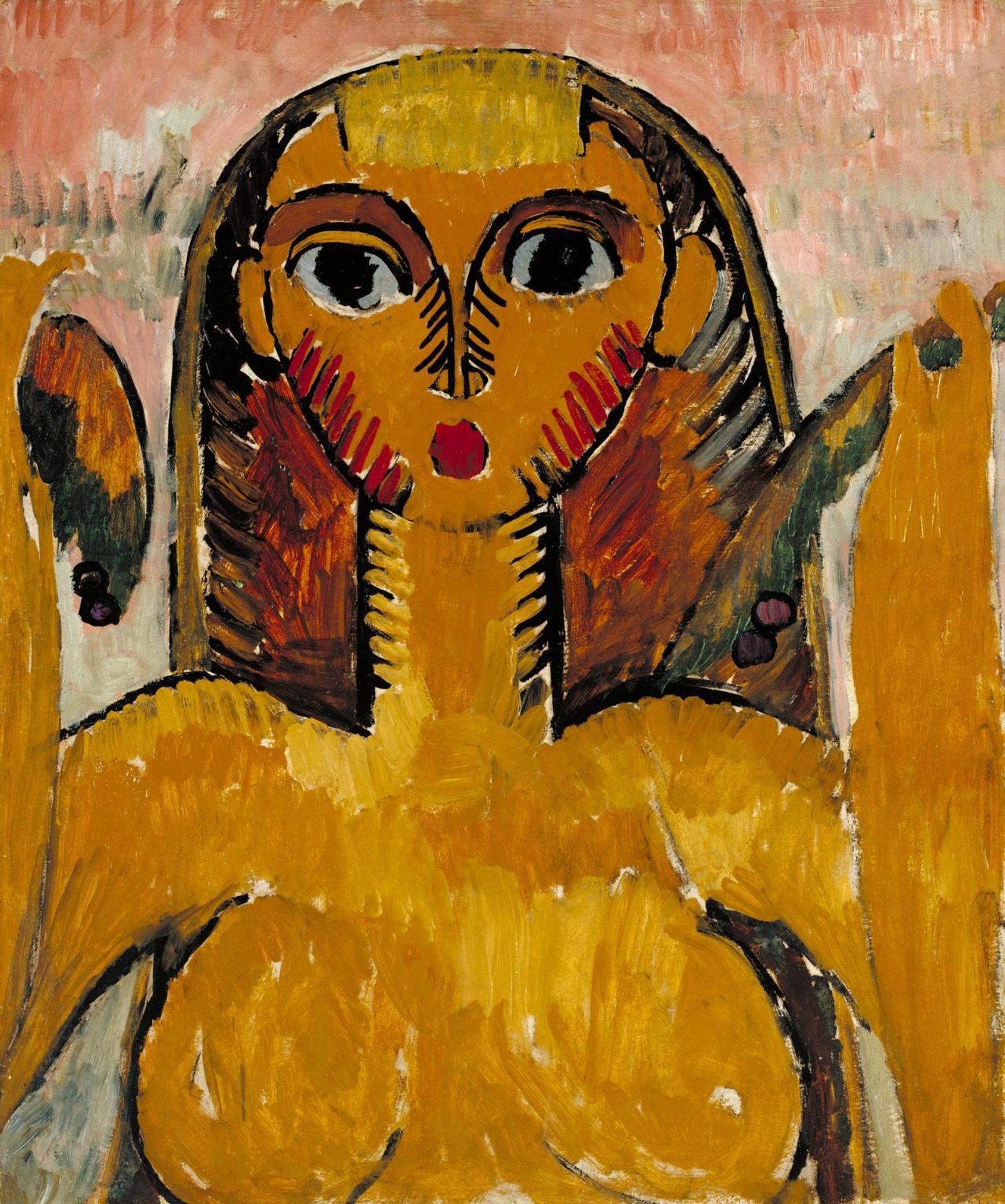
Head of Eve

Listen to curator's interpretation
Curatorial notes
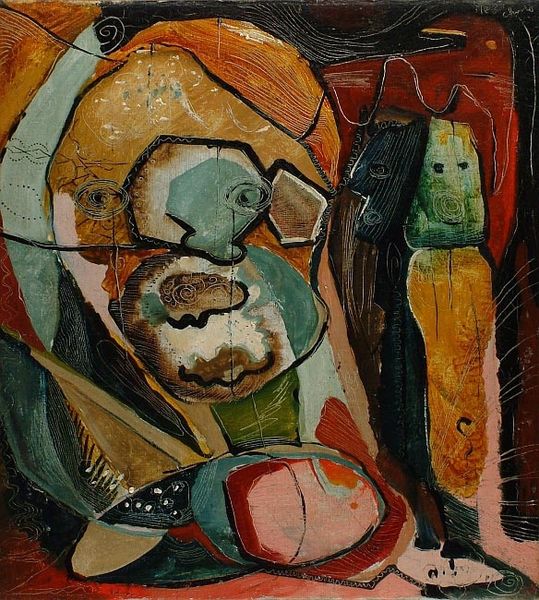
Curator: Duncan Grant's "Head of Eve," currently held at Tate Britain, presents a compelling, if somewhat unsettling, depiction of the biblical figure. Editor: Unsettling is right! The ochre palette feels almost feverish, and the raw brushstrokes definitely contribute to a mood of unease. What about the materials? It looks like a thick impasto. Curator: Yes, Grant's use of bold colors and simplified forms pulls from Primitivism, evoking a sense of ancient, almost archetypal womanhood. The figure seems to be emerging from the canvas. Editor: I’m also drawn to the texture; the thickness of the paint emphasizes the physical act of creation itself. It's a tactile experience even from a distance. Were these deliberate choices? Curator: Precisely. The figure of Eve, through Grant’s lens, embodies not just temptation and downfall, but also a primal, creative energy. The face appears mask-like, hinting at universal narratives. Editor: Ultimately, it’s the materiality that resonates most. The painting's surface becomes a record of the artist’s hand and the weight of the cultural symbol. Curator: I agree, and the symbolic weight of Eve is a fascinating element to consider with this intriguing piece. Editor: Definitely something to ponder as we move on.