c. 1811
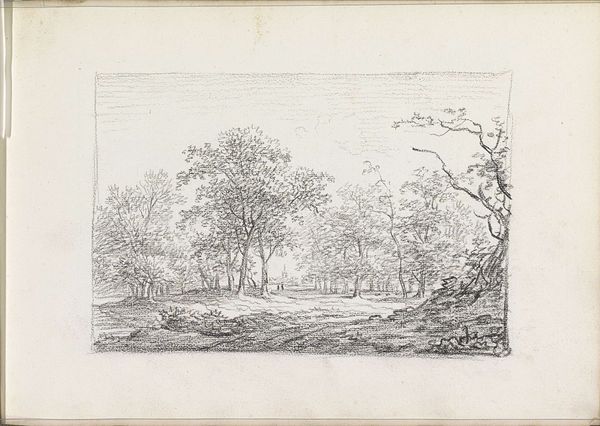
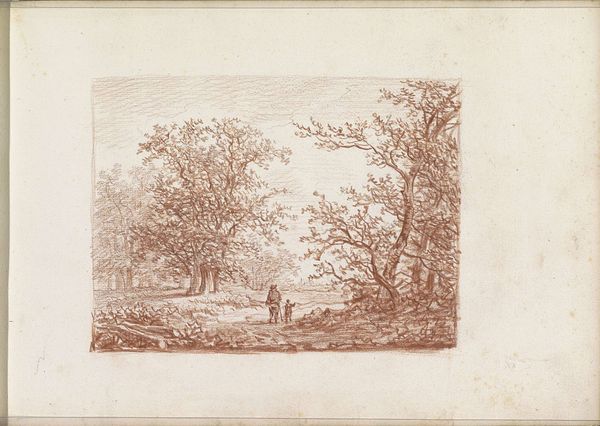
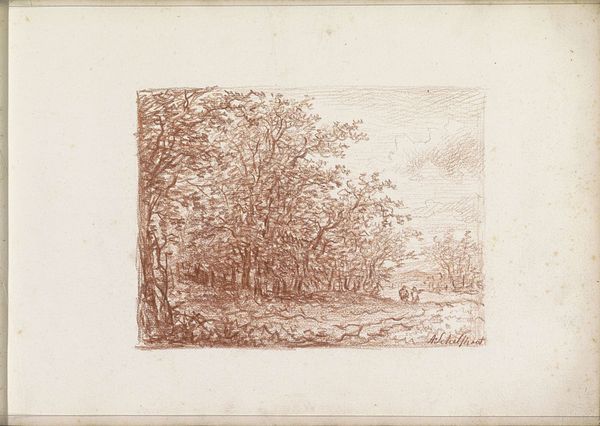
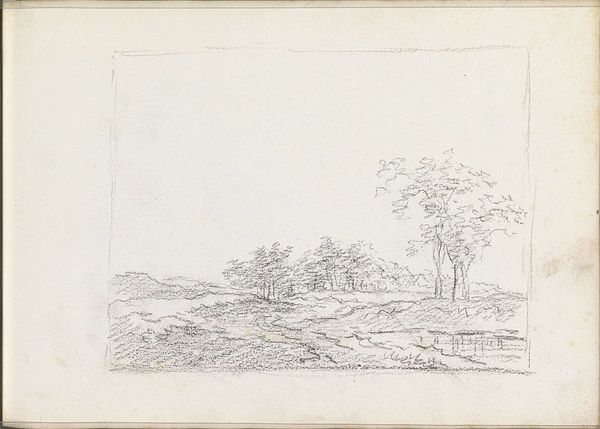
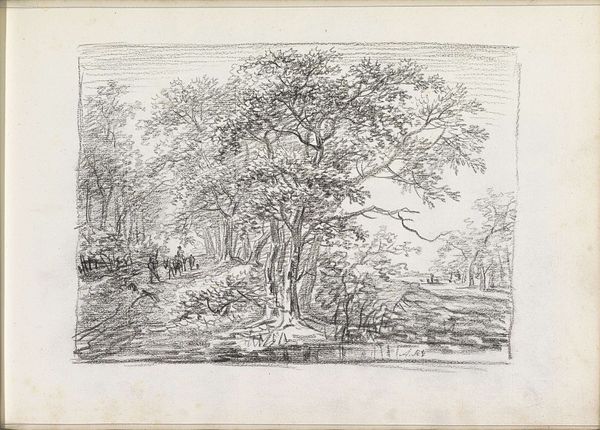
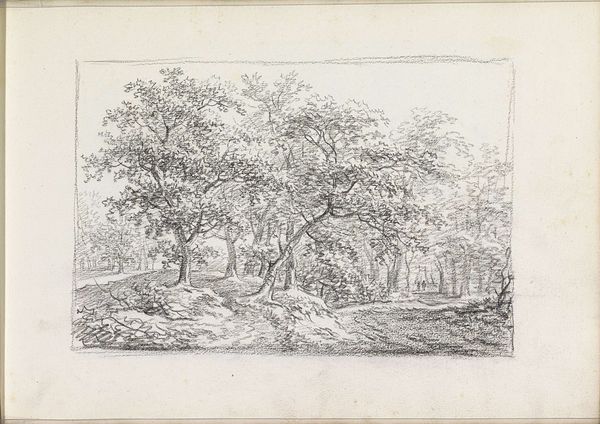
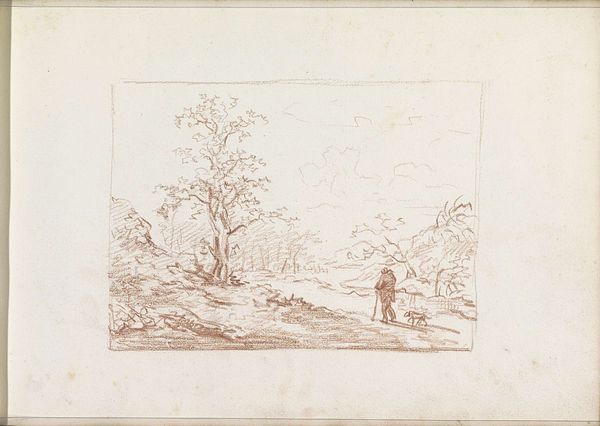
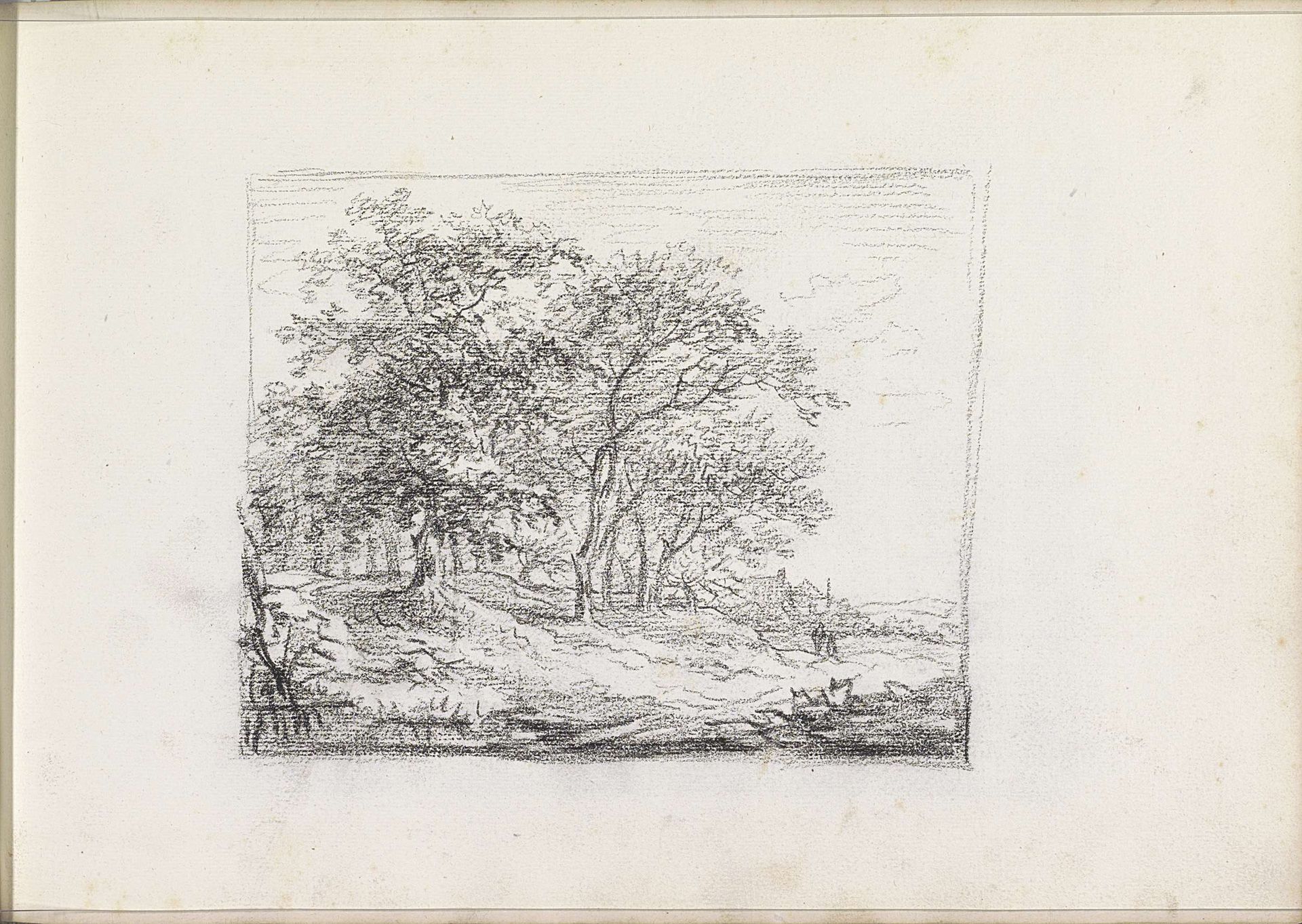
Figuren op een pad langs een bomengroep

Andreas Schelfhout
1787 - 1870Location
RijksmuseumListen to curator's interpretation
Curatorial notes
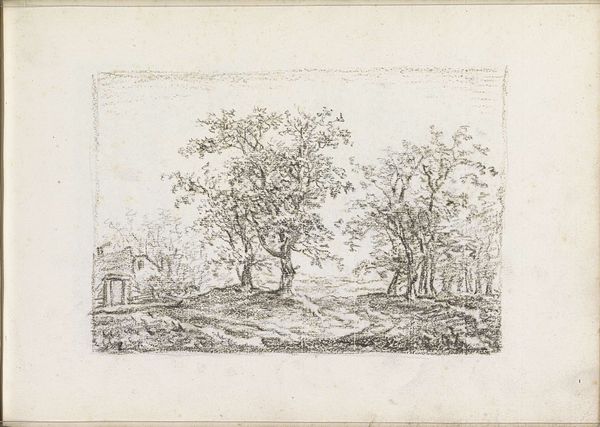
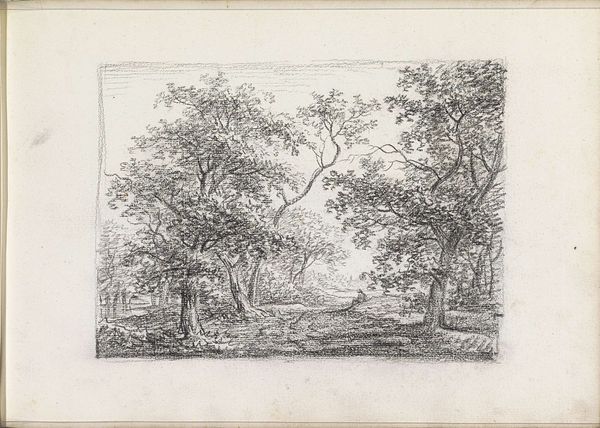
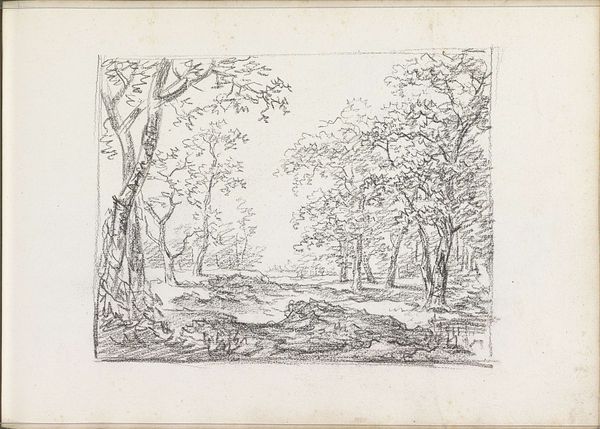
Andreas Schelfhout made this pencil drawing of figures on a path in a copse. Schelfhout belonged to a generation of Dutch landscape artists that came to prominence after the Napoleonic wars. We can see this drawing as part of the development of a national artistic identity. Artists consciously turned away from French styles. Instead they looked to earlier Dutch masters such as Jacob van Ruisdael for inspiration. They wanted to depict the natural beauty of the Netherlands. But also to show the lives of ordinary people working in the landscape. Genre paintings like this were popular with the rising middle class. The institutions of art also played a key role in fostering this artistic movement. Art academies provided training and promoted a particular vision of Dutch art. Museums began to collect and display works by living artists, shaping public taste and establishing a canon of national art. To understand more, research into the archives of art academies, exhibition catalogs, and contemporary art criticism would shed light on the artistic and cultural context of this drawing.