About this artwork
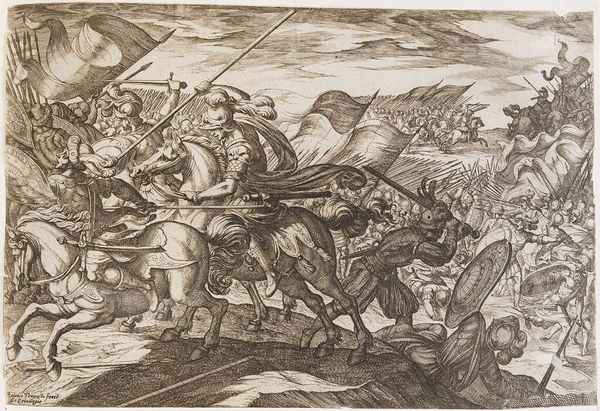
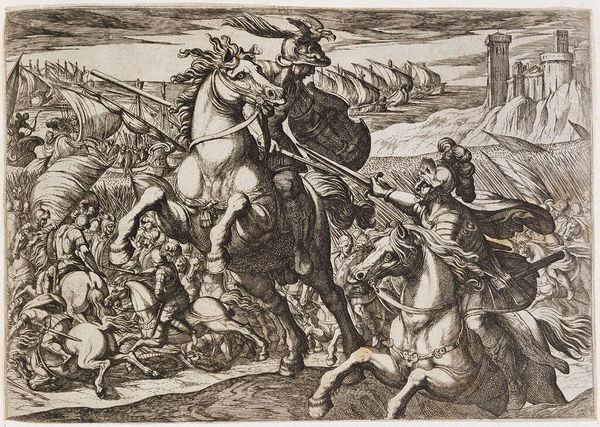
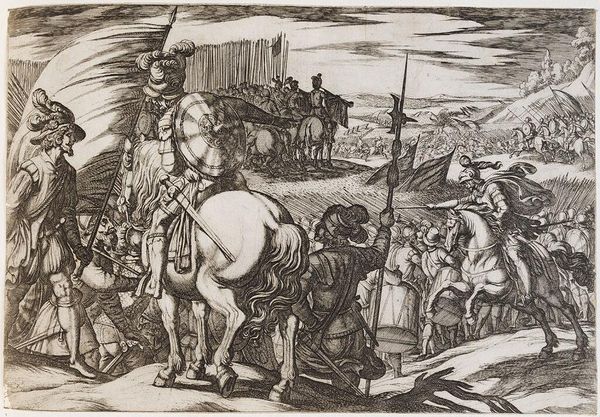
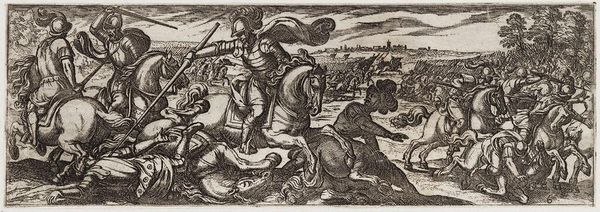
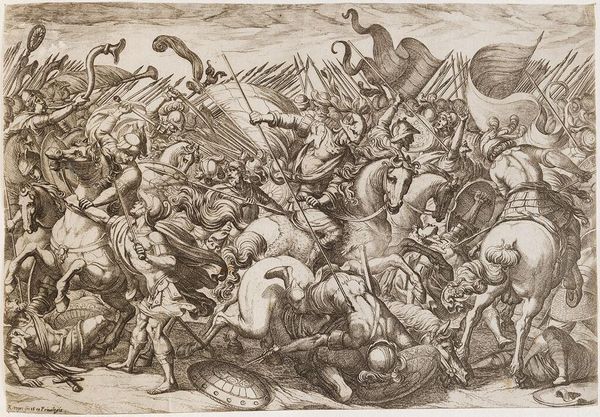
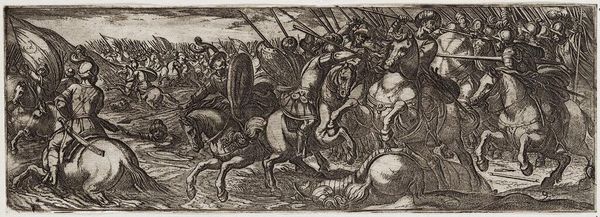
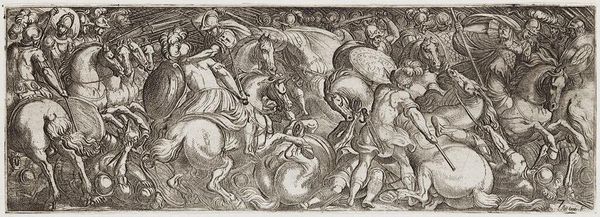
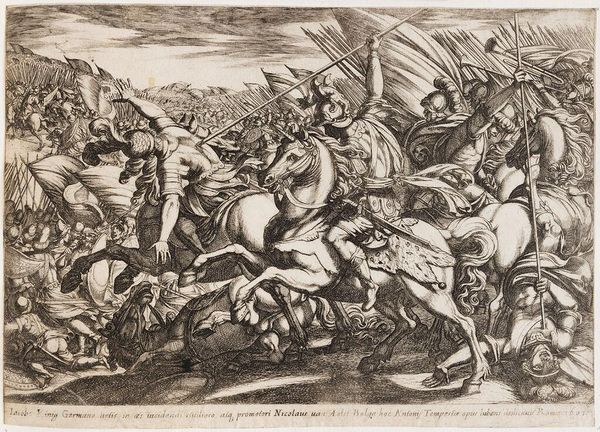
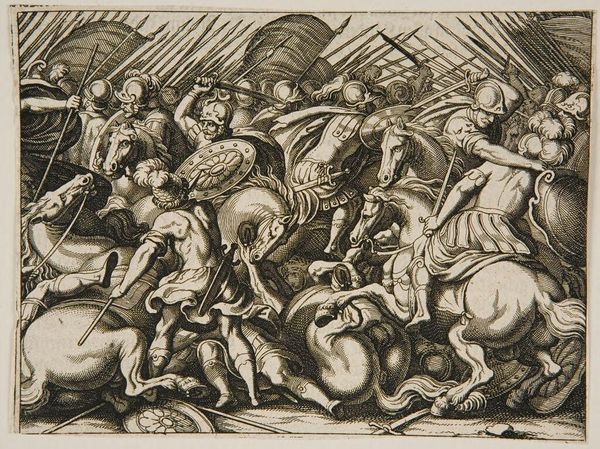
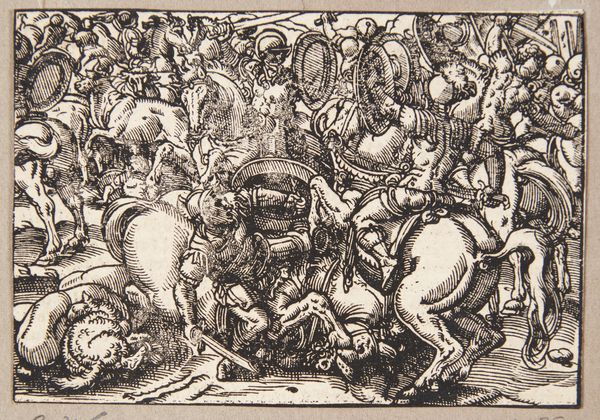
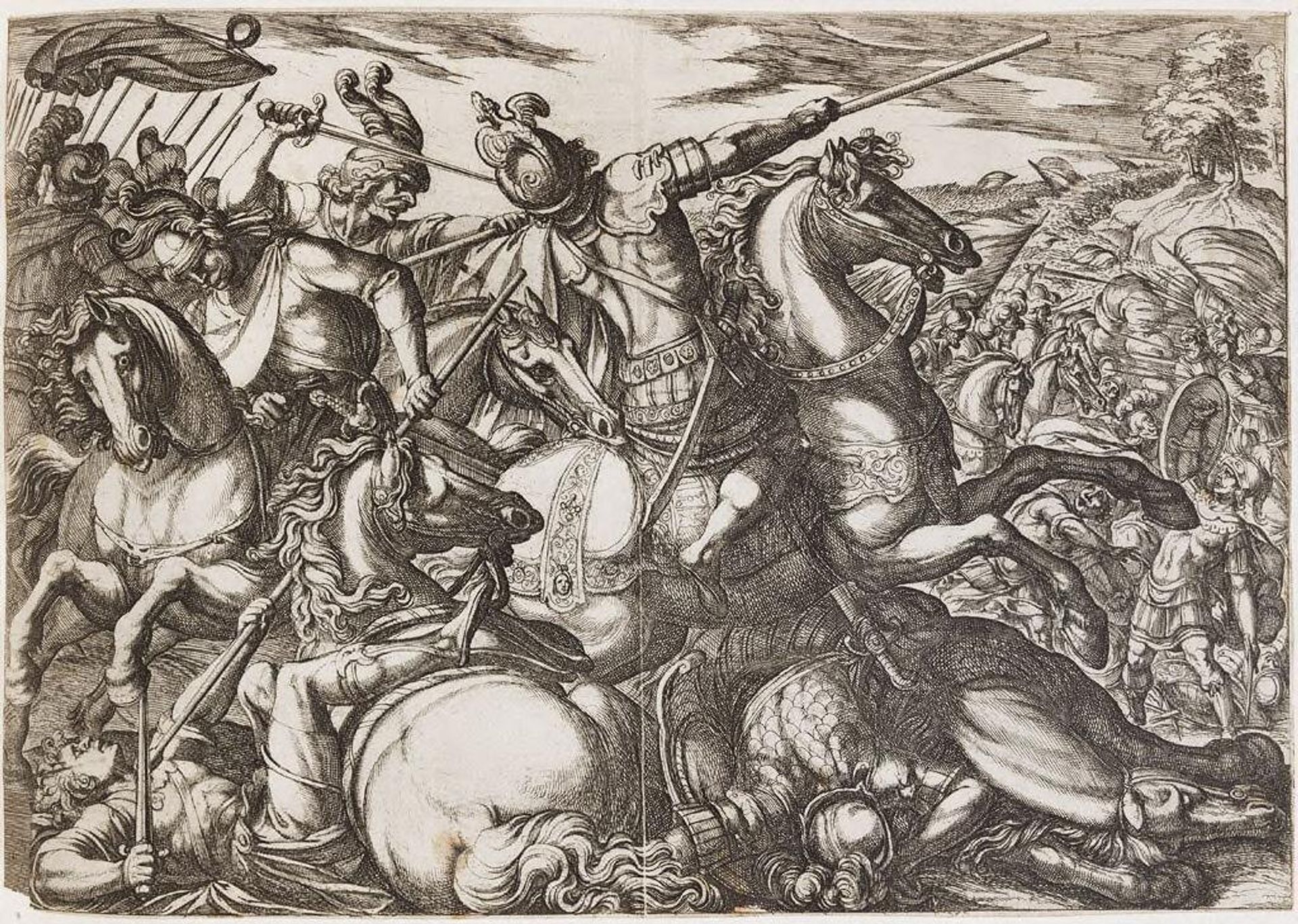
Curator: This is "Cavalry Engagement at Close Quarters," by Antonio Tempesta, an Italian artist who lived from 1555 to 1630. It's quite a whirlwind of action. Editor: It’s so intense! The way the figures are packed together, it’s almost claustrophobic. The horses are rearing, soldiers are falling… it feels like chaos. Curator: Tempesta was known for these dynamic battle scenes. He really captures the ferocity and brutality of conflict. It is, after all, a depiction of power and violence. Editor: Absolutely. And the composition emphasizes that. The tight cropping focuses our attention on the immediate struggle, obscuring any larger strategic context. Curator: Right. It's a perspective that brings us into the heart of the fray. Editor: It makes you wonder about the stories left untold, the human cost of these clashes. Curator: Indeed. It's a reminder that behind every grand historical narrative, there are countless individual experiences of suffering and loss. Editor: And that's something to keep in mind when we view historical art—the silences as well as the spectacle.
Cavalry Engagement at Close Quarters
c. 1600


Artwork details
- Location
- Harvard Art Museums
- Copyright
- CC0 1.0
Comments
Share your thoughts
About this artwork
Curator: This is "Cavalry Engagement at Close Quarters," by Antonio Tempesta, an Italian artist who lived from 1555 to 1630. It's quite a whirlwind of action. Editor: It’s so intense! The way the figures are packed together, it’s almost claustrophobic. The horses are rearing, soldiers are falling… it feels like chaos. Curator: Tempesta was known for these dynamic battle scenes. He really captures the ferocity and brutality of conflict. It is, after all, a depiction of power and violence. Editor: Absolutely. And the composition emphasizes that. The tight cropping focuses our attention on the immediate struggle, obscuring any larger strategic context. Curator: Right. It's a perspective that brings us into the heart of the fray. Editor: It makes you wonder about the stories left untold, the human cost of these clashes. Curator: Indeed. It's a reminder that behind every grand historical narrative, there are countless individual experiences of suffering and loss. Editor: And that's something to keep in mind when we view historical art—the silences as well as the spectacle.
Comments
Share your thoughts