c. 1810
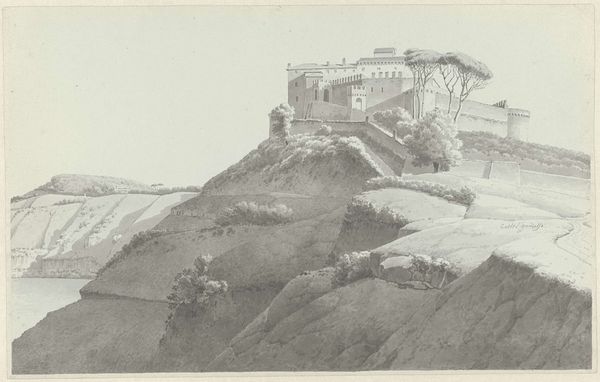
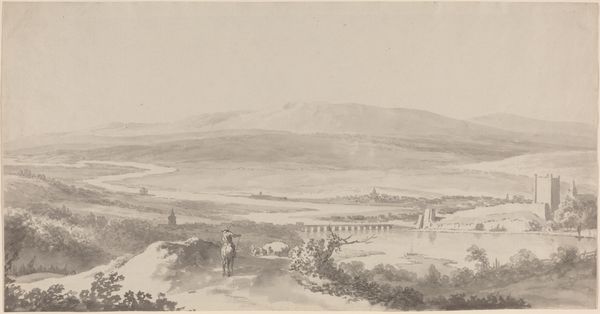
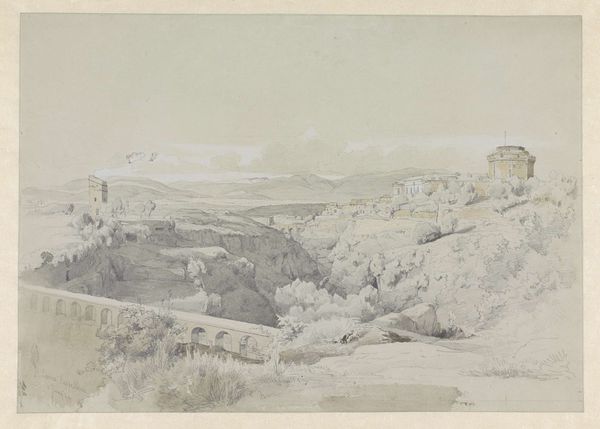
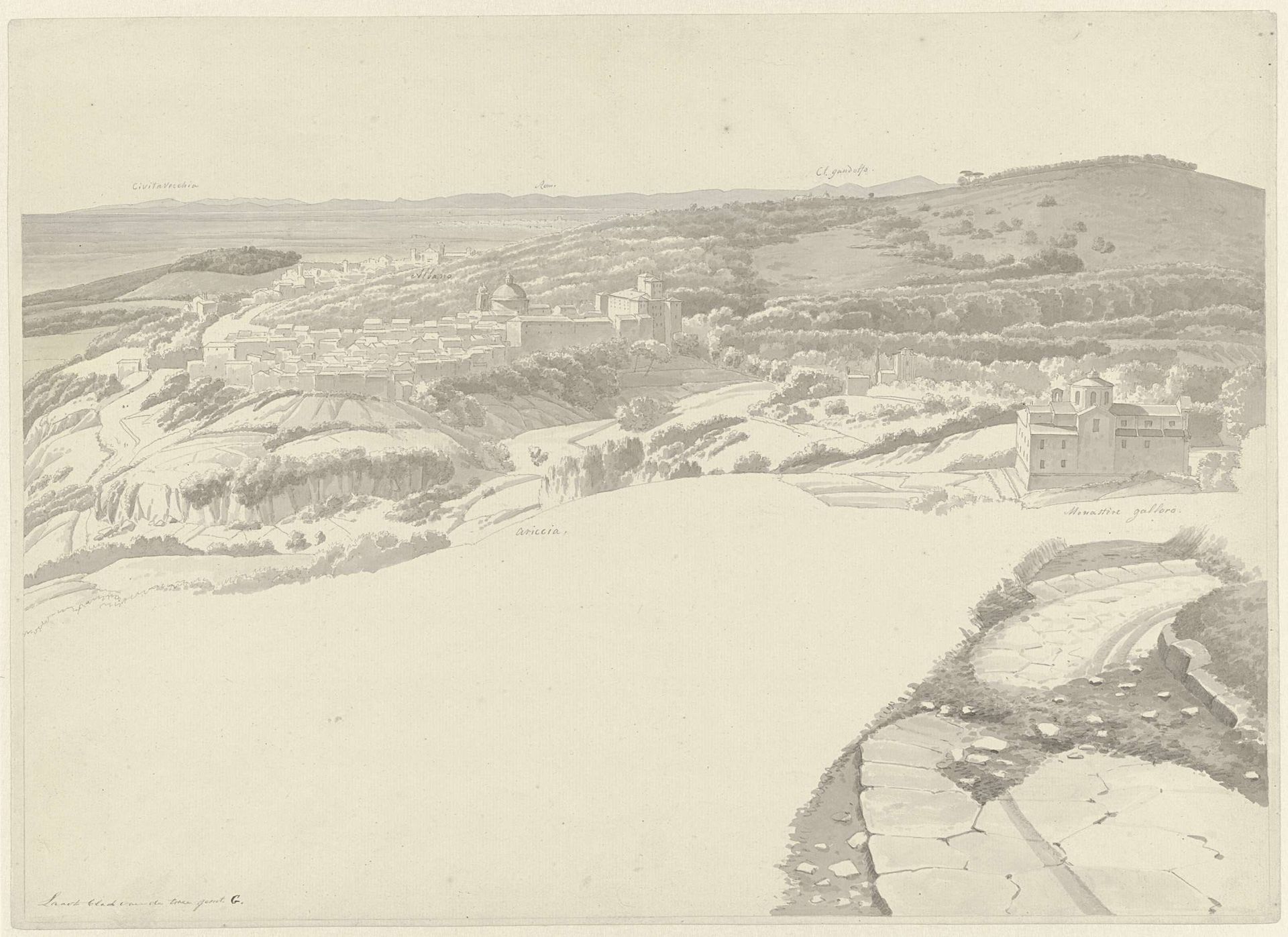
View of Ariccia from Genzano

Listen to curator's interpretation
Curatorial notes
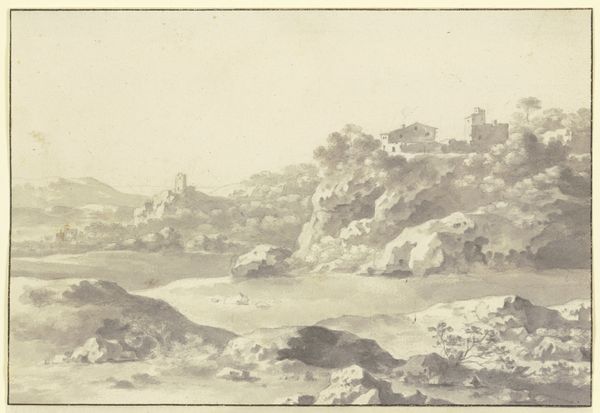
Josephus Augustus Knip created this drawing, View of Ariccia from Genzano, with pencil, pen and brush in gray ink and gray wash. This vista captures the Roman campagna, a landscape that had a huge impact on European artistic culture in the 18th and early 19th centuries. This image shows the town of Ariccia from across a valley. There is a strong interest in the picturesque. That's a term that was used in this period to describe the qualities of a landscape that made it a suitable subject for painting. We can see the picturesque in Knip's carefully chosen viewpoint, his attention to the ruins and the irregularity of the natural forms. The picturesque aesthetic was directly related to British tourism and the rise of a market for landscape prints and drawings, which were often commissioned as souvenirs of the Grand Tour. To understand the role of this drawing, we can research not only the artist's biography and techniques, but also the social and economic conditions that shaped the market for landscape imagery.