About this artwork
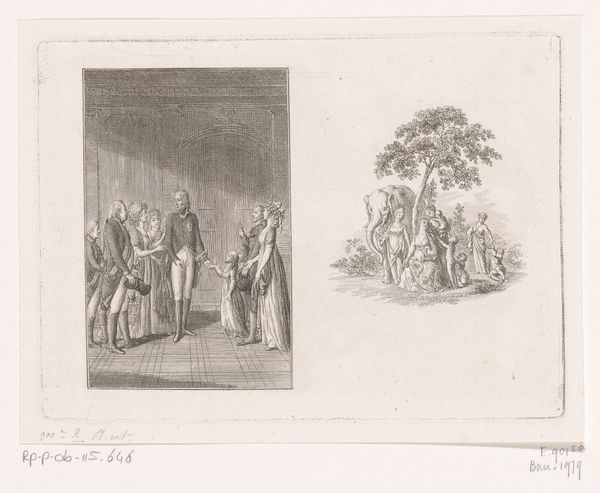
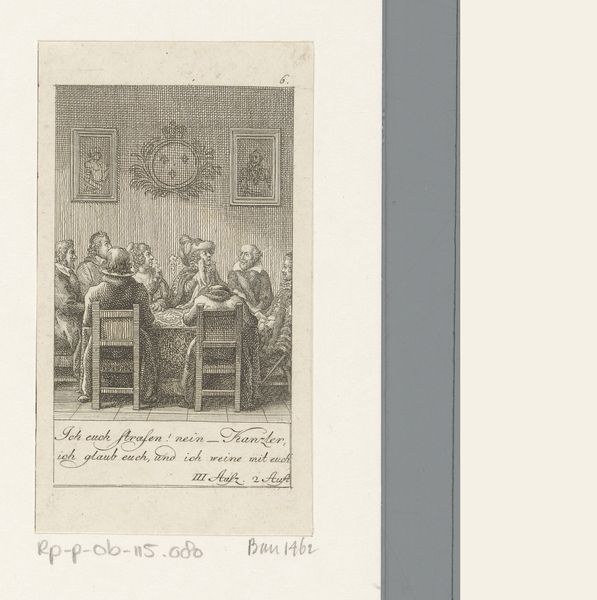
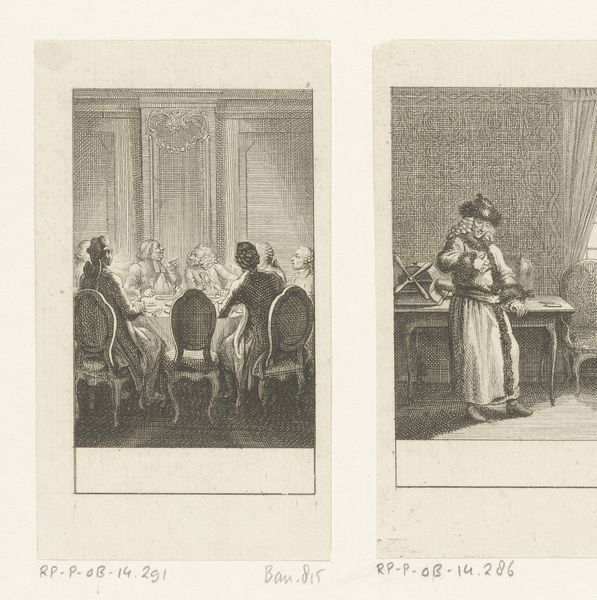
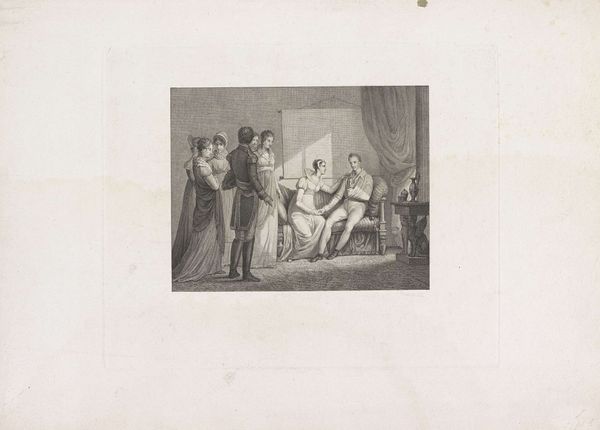
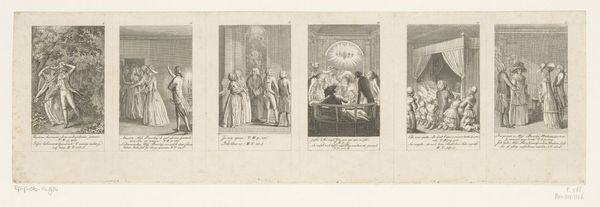
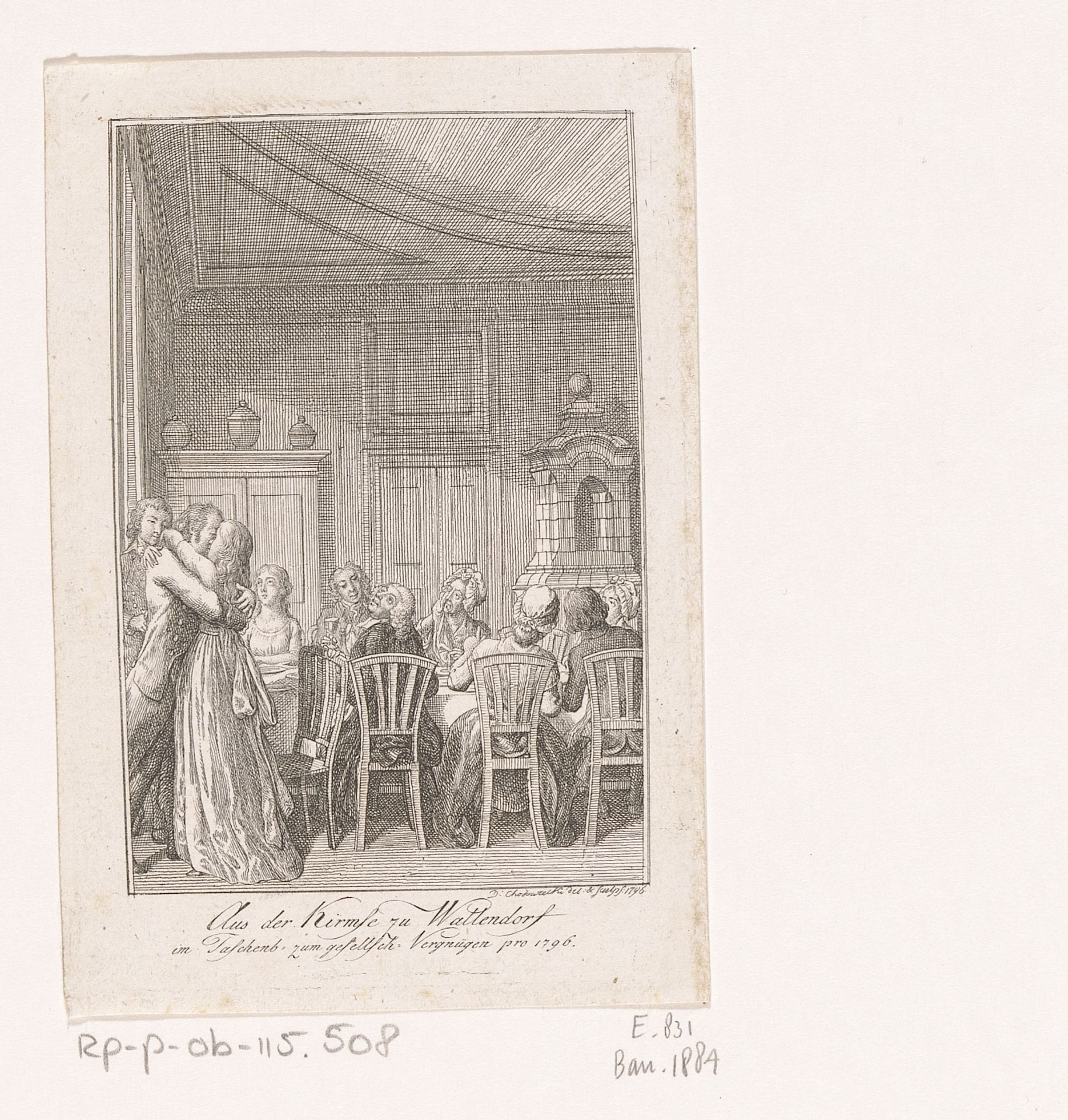
Daniel Nikolaus Chodowiecki created this etching titled, "Röschen dankt haar vader", around 1796. It depicts a scene of celebration, a young woman embracing an older man before a crowd of onlookers seated around a table. Chodowiecki worked in Berlin and was a prominent figure in the Enlightenment era, a period emphasizing reason and individualism over tradition. His prints, often small in scale, were widely circulated and engaged with contemporary social issues and morality. Here, the setting seems to be a tavern or public house in a small village. The image highlights a moment of affection and familial bonding during what appears to be a festival. The reactions of the onlookers provide us with an understanding of the values of the time and how the institution of family was viewed. The image likely served as social commentary, perhaps promoting the values of family and community. Historians can gain a deeper understanding of the artwork's purpose and impact by studying the socio-political context of late 18th-century Germany, including the rise of the middle class and the evolving role of art in shaping public opinion.

Artwork details
- Medium
- drawing, print, etching, engraving
- Dimensions
- height 111 mm, width 75 mm
- Location
- Rijksmuseum
- Copyright
- Rijks Museum: Open Domain
Tags
portrait
drawing
etching
old engraving style
group-portraits
romanticism
genre-painting
history-painting
engraving
Comments
No comments
About this artwork
Daniel Nikolaus Chodowiecki created this etching titled, "Röschen dankt haar vader", around 1796. It depicts a scene of celebration, a young woman embracing an older man before a crowd of onlookers seated around a table. Chodowiecki worked in Berlin and was a prominent figure in the Enlightenment era, a period emphasizing reason and individualism over tradition. His prints, often small in scale, were widely circulated and engaged with contemporary social issues and morality. Here, the setting seems to be a tavern or public house in a small village. The image highlights a moment of affection and familial bonding during what appears to be a festival. The reactions of the onlookers provide us with an understanding of the values of the time and how the institution of family was viewed. The image likely served as social commentary, perhaps promoting the values of family and community. Historians can gain a deeper understanding of the artwork's purpose and impact by studying the socio-political context of late 18th-century Germany, including the rise of the middle class and the evolving role of art in shaping public opinion.
Comments
No comments