lithograph, print, etching
#
lithograph
# print
#
etching
#
romanticism
#
cityscape
#
genre-painting
Dimensions: height 149 mm, width 237 mm
Copyright: Rijks Museum: Open Domain
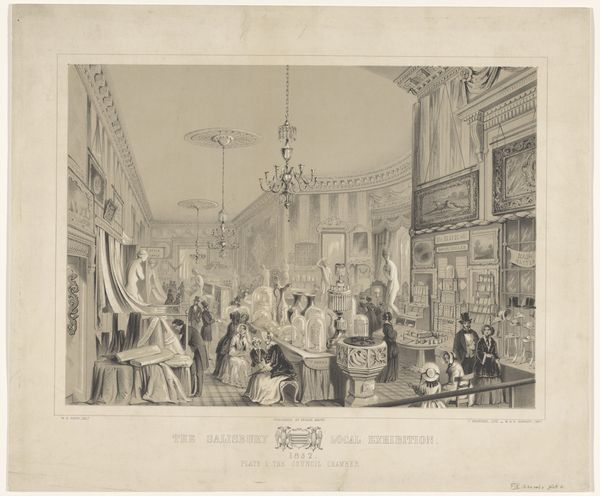
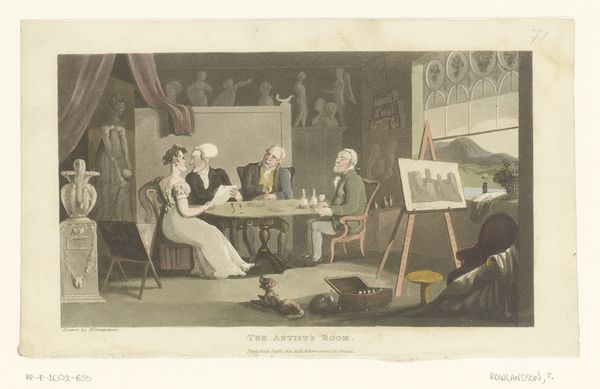
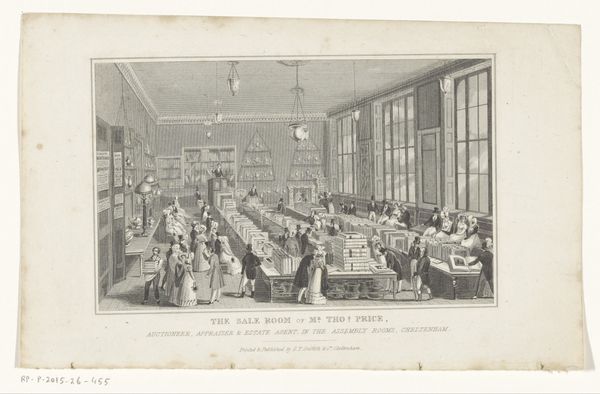
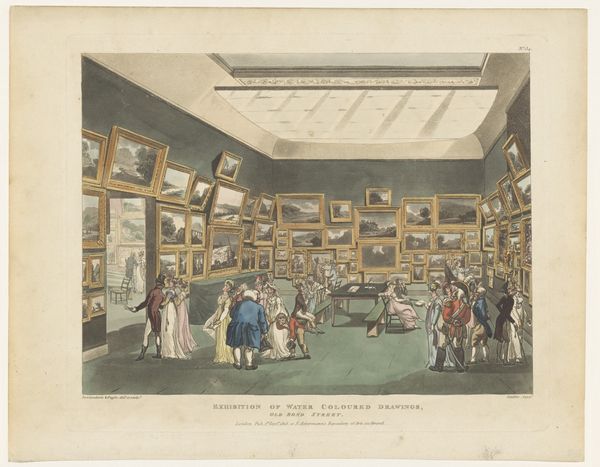
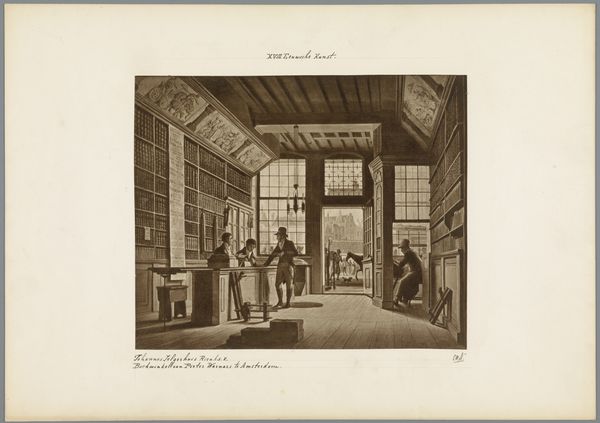
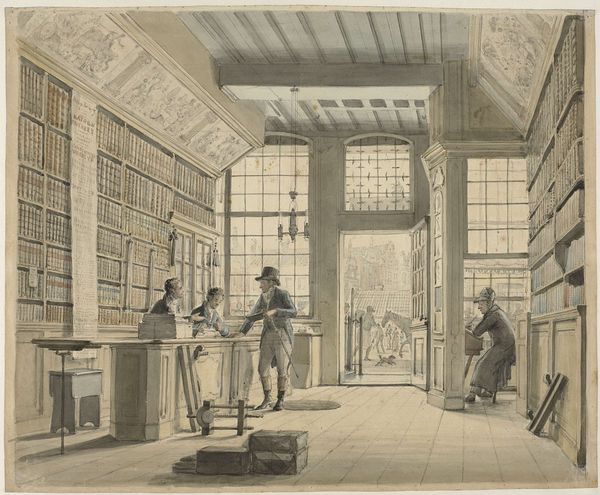
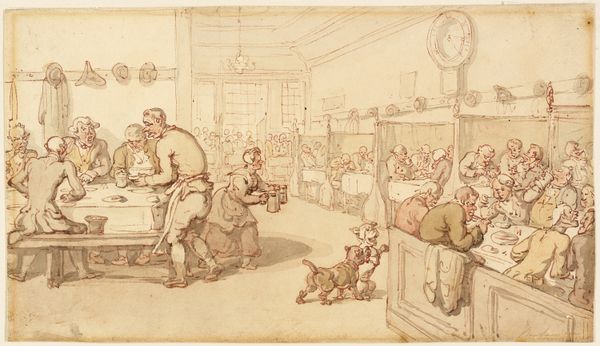
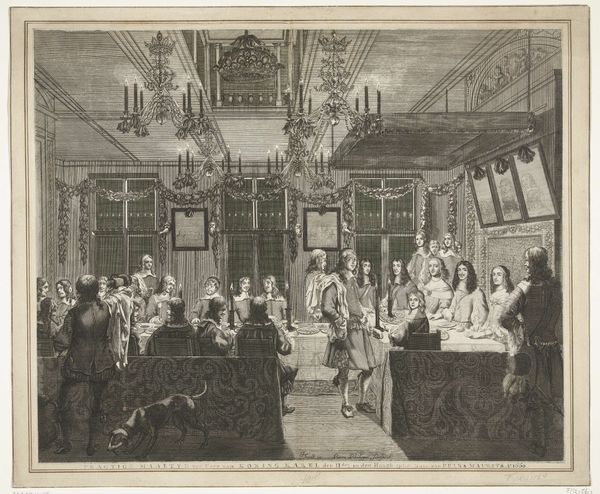
Editor: So, here we have "Interior of Ackerman's Repository of the Arts in London," a print from 1809 made using etching and lithography, depicting a busy art space. It's quite charming! It captures a vibrant atmosphere. How do you interpret this work? Curator: It's tempting to see this scene simply as a snapshot of Regency-era London, but let's delve deeper. Ackerman's Repository wasn’t just a shop; it was a crucial site for the circulation of images and ideas during a period of immense social and political upheaval. How do you think access to art like this might have impacted contemporary viewers, especially women who seem to be prominent here? Editor: Well, I can imagine being surrounded by art like this could really fuel your own creative thinking! Was Ackerman's intentionally trying to make art more accessible, particularly for women? Curator: Precisely! Ackerman aimed to democratize art, providing educational opportunities, materials, and exposure. It was a strategic move in a society grappling with changing gender roles. Consider also the role of prints in disseminating visual information and influencing public opinion beyond the elite circles. Editor: So, it was about more than just pretty pictures; it was a vehicle for social change, empowering a wider audience by providing them with visual resources and encouraging discussion? Curator: Exactly. The seemingly innocuous scene hides a subtle power dynamic where art consumption becomes a form of social engagement and possibly even resistance. It encouraged creativity and discussion. Editor: That makes me see the artwork completely differently now; it’s like peeking into a space that was subtly reshaping society! Thanks! Curator: And thank you! Thinking about the power of spaces that encourage the free flow of ideas is more relevant than ever.
Comments
No comments
Be the first to comment and join the conversation on the ultimate creative platform.
 Collect
 React
React Comment
More like this