1629 - 1740
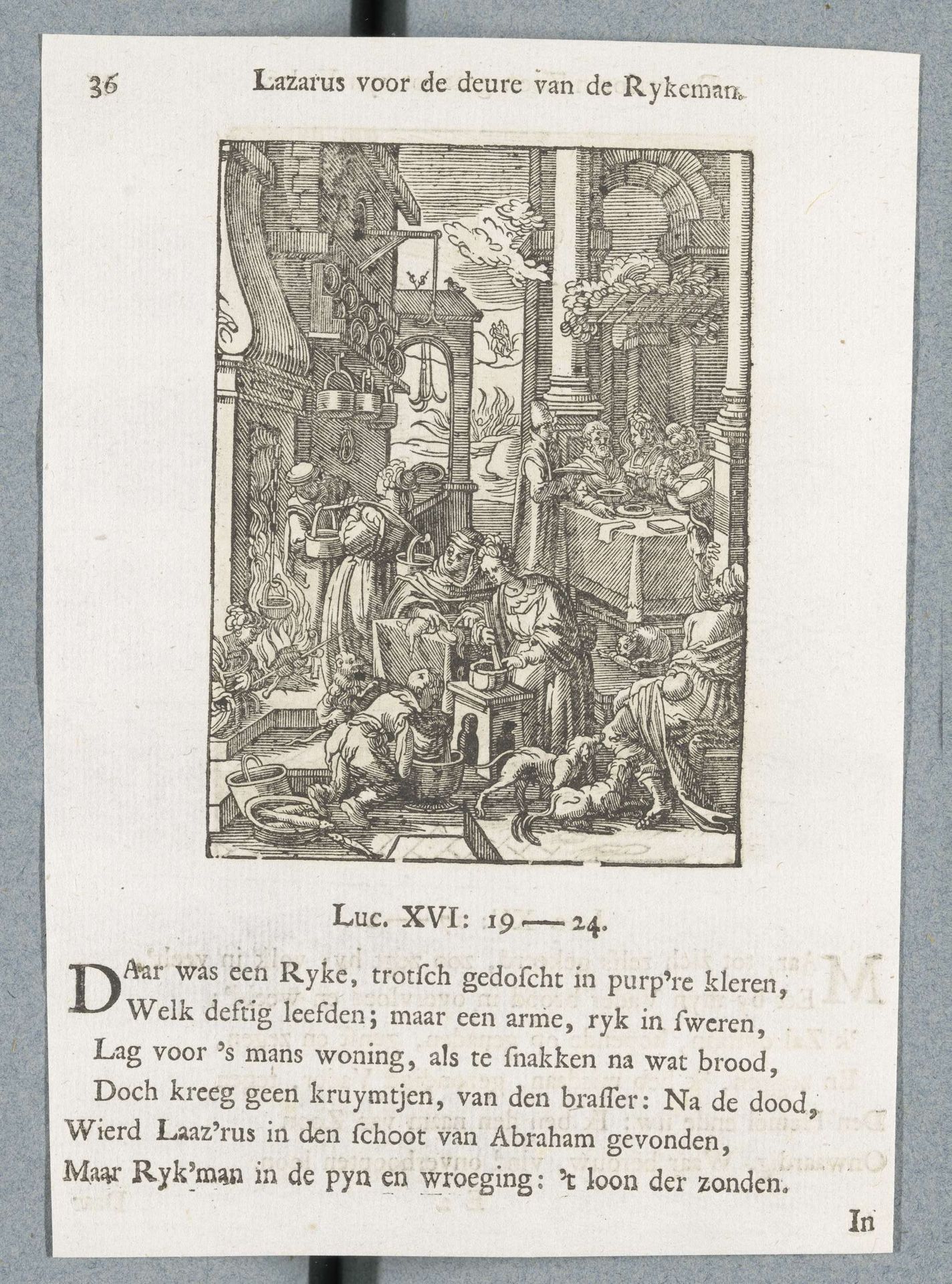
Gelijkenis van de rijke man en de arme Lazarus

Christoffel van (II) Sichem
1581 - 1658Location
RijksmuseumListen to curator's interpretation
Curatorial notes
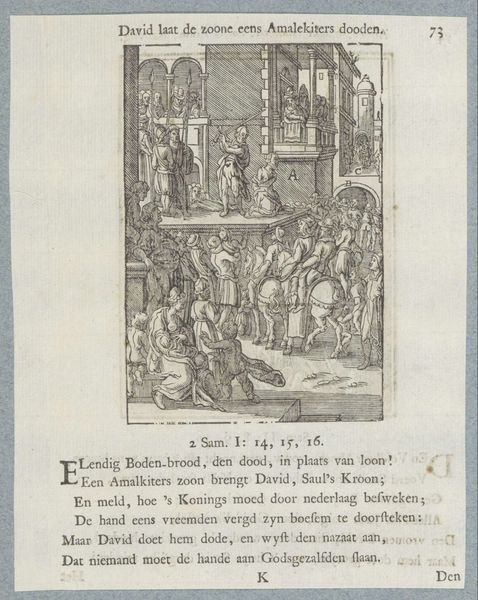
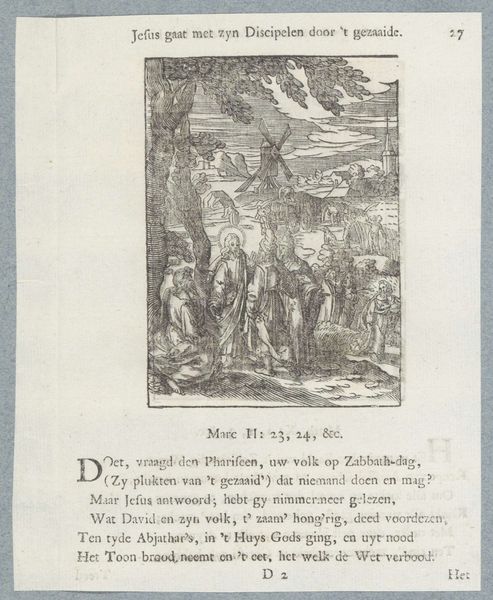
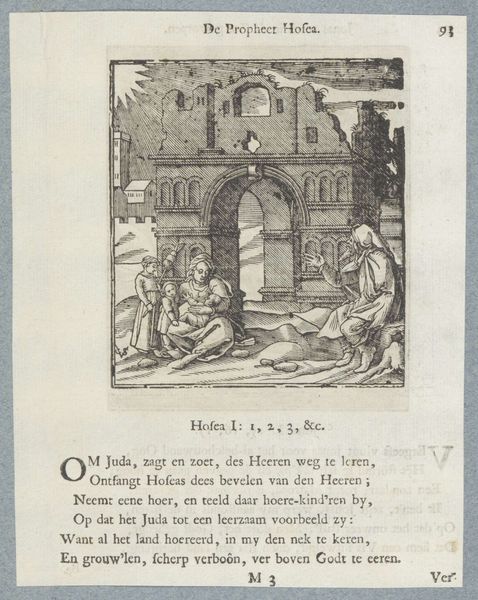
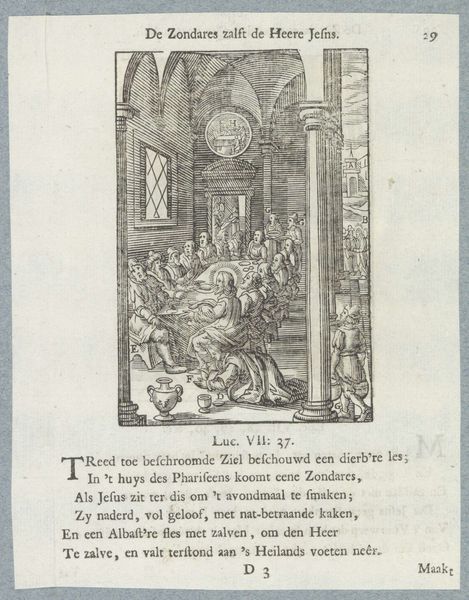
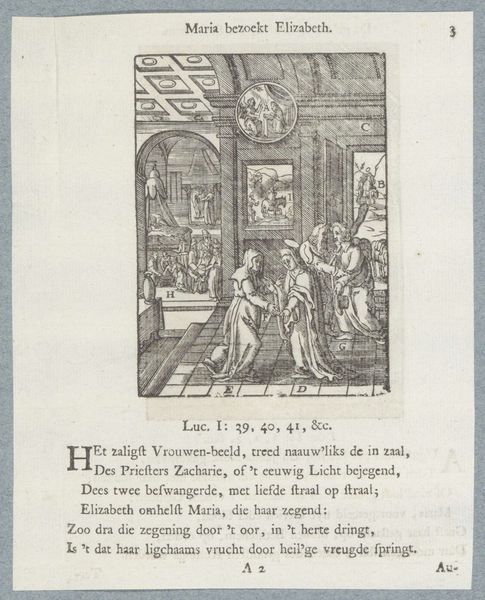
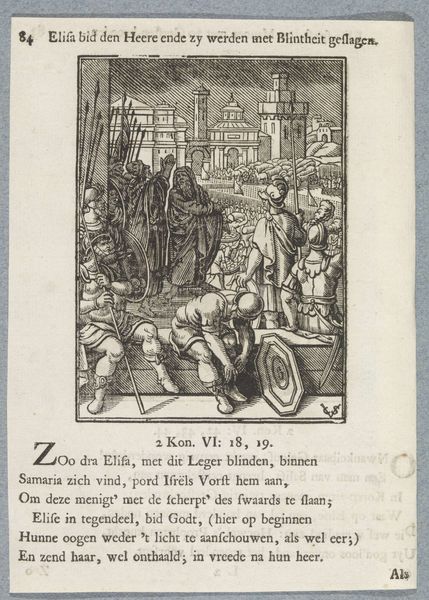
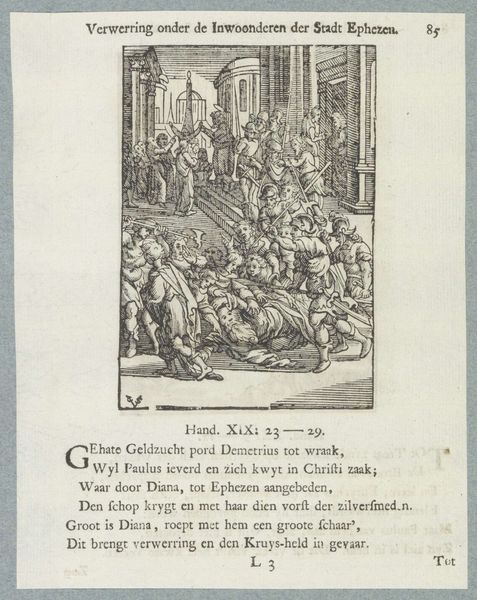
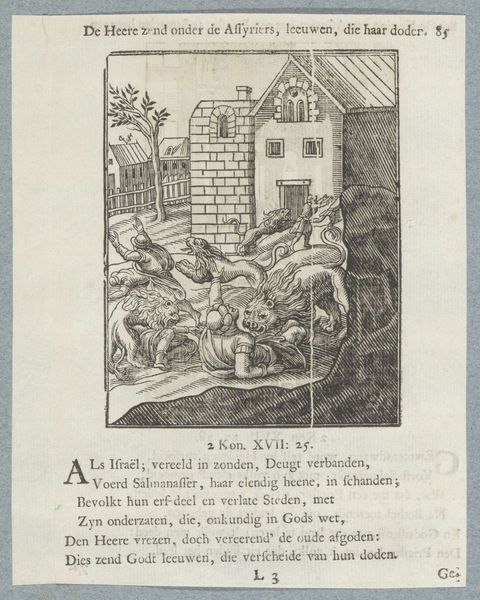
This woodcut, made by Christoffel van Sichem II, visualizes the parable of the rich man and Lazarus. It’s a stark depiction of social inequality. The story, originating from the Gospel of Luke, highlights the chasm between the opulent lifestyle of the wealthy and the destitution of the poor. Made in the Netherlands, without a specified date, this image is situated in a society grappling with shifting economic landscapes. The Dutch Golden Age saw unprecedented prosperity for some, but it also exacerbated social stratification. Woodcuts such as these were cheap to produce and were used as didactic tools. This particular image would have served as a potent reminder of the moral obligations of the wealthy towards the less fortunate. The choice of a biblical narrative allows the artist to critique social structures. Is it self-consciously conservative or progressive? To fully understand this work, research into the religious and social history of the Dutch Golden Age is essential. Art history helps us appreciate how art engages with and reflects the values of its time.