paper, engraving
#
portrait
#
neoclacissism
#
old engraving style
#
figuration
#
paper
#
line
#
history-painting
#
engraving
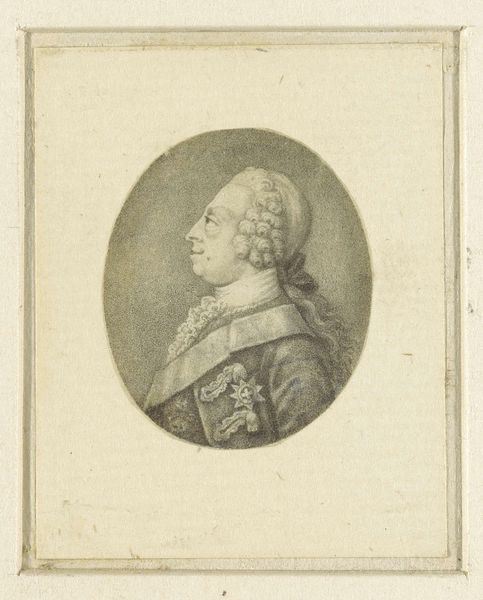
Dimensions: height 112 mm, width 96 mm
Copyright: Rijks Museum: Open Domain
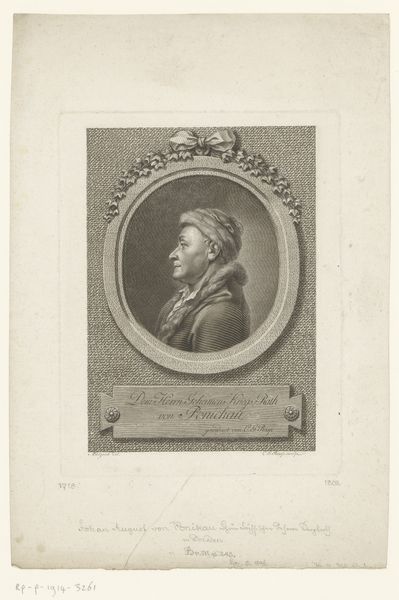
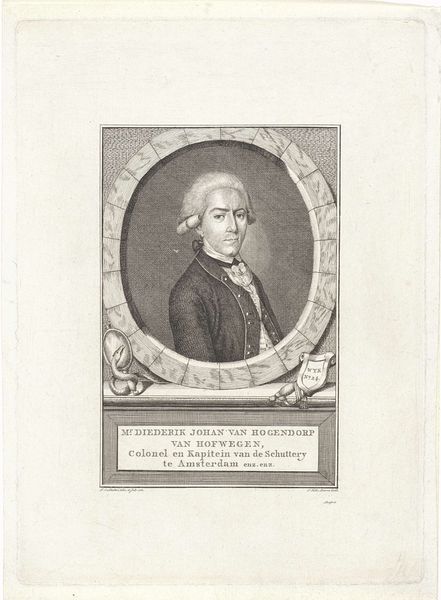
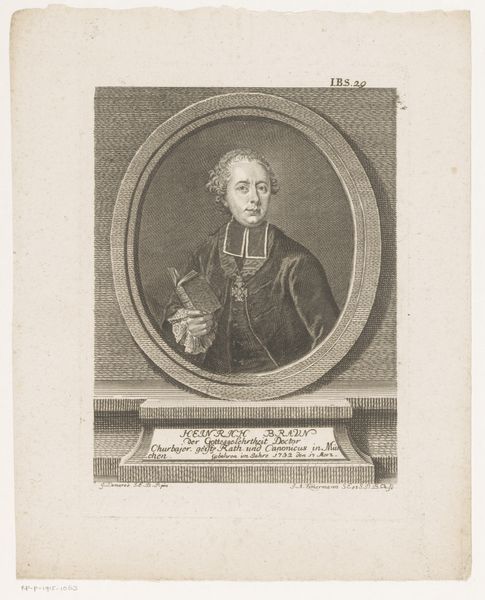
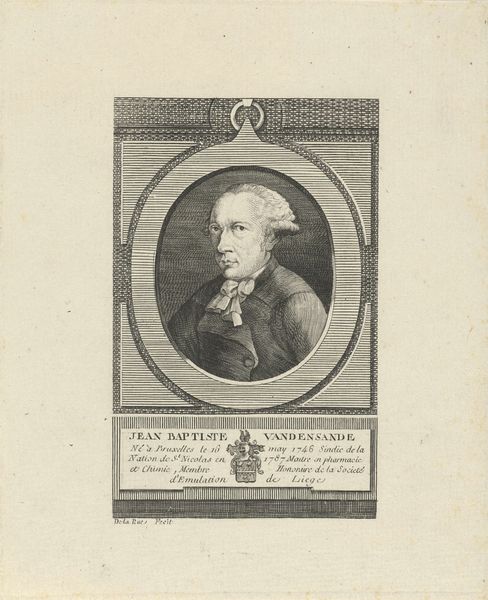
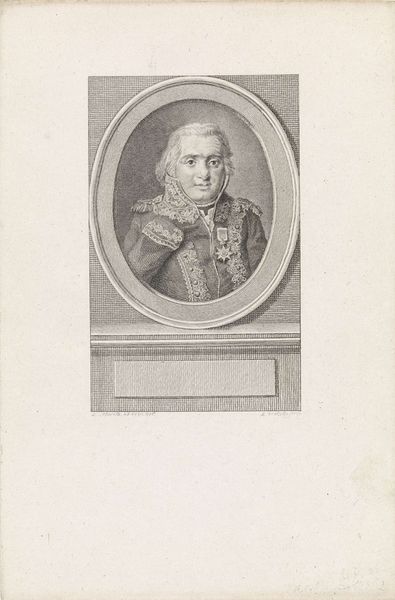
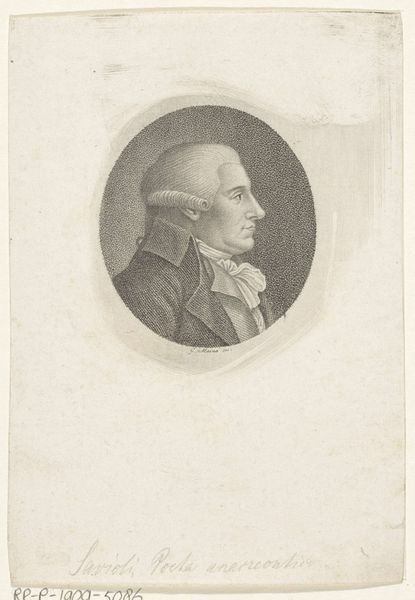
Editor: So, this is "Portret van Vittorio Emanuele I" by Gaspare Ginanni, around 1791. It's an engraving on paper. It feels very formal, almost austere. What can you tell me about it? Curator: Well, beyond its immediate aesthetic qualities, this piece acts as a visual artifact, reflecting the complex political and social currents of its time. Ginanni created it at the tail end of the 18th century. Think about the Neoclassical style and its fascination with order and reason. What was it trying to reject, do you think? Editor: I guess, like, the excesses of the Rococo period? Maybe the Neoclassical artists were reacting against what they perceived as frivolity during a time of social inequality. Curator: Exactly. And who was Vittorio Emanuele I? The Duke of Aosta, right before the Napoleonic Wars. Portraits were rarely ever "just" portraits; they were statements of power. Do you notice how the clean lines and stoic expression aim to project an image of authority and stability? Editor: Now that you mention it, it does feel very deliberate. But it's just an engraving, so how much impact could it have had? Curator: Engravings like these circulated widely. It reproduces an idealized version of a leader. They became tools to solidify power at a time of significant unrest. Consider its use today. Does its history of propaganda matter or is it just an old drawing of a powerful figure? Editor: I see your point. Understanding that helps unpack not just the artwork itself but how it was *meant* to function in society. It is indeed important to think of it within that context, considering its use and meaning within its social milieu. Curator: Precisely, seeing it within this framework, as a convergence of aesthetics, power, and historical forces, gives us much more to discuss!
Comments
No comments
Be the first to comment and join the conversation on the ultimate creative platform.
 Collect
 React
React Comment
More like this