About this artwork
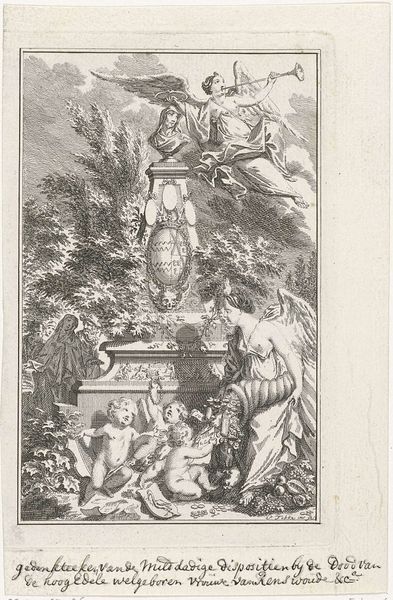
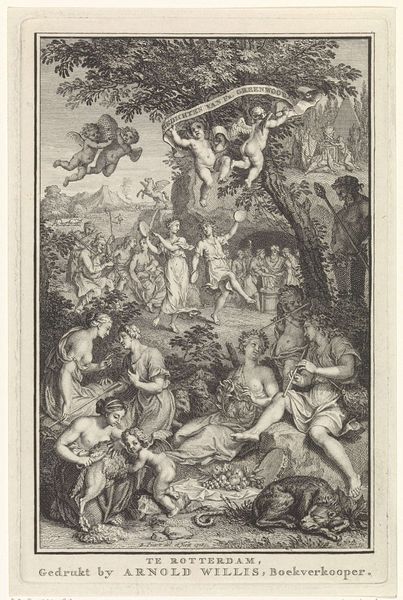
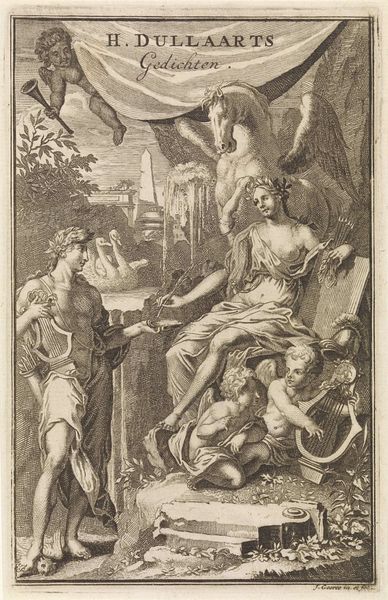
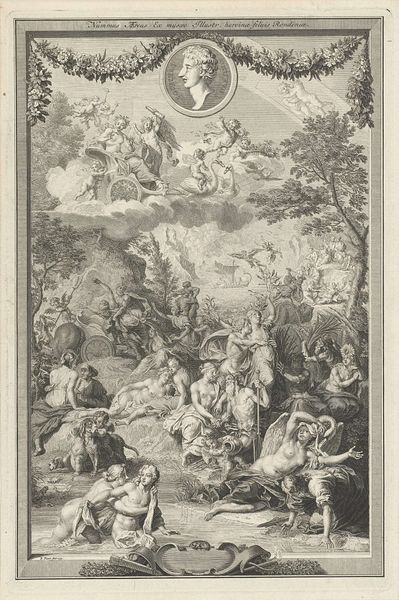
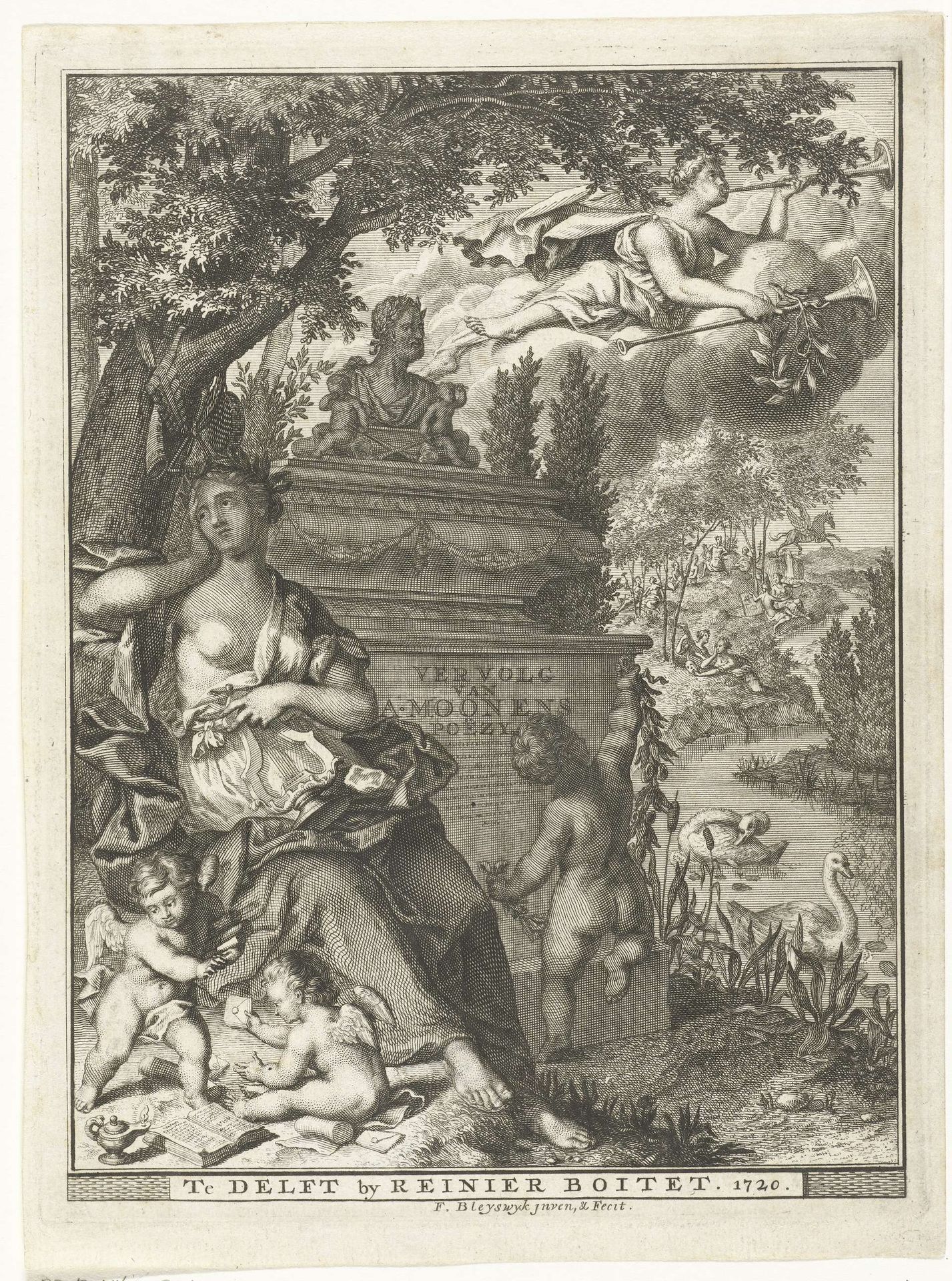
François van Bleyswijck created this print, titled "Muze en putti zitten bij grafmonument van dichter Arnold Moonen," at an unknown date. During the Dutch Golden Age, the role of art shifted as the Dutch Republic grew as a global economic power. Here, a muse sits pensively beside a tomb erected for the poet Arnold Moonen, attended by putti. In the clouds above, another muse heralds Moonen’s legacy. These allegorical figures reflect the conventions of the time, yet they also hint at deeper societal expectations. The representation of the muse, for example, embodies ideals of female beauty and intellectual inspiration. The cherubic putti surrounding her suggest innocence and purity, reinforcing the era's social values. This piece, intended as a memorial, engages with themes of legacy and remembrance, even as it quietly affirms existing social structures and gendered roles.
Muze en putti zitten bij grafmonument van dichter Arnold Moonen
1720

François van Bleyswijck
1671 - 1746Location
RijksmuseumArtwork details
- Medium
- print, engraving
- Dimensions
- height 187 mm, width 140 mm
- Location
- Rijksmuseum
- Copyright
- Rijks Museum: Open Domain
Tags
Comments
Share your thoughts
About this artwork
François van Bleyswijck created this print, titled "Muze en putti zitten bij grafmonument van dichter Arnold Moonen," at an unknown date. During the Dutch Golden Age, the role of art shifted as the Dutch Republic grew as a global economic power. Here, a muse sits pensively beside a tomb erected for the poet Arnold Moonen, attended by putti. In the clouds above, another muse heralds Moonen’s legacy. These allegorical figures reflect the conventions of the time, yet they also hint at deeper societal expectations. The representation of the muse, for example, embodies ideals of female beauty and intellectual inspiration. The cherubic putti surrounding her suggest innocence and purity, reinforcing the era's social values. This piece, intended as a memorial, engages with themes of legacy and remembrance, even as it quietly affirms existing social structures and gendered roles.
Comments
Share your thoughts