1533
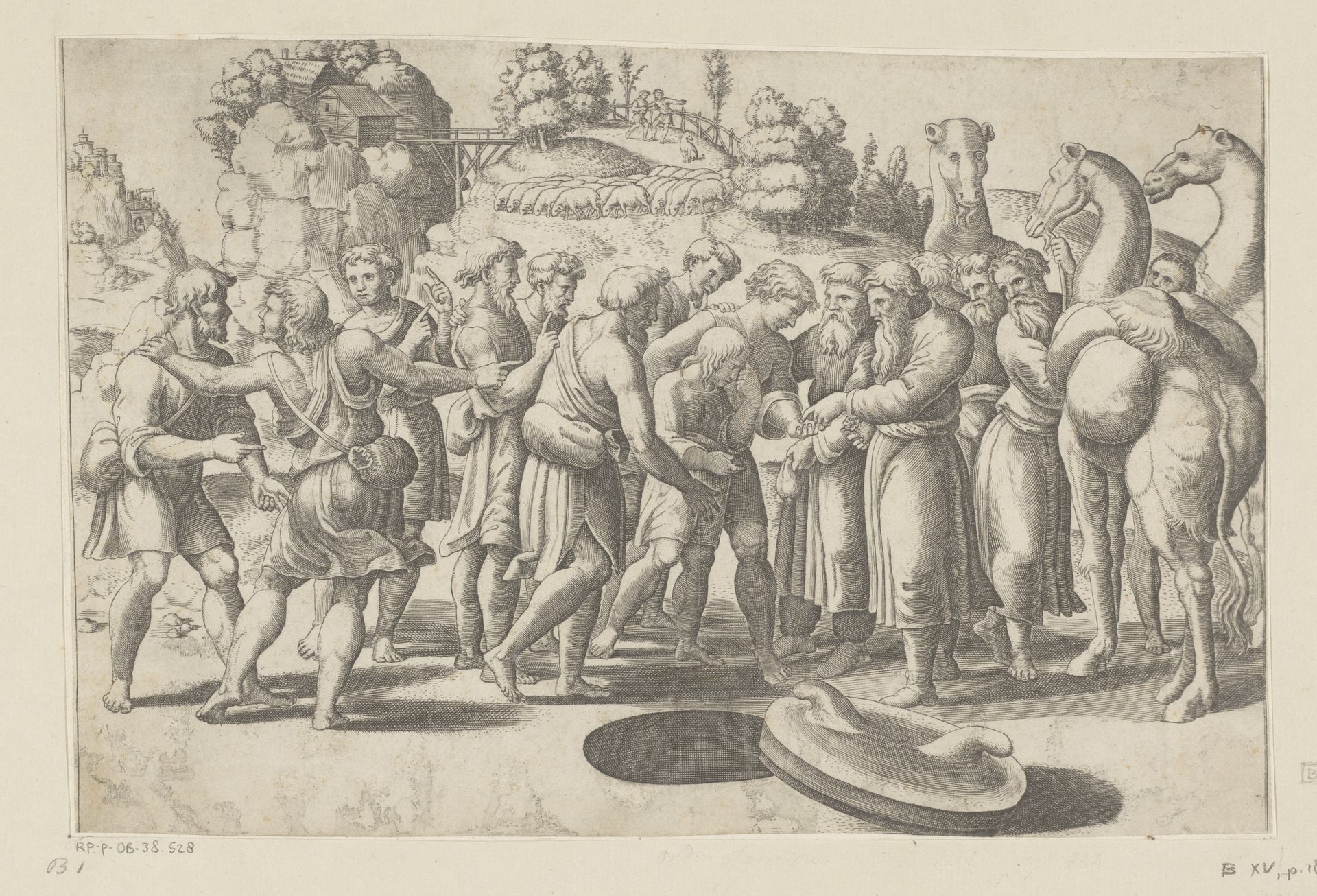
Jozef door zijn broers verkocht

Meester van de Dobbelsteen
@meestervandedobbelsteenLocation
RijksmuseumListen to curator's interpretation
Curatorial notes
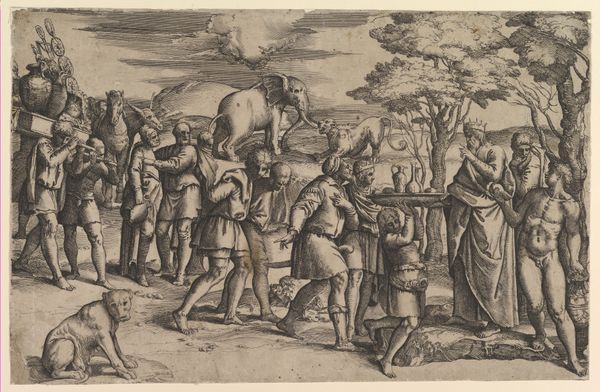
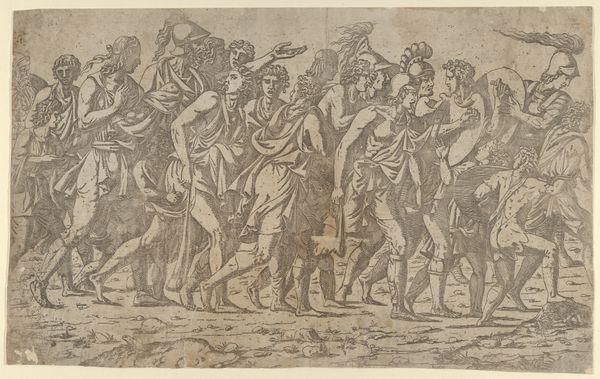
The Master of the Die created this engraving, "Joseph sold by his brothers", sometime in the 16th century. Here we see the illustration of a biblical episode where Joseph's brothers sell him into slavery. What's interesting here is how the artist uses visual cues to comment on social structures. The act of selling Joseph isn't just a family drama, it is a critique of economic exploitation. The brothers, who represent the established social order, are contrasted with Joseph who's being pulled away, highlighting the power dynamics at play. Consider the setting: a bustling marketplace filled with exotic animals, underscoring the commercial nature of this transaction. Engravings like this one would have been widely circulated, influencing public opinion and perhaps even challenging the norms of the time. To truly understand the artist's intentions, scholars consult historical texts, religious commentaries, and economic records. We can then understand the complex relationship between art, society, and the institutions that shape it.