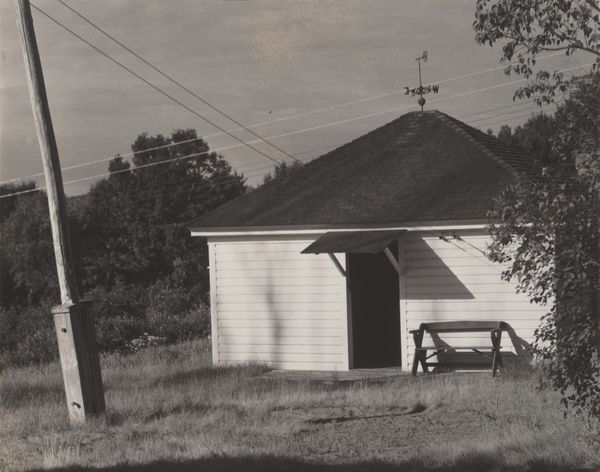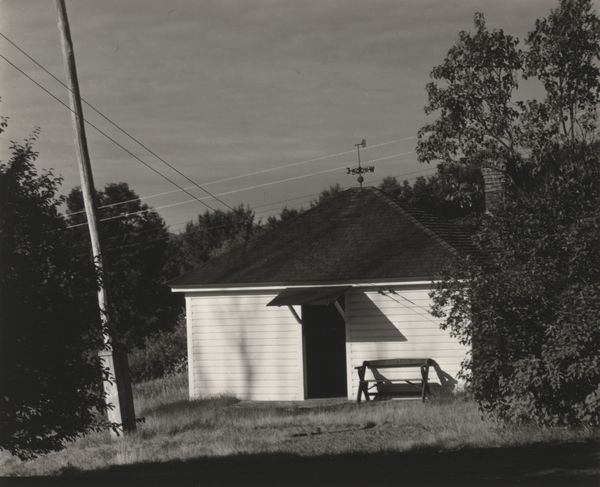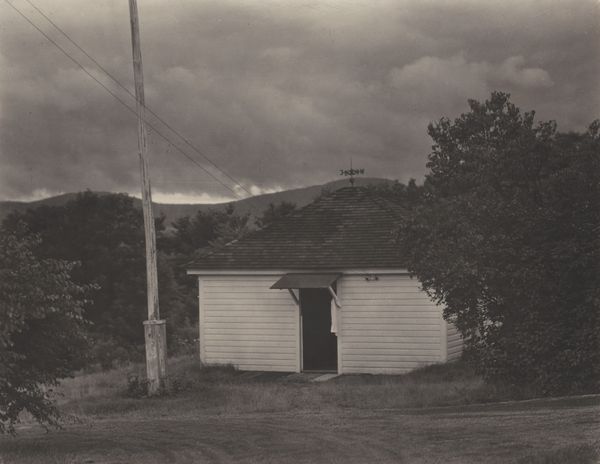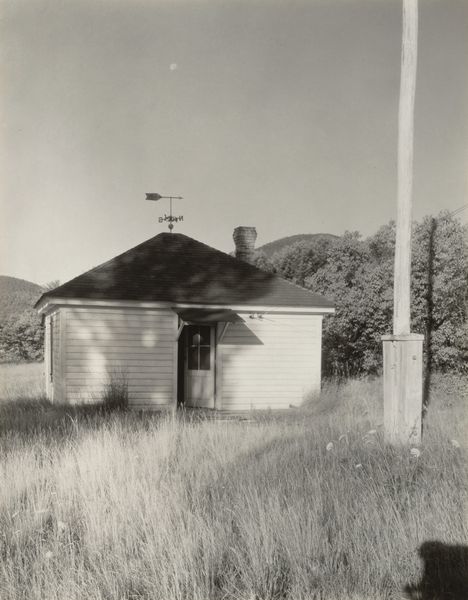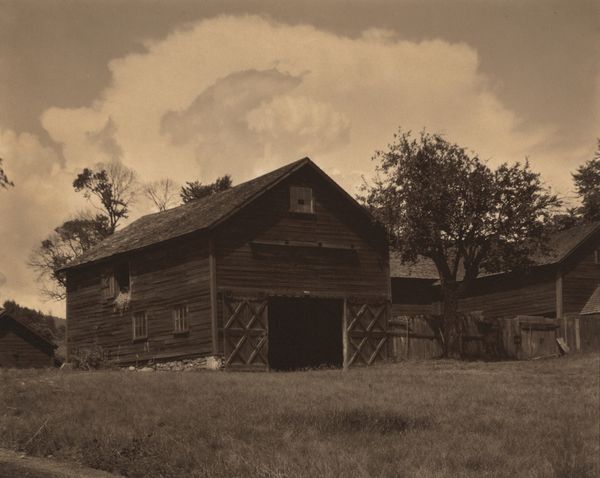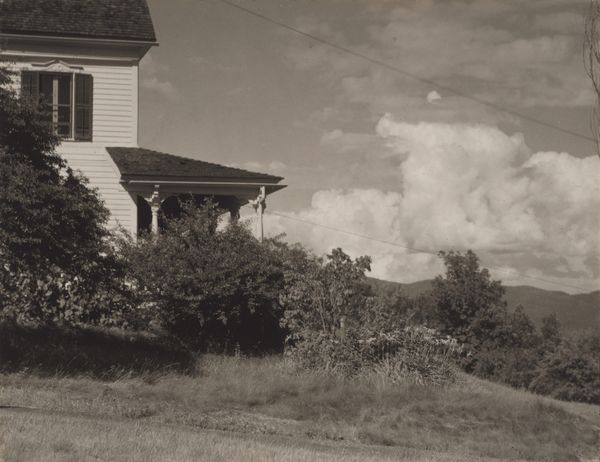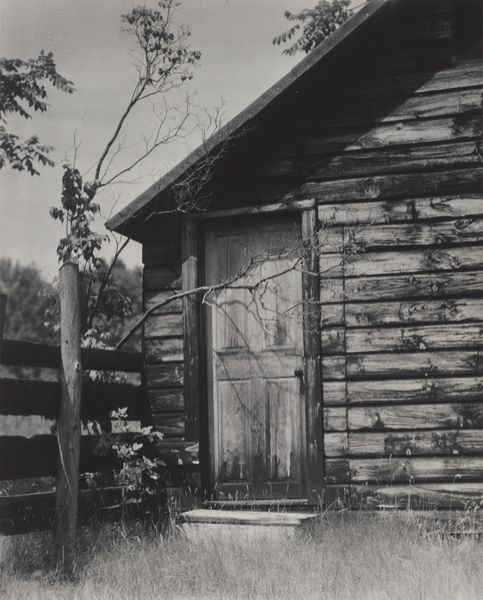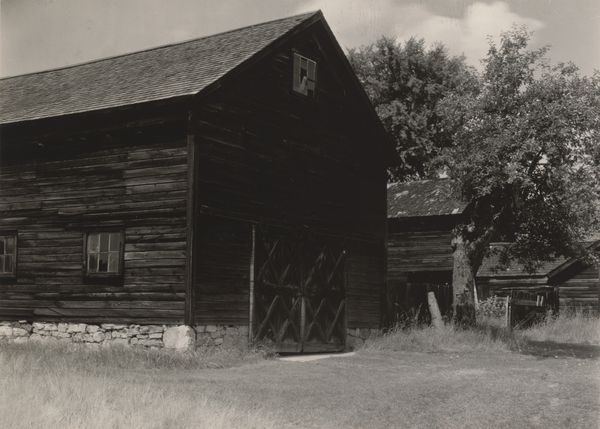
c. 1933
Little House, Lake George


Listen to curator's interpretation
Curatorial notes
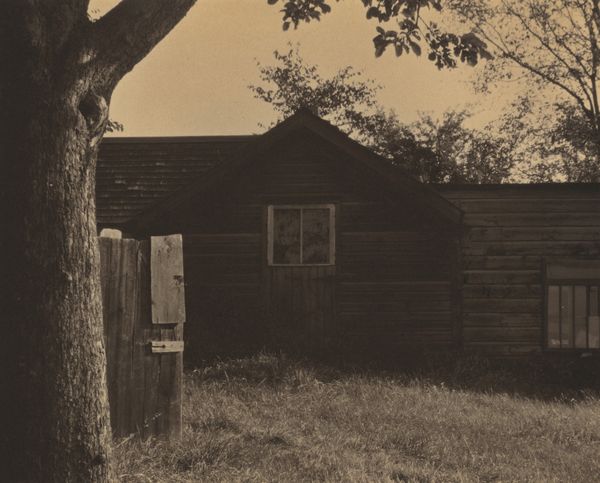
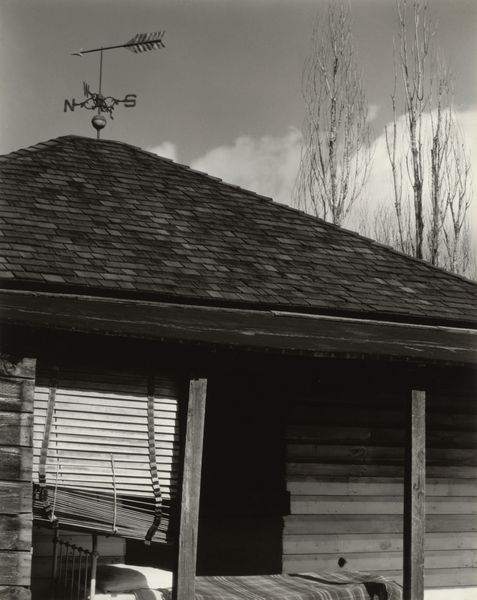
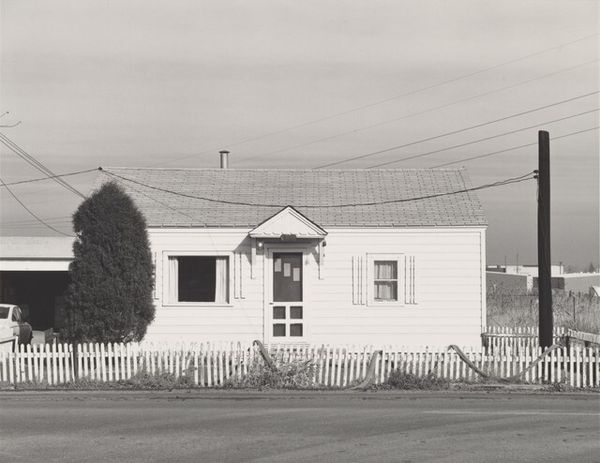
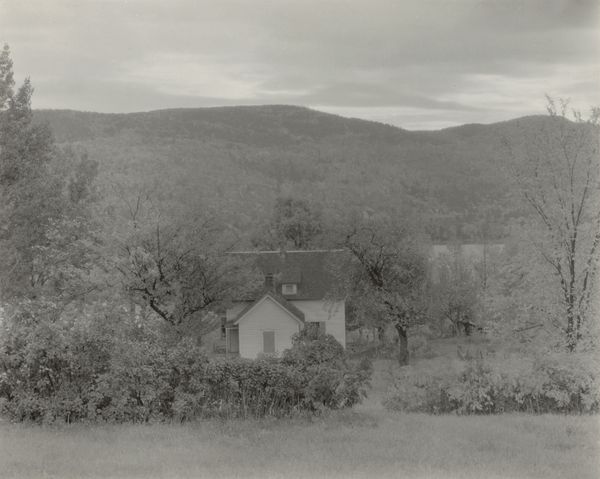
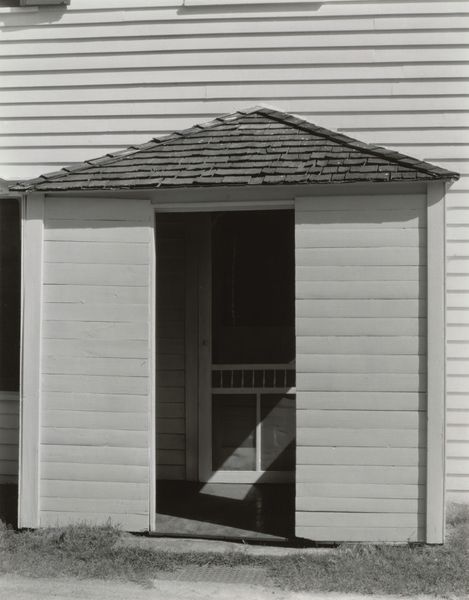
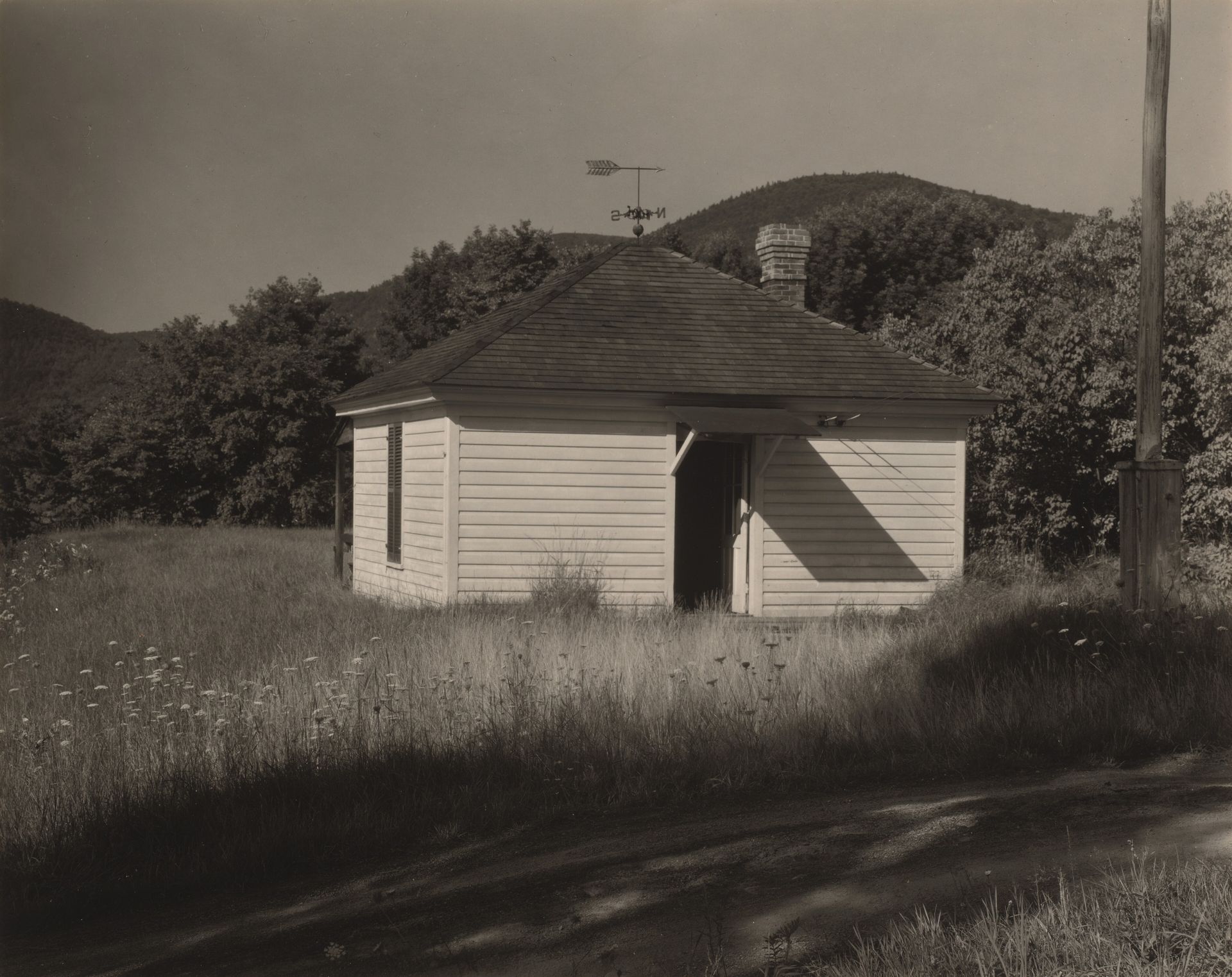
Editor: Here we have Alfred Stieglitz’s gelatin silver print, "Little House, Lake George," from around 1933. It's quite a striking black and white image, very simple. What is particularly fascinating about it to you? Curator: I see in this gelatin silver print a negotiation of class, labor and materiality during the Depression. Consider the “little house” itself, likely a utility building on the Lake George estate owned by Stieglitz’s wife, Georgia O'Keeffe. It suggests a leisure class reliant on unseen labor. Editor: So, it’s not just a quaint countryside scene? Curator: Not at all. Stieglitz, despite his modernist leanings, persistently photographed his properties, thereby reinforcing their material reality. The gelatin silver printing process itself deserves attention. A chemically manufactured process transforms the humble dirt road, the wooden structure, and native vegetation into a rarefied art object for consumption. Don’t you think the transformation of ordinary materials to fine art significant? Editor: Absolutely! It highlights how value is constructed. But I'm wondering, given the economic hardships of the 1930s, was Stieglitz aware of how this photographic act might be perceived? Curator: It’s impossible to say with certainty what his intentions were. But what is clear is that through careful framing, manipulation of light, and the deployment of a specific technology—photography—Stieglitz participates in a system where nature and labor become commodities. Consider how the sharp focus renders every surface texture, emphasizing material qualities for a viewer likely far removed from that reality. Editor: That's given me a lot to think about – the hidden layers within this seemingly straightforward photograph. Curator: Indeed. It’s in the intersection of materials, process and social context that the true value of "Little House, Lake George" reveals itself.