photography
#
portrait
#
photography
#
historical fashion
#
genre-painting
Dimensions: height 167 mm, width 111 mm
Copyright: Rijks Museum: Open Domain
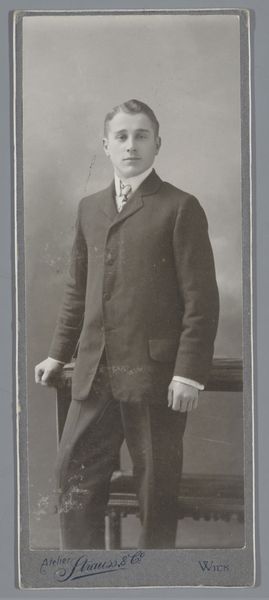
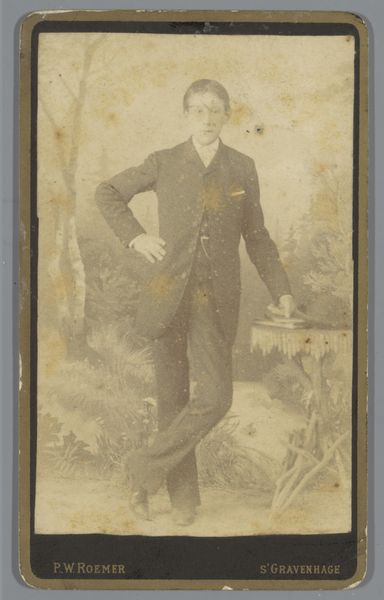
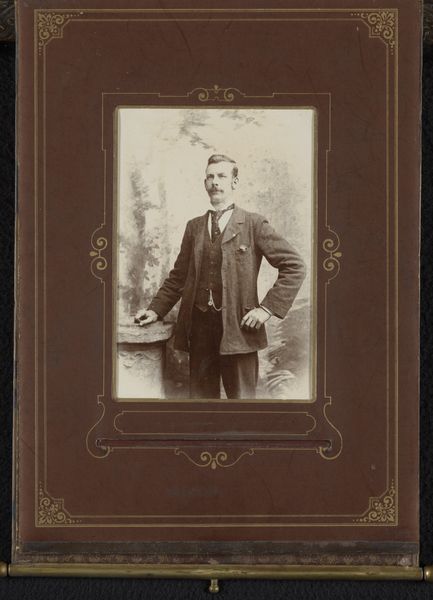
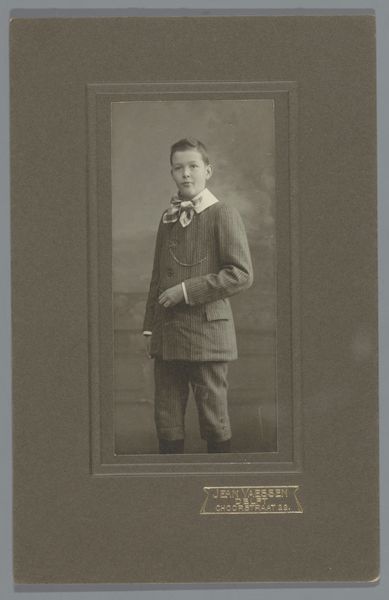
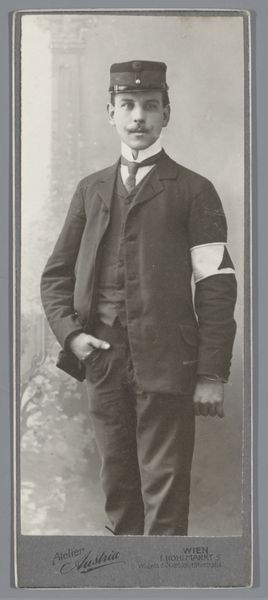
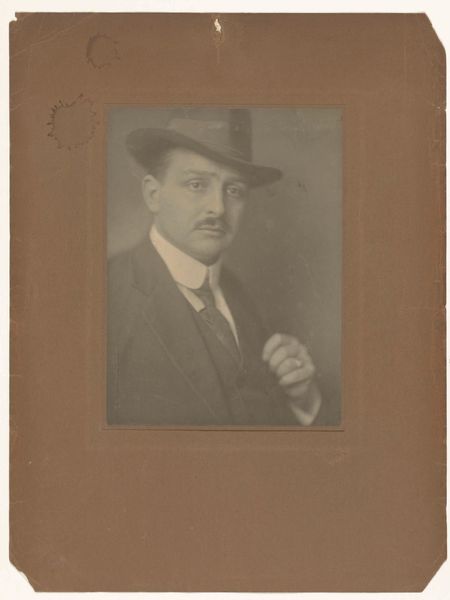
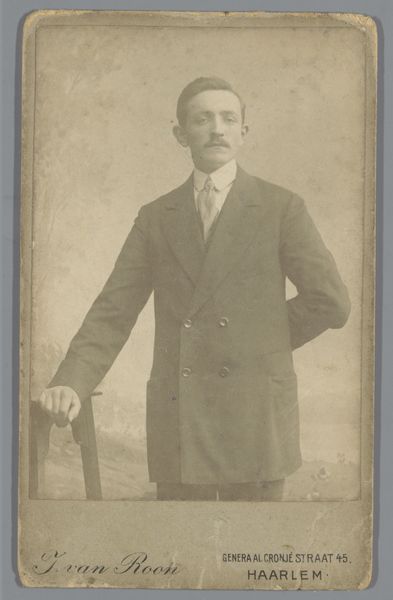
Editor: Well, this portrait exudes such a sense of poised dignity. Curator: Indeed. This is a photograph entitled "Portret van G.N.P. van Eijk, staand met hoed" – or “Portrait of G.N.P. van Eijk, standing with hat” – created sometime between 1910 and 1920 by Blankenburg & Luca. Look at how the framing shapes the way we perceive Mr. van Eijk. It is a stark rectangle with the company's stamp displayed. Editor: The choice of photography as the medium, and the mounting of it, points to its intended circulation and the accessibility of portraiture to a wider segment of the population at this time. Mass production versus unique hand-crafted work comes to mind. Curator: Exactly. These photographic studios democratized portraiture, moving it away from the exclusive realm of painting. Photography became a vehicle for social mobility and visual representation. His garments really speak of a newly industrialized era! Editor: Precisely. And, given that photographic printing was often done by women in that era, there are hidden labors involved here. Who printed the image, and under what conditions? The presentation becomes part of its power, right? Consider its impact on society. How did this shape how one was viewed in that period? Curator: Well, the studio’s address displayed suggests where and how this was initially viewed within its community. I see now a cultural statement regarding Dutch society in a fascinating period. I had focused mainly on how studios created photographic art and now realize its profound effect on broader society! Editor: Seeing through your eyes to understanding photography within society and culture provides fascinating and necessary understanding. Curator: And the way you emphasize the material realities of photographic production offers a critical reminder of the hands and processes behind these images.
Comments
No comments
Be the first to comment and join the conversation on the ultimate creative platform.
 Collect
 React
React Comment
More like this