About this artwork
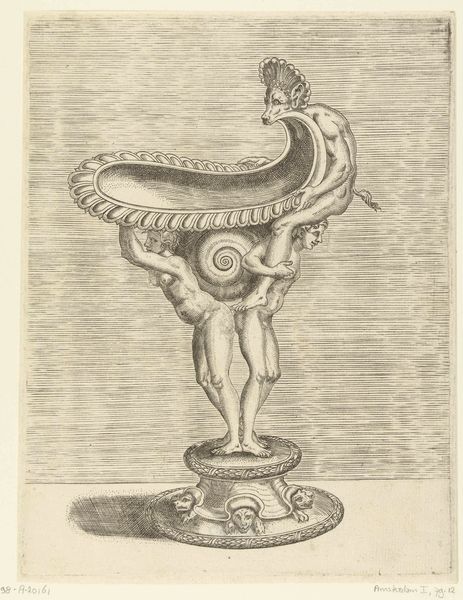
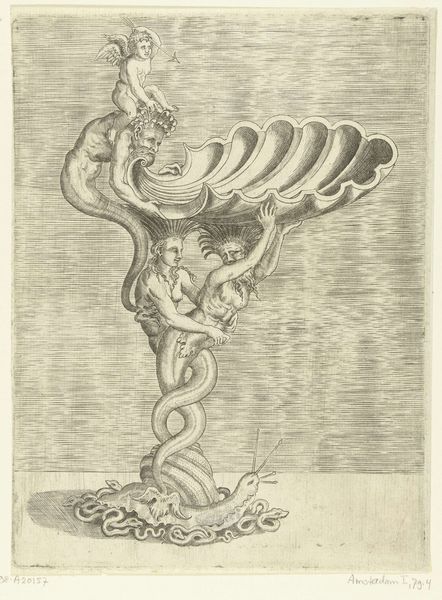
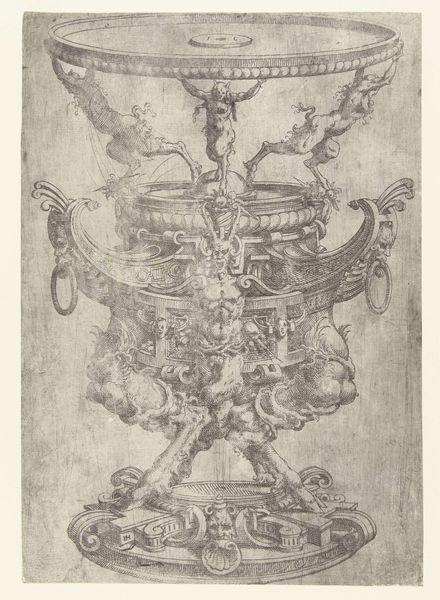
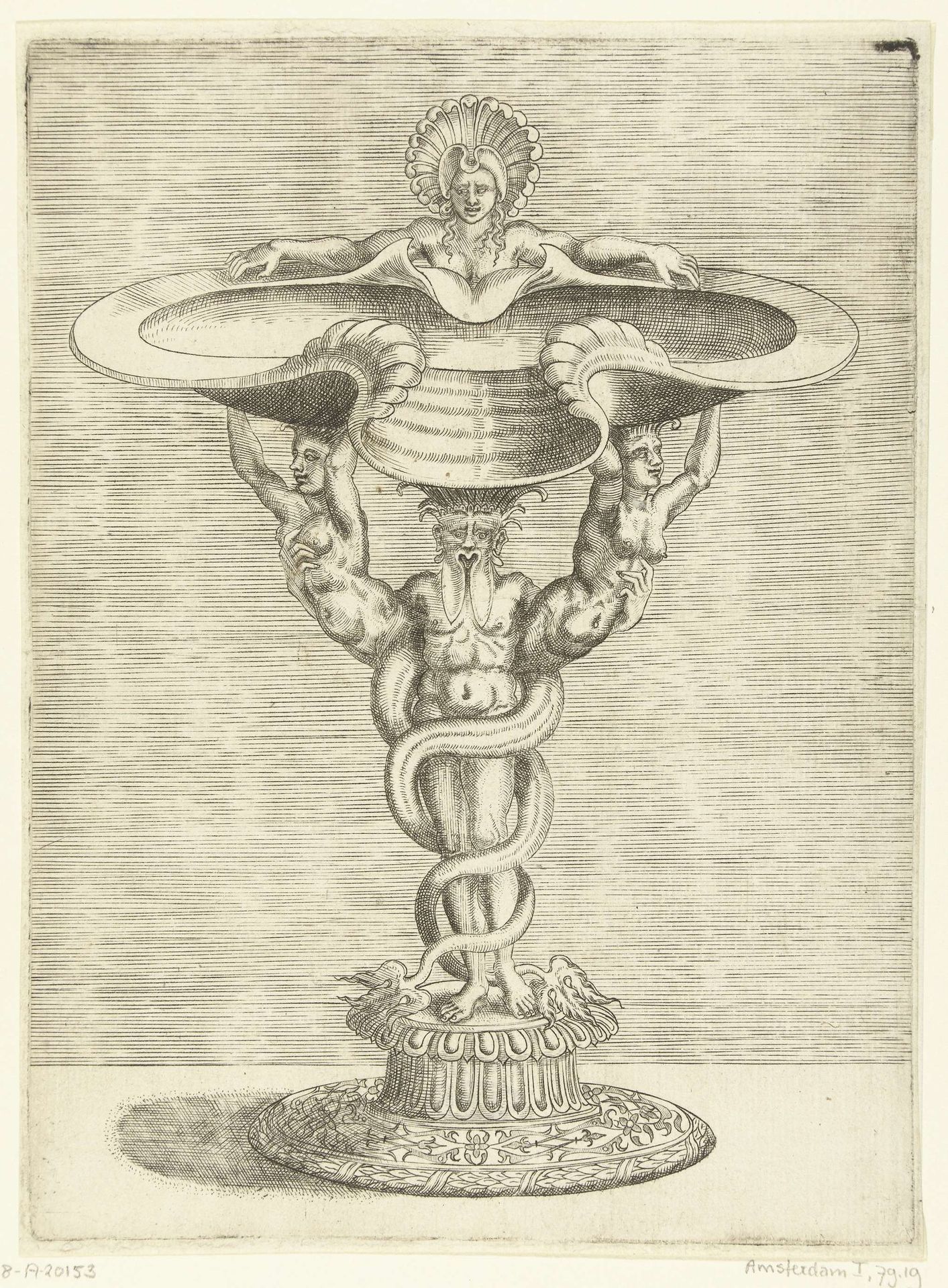
This print, made by Balthazar van den Bos in the 16th century, depicts a fantastical vessel, seemingly crafted from precious metal. The image would have been made using an intaglio printmaking process, where the design is incised into a metal plate, inked, and then transferred to paper under high pressure. Look closely, and you can see the network of fine lines that create the image. These marks define not only the form, but also the reflective quality of the imagined silver or gold. This illusion is entirely dependent on the skill of the engraver. Consider the cultural context: prints like these circulated widely, serving as inspiration for actual three-dimensional objects made by goldsmiths and silversmiths. The design reflects the Mannerist style, with its emphasis on elaborate, muscular figures and inventive ornament. But beyond aesthetics, this print prompts us to consider labor. Though it depicts a luxury object, the print itself was relatively accessible. The knowledge and skill of the artist, combined with the relative affordability of the print medium, democratized access to high design.
Schaal gevormd door een man en twee zeemeerminnen
1548

Balthazar van den Bos
1518 - 1580Location
RijksmuseumArtwork details
- Medium
- print, metal, engraving
- Dimensions
- height 225 mm, width 169 mm
- Location
- Rijksmuseum
- Copyright
- Rijks Museum: Open Domain
Tags
Comments
Share your thoughts
About this artwork
This print, made by Balthazar van den Bos in the 16th century, depicts a fantastical vessel, seemingly crafted from precious metal. The image would have been made using an intaglio printmaking process, where the design is incised into a metal plate, inked, and then transferred to paper under high pressure. Look closely, and you can see the network of fine lines that create the image. These marks define not only the form, but also the reflective quality of the imagined silver or gold. This illusion is entirely dependent on the skill of the engraver. Consider the cultural context: prints like these circulated widely, serving as inspiration for actual three-dimensional objects made by goldsmiths and silversmiths. The design reflects the Mannerist style, with its emphasis on elaborate, muscular figures and inventive ornament. But beyond aesthetics, this print prompts us to consider labor. Though it depicts a luxury object, the print itself was relatively accessible. The knowledge and skill of the artist, combined with the relative affordability of the print medium, democratized access to high design.
Comments
Share your thoughts