About this artwork
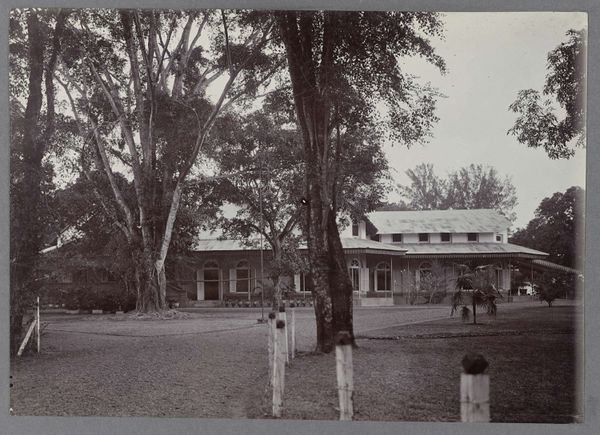
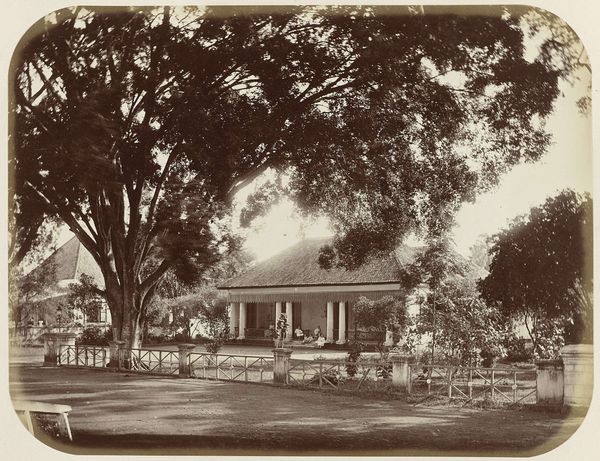
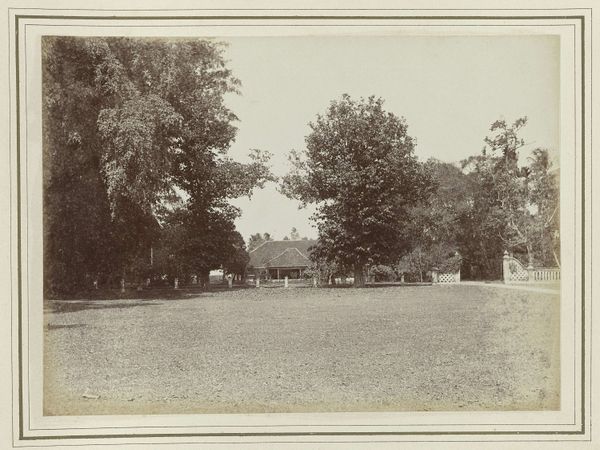
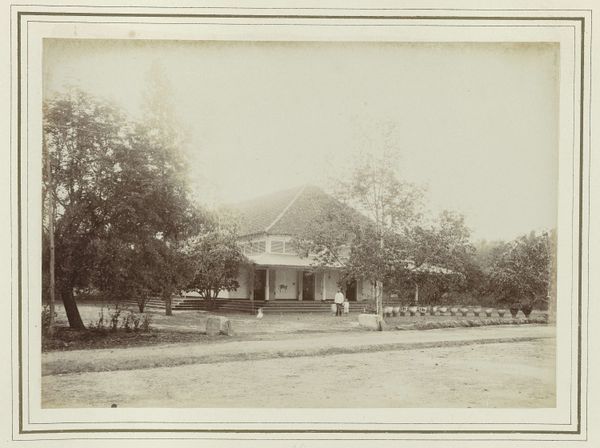
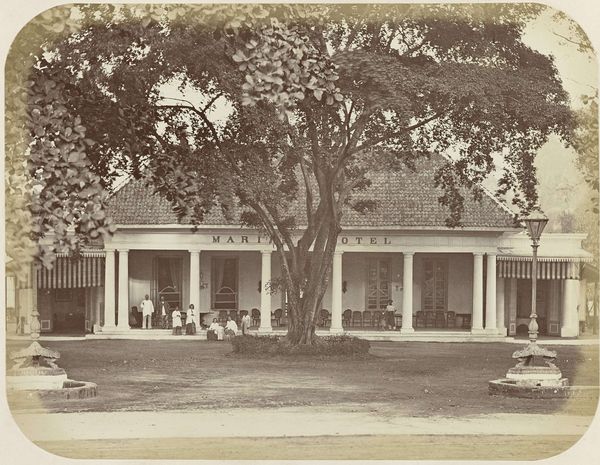
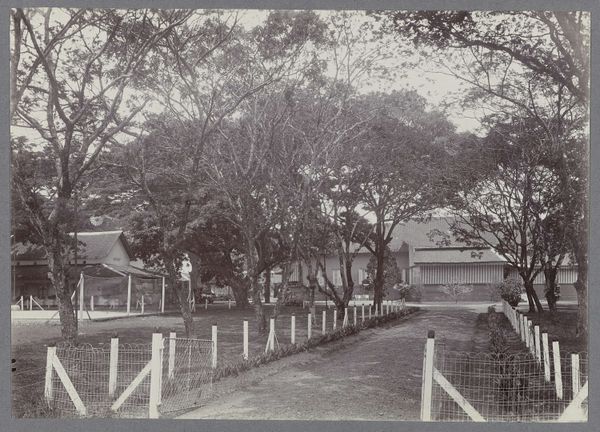
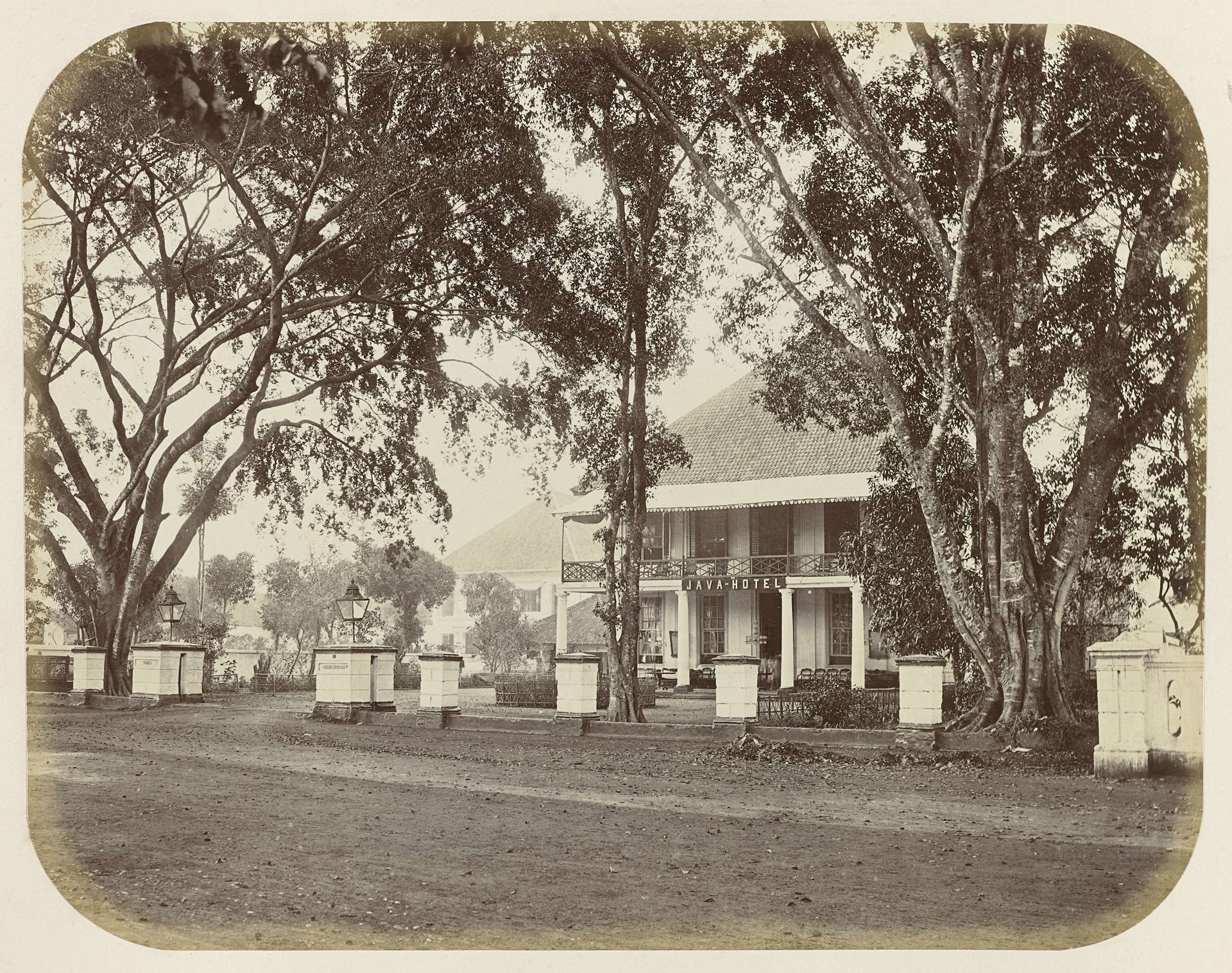
Editor: This is "Java-Hotel op Rijswijk", a photograph from before 1872 by Woodbury & Page, housed in the Rijksmuseum. It looks like an albumen print. The image depicts a hotel, partially obscured by large trees. The mood is serene, almost ghostly. What’s your take on this piece? Curator: This image offers a fascinating window into the means of production of colonial imagery. The albumen print, a process heavily reliant on both material resources and skilled labor, reveals much about the relationship between Europe and its colonies in the 19th century. Think about where the materials for this print came from: the silver, the eggs for the albumen. Editor: So, you're suggesting that the photograph itself is a product of colonial exploitation? Curator: Precisely. The seemingly innocuous landscape, meticulously captured and reproduced, is inseparable from the networks of trade and power that enabled its creation. The exotic "Orient" became a consumable commodity, manufactured and distributed back to Europe, reinforcing a very specific gaze. Do you consider the way the photograph idealizes a landscape, turning a blind eye on colonial operations? Editor: I hadn't thought about it that way, focusing on the materials and labor involved really shifts my perspective on what this image represents. Curator: Exactly. It compels us to examine the very materiality of art production, uncovering the complex relationship between artistic creation and the broader systems of power and resource extraction. It's not just an image; it's a product of its time. Editor: That makes me consider photography and its use as not only artistic endeavors, but also documentations of societal endeavors. I will think more critically on materials used when evaluating art. Thanks!

Artwork details
- Medium
- photography, albumen-print
- Dimensions
- height 188 mm, width 240 mm
- Location
- Rijksmuseum
- Copyright
- Rijks Museum: Open Domain
Tags
Comments
Share your thoughts
About this artwork
Editor: This is "Java-Hotel op Rijswijk", a photograph from before 1872 by Woodbury & Page, housed in the Rijksmuseum. It looks like an albumen print. The image depicts a hotel, partially obscured by large trees. The mood is serene, almost ghostly. What’s your take on this piece? Curator: This image offers a fascinating window into the means of production of colonial imagery. The albumen print, a process heavily reliant on both material resources and skilled labor, reveals much about the relationship between Europe and its colonies in the 19th century. Think about where the materials for this print came from: the silver, the eggs for the albumen. Editor: So, you're suggesting that the photograph itself is a product of colonial exploitation? Curator: Precisely. The seemingly innocuous landscape, meticulously captured and reproduced, is inseparable from the networks of trade and power that enabled its creation. The exotic "Orient" became a consumable commodity, manufactured and distributed back to Europe, reinforcing a very specific gaze. Do you consider the way the photograph idealizes a landscape, turning a blind eye on colonial operations? Editor: I hadn't thought about it that way, focusing on the materials and labor involved really shifts my perspective on what this image represents. Curator: Exactly. It compels us to examine the very materiality of art production, uncovering the complex relationship between artistic creation and the broader systems of power and resource extraction. It's not just an image; it's a product of its time. Editor: That makes me consider photography and its use as not only artistic endeavors, but also documentations of societal endeavors. I will think more critically on materials used when evaluating art. Thanks!
Comments
Share your thoughts