About this artwork
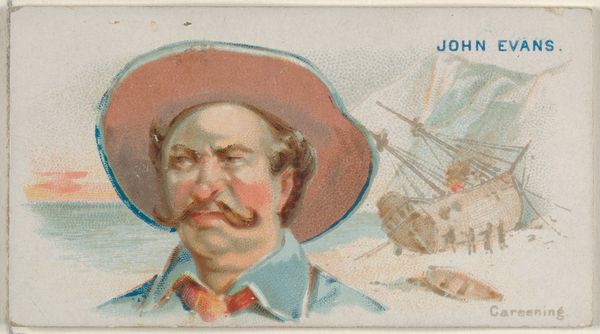
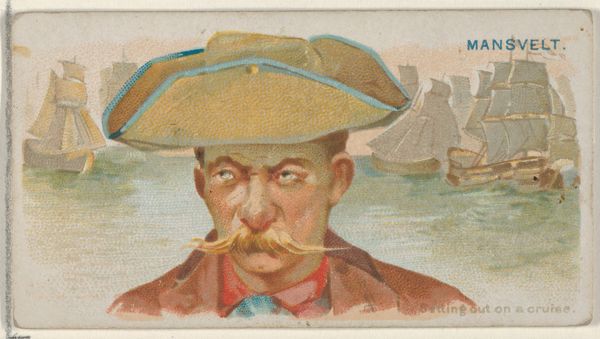
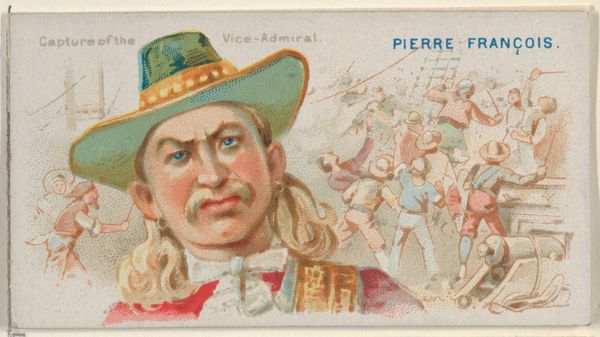
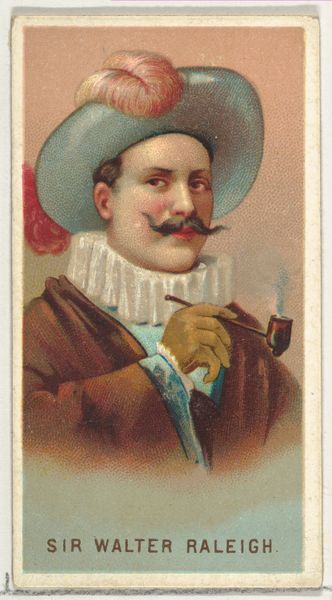
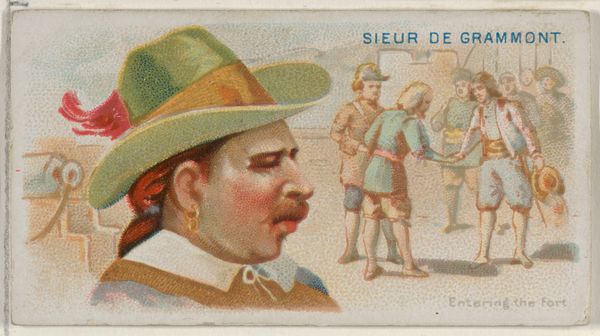
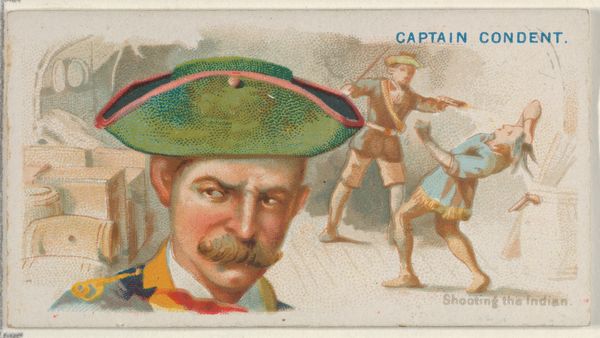
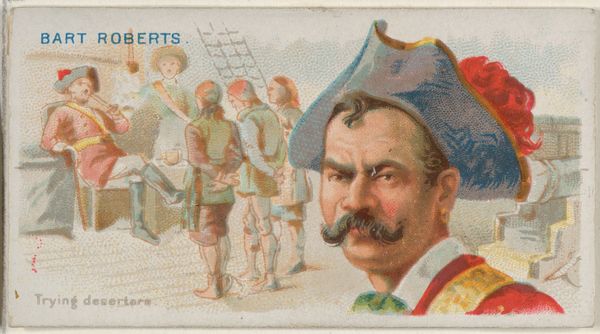
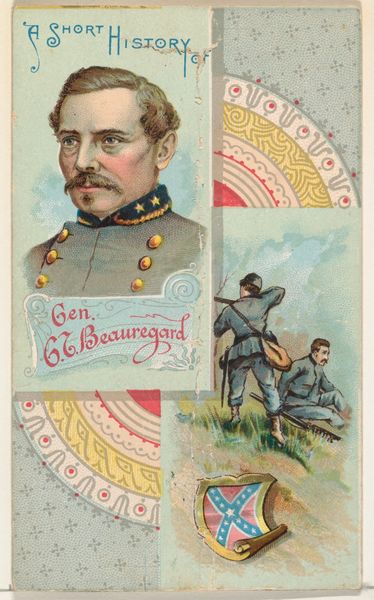
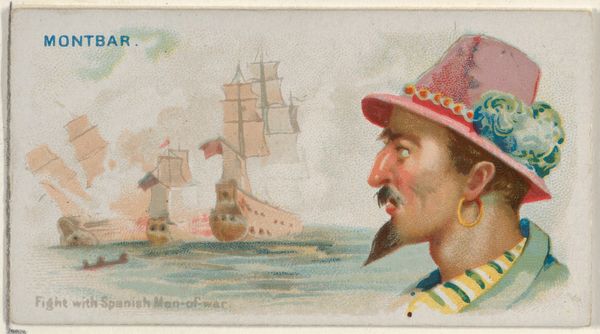
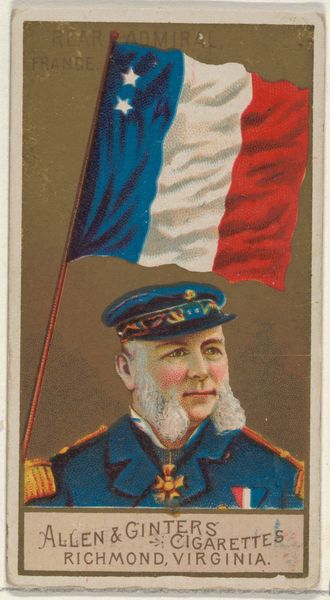
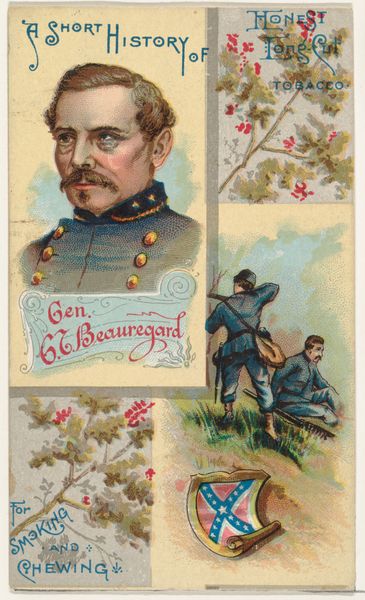
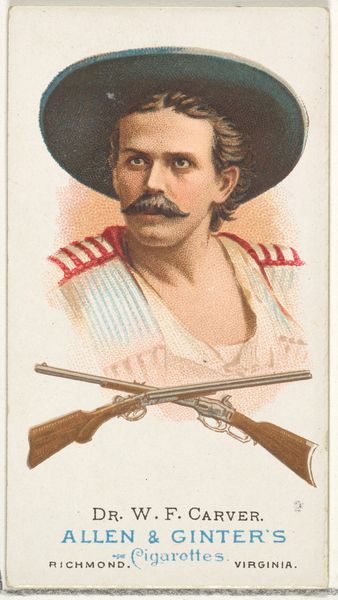
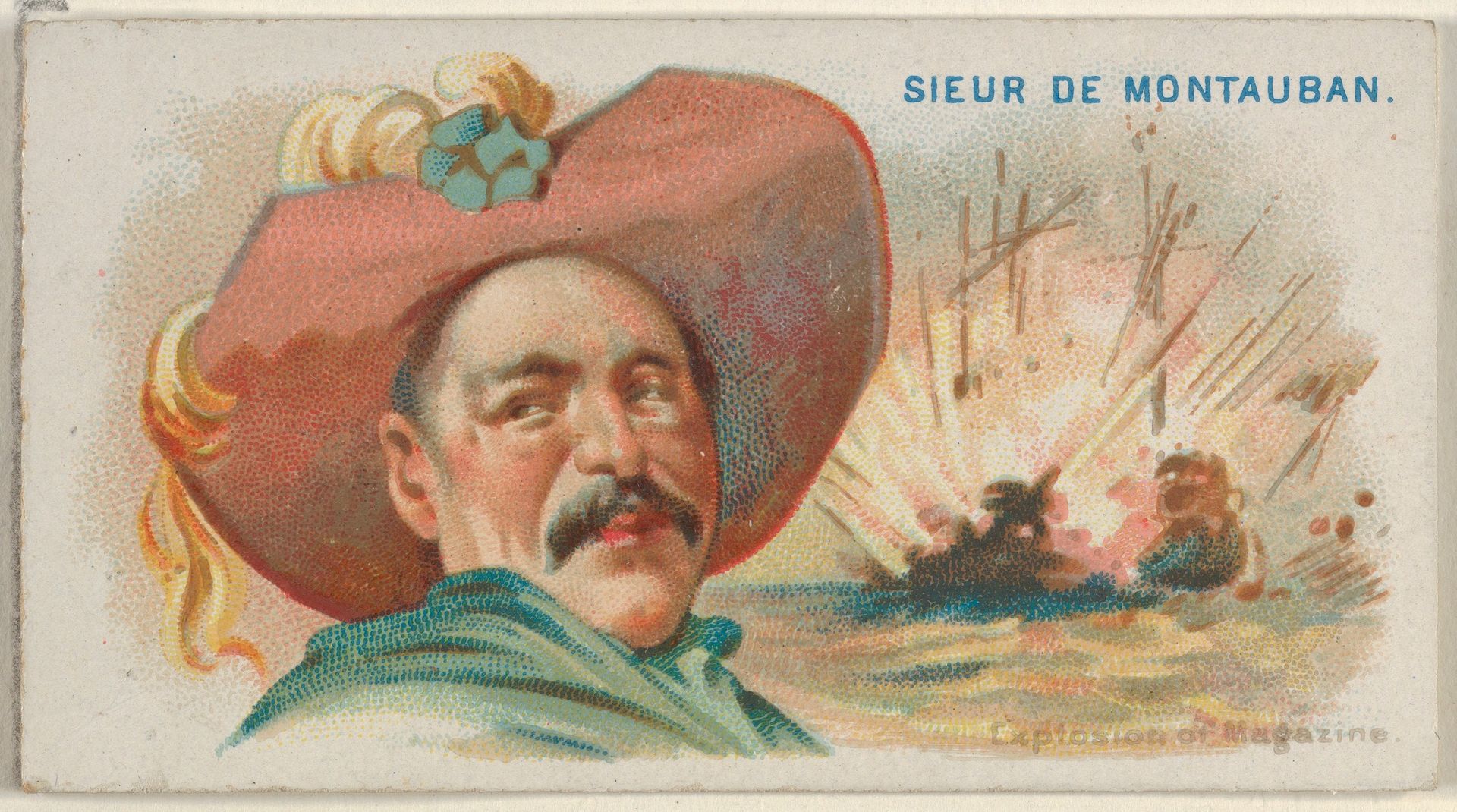
This lithograph card, made by Allen & Ginter, was one of a series included in cigarette packs. The images promoted the brand, but also offered consumers a taste of exotic adventure, without the expense of travel. Printed images like these were made possible by industrial advancements in image reproduction; chromolithography allowed for mass production and wider distribution. In this case, we see Sieur de Montauban, a pirate, in a rather swashbuckling pose, with an explosion in the background. It’s quite a feat to capture such a scene on something so small – a surface not much bigger than a postage stamp. This miniaturization is key to the card’s impact. It represents a democratizing impulse, driven by industrial production. The image, and the dream of adventure it represents, was literally in the hands of anyone who could afford a pack of cigarettes. Ultimately, the success of these cards lies in their accessibility. They blur the lines between art, advertising, and everyday life, offering a glimpse into a world of both fantasy and commerce.
Sieur de Montauban, Explosion of Magazine, from the Pirates of the Spanish Main series (N19) for Allen & Ginter Cigarettes
1886 - 1891
Artwork details
- Medium
- drawing, print, watercolor
- Dimensions
- Sheet: 1 1/2 x 2 3/4 in. (3.8 x 7 cm)
- Location
- Metropolitan Museum of Art, New York, NY
- Copyright
- Public Domain
Tags
Comments
Share your thoughts
About this artwork
This lithograph card, made by Allen & Ginter, was one of a series included in cigarette packs. The images promoted the brand, but also offered consumers a taste of exotic adventure, without the expense of travel. Printed images like these were made possible by industrial advancements in image reproduction; chromolithography allowed for mass production and wider distribution. In this case, we see Sieur de Montauban, a pirate, in a rather swashbuckling pose, with an explosion in the background. It’s quite a feat to capture such a scene on something so small – a surface not much bigger than a postage stamp. This miniaturization is key to the card’s impact. It represents a democratizing impulse, driven by industrial production. The image, and the dream of adventure it represents, was literally in the hands of anyone who could afford a pack of cigarettes. Ultimately, the success of these cards lies in their accessibility. They blur the lines between art, advertising, and everyday life, offering a glimpse into a world of both fantasy and commerce.
Comments
Share your thoughts