


Curatorial notes
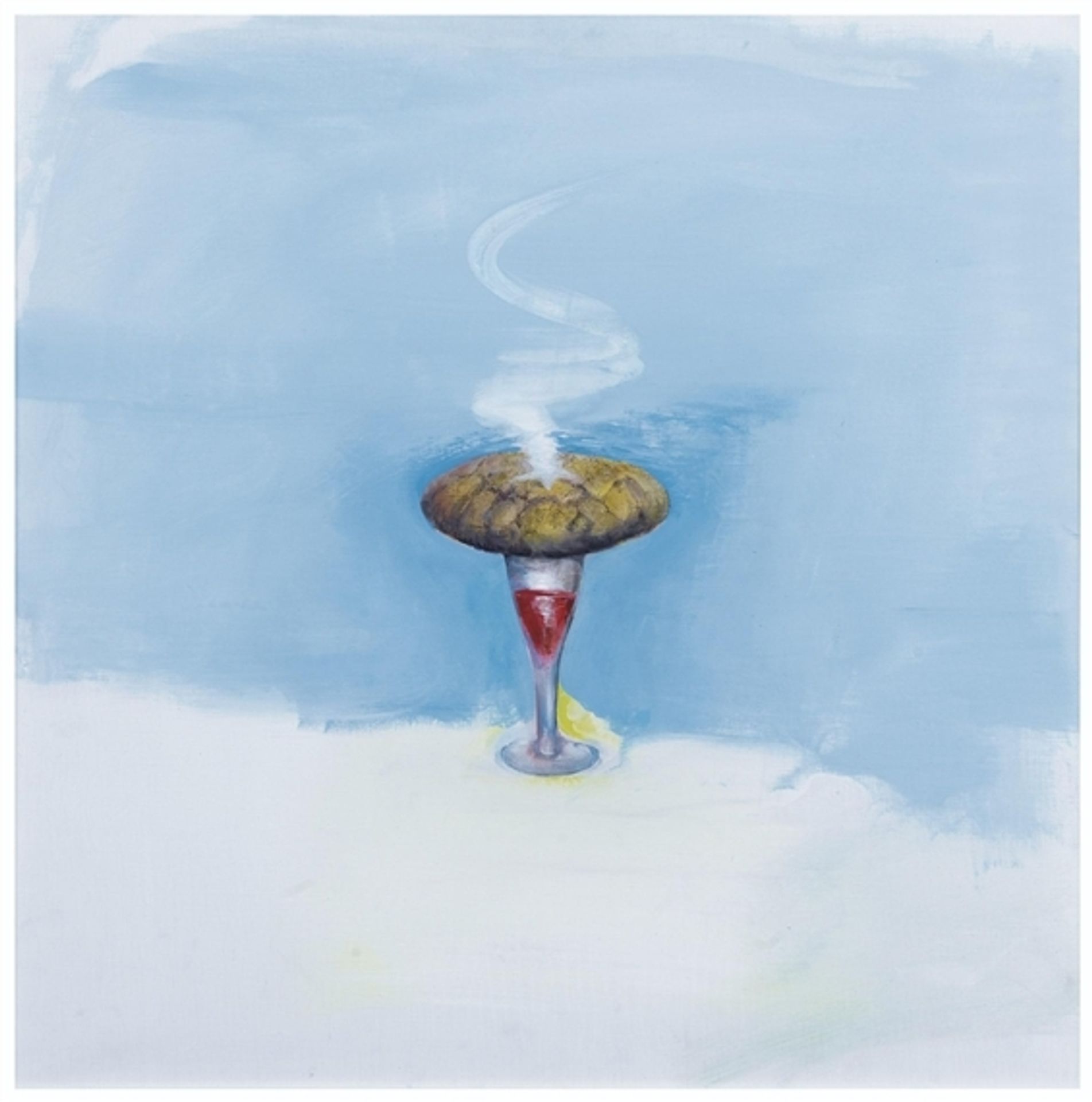
Curator: Here we have Martial Raysse’s "Le Pain et le Vin," or "The Bread and the Wine," created in 1984. It’s an oil painting on canvas, fairly modest in scale. My first thought? Oddly unsettling. Editor: That’s putting it mildly! It's bread on top of wine. Bread emanating steam. All set against this…icy pastel sky. It clashes, doesn't it? Like luxury gone wrong, conspicuous consumption with a touch of the absurd. Curator: I see it as engaging with the very construction of desire. Look at how Raysse depicts the wine glass: a slender, refined form contrasted against the hefty, almost primordial loaf of bread. The contrast itself becomes a statement about how we manufacture needs. Editor: Or maybe he was hungry and thirsty at the same time! Seriously, the juxtaposition is so direct, so lacking in subtlety, that it circles back to… what? A kind of ironic reverence? The bread, with that wisp of steam, feels almost sacralized, yet the entire image is so intentionally…bizarre. Curator: He’s manipulating recognizable objects to challenge traditional relationships, just consider, how is consumerism linked to labour and artistic value here? The wine speaks of commerce, branding, and sophisticated tastes; the bread, perhaps, of labor, the basic material necessary for life. Is the hot, fresh bread being commodified and stylized as well? Editor: Definitely a sense of mockery and celebration present at the same time, bread in its unglamorous heft sitting atop the symbol of sophistication. Like, look at what we value! Like everything on top of an unstable, refined, expensive…foundation? Or a deconstructed communion? Curator: Exactly, this disruption reflects anxieties about late-stage consumer culture. He challenges us to question the narratives built around everyday commodities. By combining what is usually seen as an essential item to an object of elevated taste, is Raysse forcing us to reckon with an increasingly hollow or shallow and thus almost parodied symbolization of prosperity? Editor: I guess Raysse made something weird and yet unforgettable. That’s enough for me. Curator: Indeed, this peculiar assembly prompts questions about the foundations and disconnections we create as consumers. It remains an important reflection on the contradictions of our material culture.