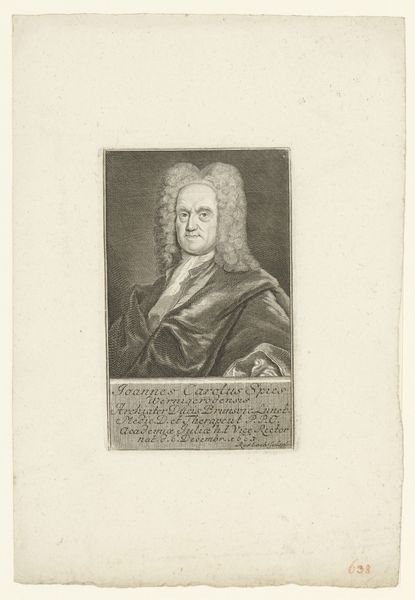
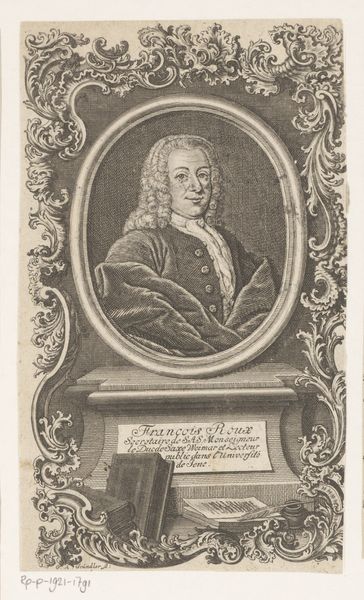
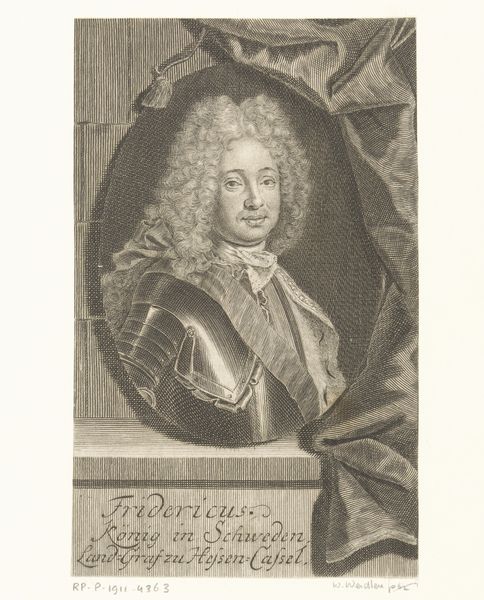
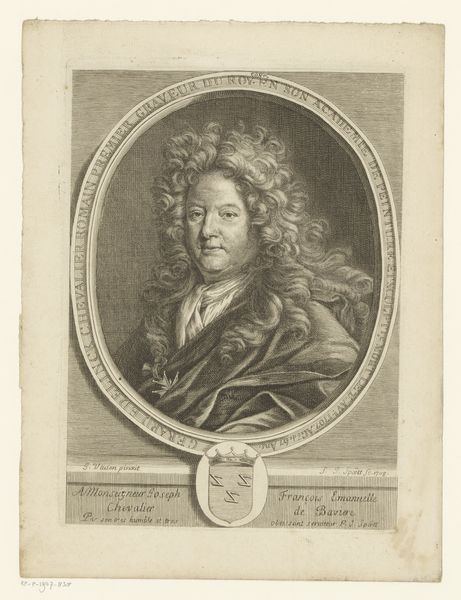
print, etching
#
portrait
#
parchment
# print
#
etching
#
history-painting
#
realism
Dimensions: 240 mm (height) x 160 mm (width) (plademaal)
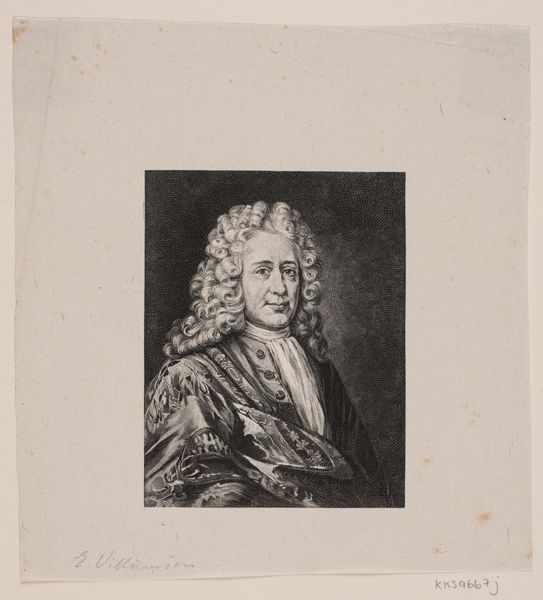
Curator: The portrait we're observing, simply titled "Ludvig Holberg", was etched in 1843 by Erling Eckersberg. You can find it here at the SMK, Statens Museum for Kunst. It's a rather formal depiction rendered in print, emphasizing detail and perhaps a sense of established authority. What are your initial thoughts on it? Editor: The overwhelming feeling is of understated elegance. The monochrome palette really enhances the composition's sharp focus on the figure. The flowing wig, combined with what looks like a robe, certainly projects a regal persona. Who exactly was Holberg, and why this portrayal? Curator: Ludvig Holberg was a prominent Dano-Norwegian playwright, historian, and essayist of the Enlightenment era. He's considered the father of modern Danish and Norwegian literature. Eckersberg's portrait emphasizes his standing in society, hence the formal attire. Note also the inscription "Friherre af Holberg," indicating his noble status. Editor: That explains the symbolism embedded in the portrayal—the wig indicating status, the cloak hinting at importance, and the crest underneath acting as an emblem of aristocratic entitlement. It feels very deliberately constructed to convey power and intellectual might. How much of this do you think Holberg himself orchestrated? Curator: Good question! These commissioned portraits, even etchings such as this one, often involved close collaboration. The sitter usually had a say in how they wished to be presented. It served the public function of cementing a legacy. It allowed Holberg's vision of himself to be disseminated widely within society, which might reflect both personal and professional agendas. Editor: Indeed, it's all about legacy and memory, isn’t it? He’s presenting himself, in perpetuity, for future generations, crafting that memory through visual symbols. He has a particular seriousness in his facial expression; almost like he's communicating through the ages. It makes me wonder how conscious he was of how his image might influence the reception of his work. Curator: I think we can safely say, very conscious. The Enlightenment was about reason and visibility, making one's mark on the world. The portrait would function within a network of cultural representation; not just a simple image, but as a powerful claim to intellectual authority and a lasting role within Danish history. Editor: Fascinating. This seemingly simple portrait unravels into such a rich tapestry of societal, historical, and symbolic meaning! Curator: Indeed. A reminder that portraits aren’t just records; they’re carefully constructed narratives, playing a significant part in social history.
Comments
No comments
Be the first to comment and join the conversation on the ultimate creative platform.
 Collect
 React
React Comment
More like this