About this artwork
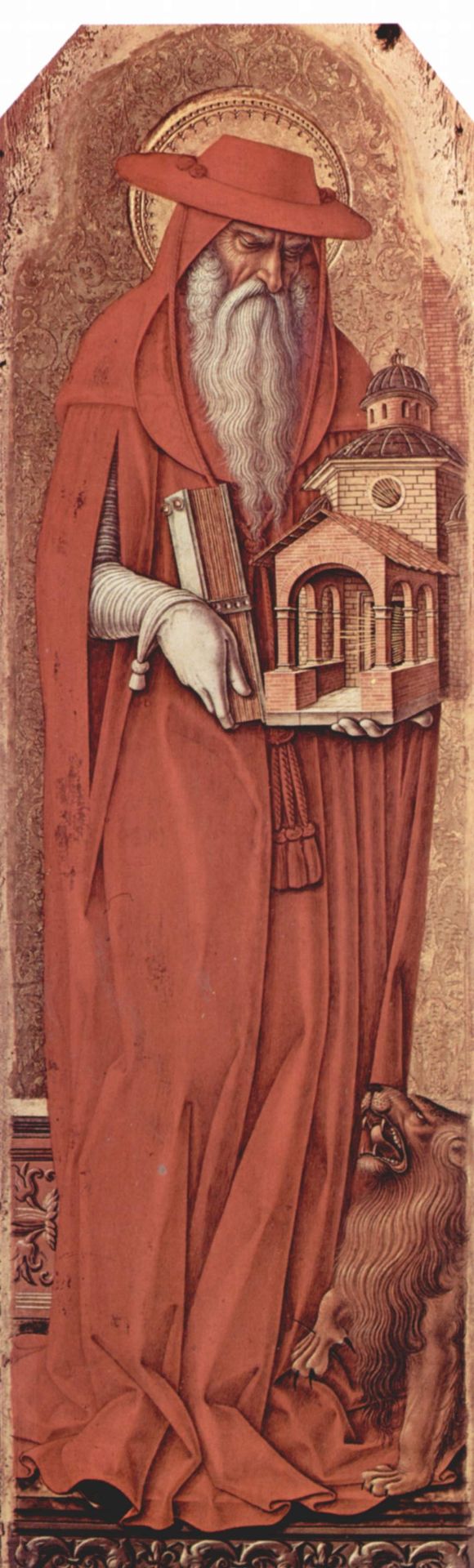
This panel showing Saint Jerome was painted by Carlo Crivelli, probably in the second half of the fifteenth century. The materials are oil paint, and tempera, on a wood panel. Look at the precise, painstaking way Crivelli applied his materials. It’s all meticulously considered. The drapery is carefully articulated, and the features of Saint Jerome and the lion at his feet are rendered with great attention to detail. Even the book and the architectural model he holds are depicted with a craftsman's sensibility. We can really see the time and labor involved. Consider how these materials and processes would have been understood at the time. Panel paintings like this, especially those incorporating expensive materials, were luxury goods. Crivelli’s refined technique catered to an elite clientele. The association of this kind of work with wealth and status elevates it beyond mere craft. Ultimately, the painting asks us to think about the connections between materials, production, and social value. Crivelli takes the traditions of craft, elevating them to the realm of fine art.

Artwork details
- Medium
- painting, oil-paint
- Dimensions
- 91 x 26 cm
- Copyright
- Public domain
Tags
portrait
painting
oil-paint
oil painting
christianity
history-painting
academic-art
italian-renaissance
Comments
Be the first to share your thoughts about this work.
About this artwork
This panel showing Saint Jerome was painted by Carlo Crivelli, probably in the second half of the fifteenth century. The materials are oil paint, and tempera, on a wood panel. Look at the precise, painstaking way Crivelli applied his materials. It’s all meticulously considered. The drapery is carefully articulated, and the features of Saint Jerome and the lion at his feet are rendered with great attention to detail. Even the book and the architectural model he holds are depicted with a craftsman's sensibility. We can really see the time and labor involved. Consider how these materials and processes would have been understood at the time. Panel paintings like this, especially those incorporating expensive materials, were luxury goods. Crivelli’s refined technique catered to an elite clientele. The association of this kind of work with wealth and status elevates it beyond mere craft. Ultimately, the painting asks us to think about the connections between materials, production, and social value. Crivelli takes the traditions of craft, elevating them to the realm of fine art.
Comments
Be the first to share your thoughts about this work.