About this artwork
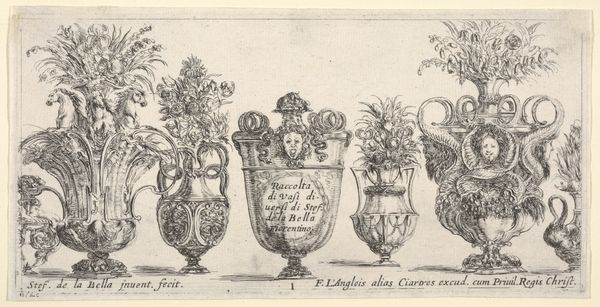
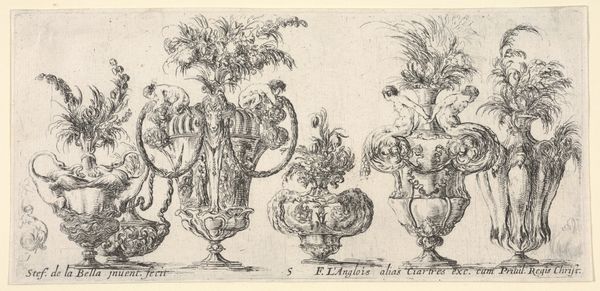
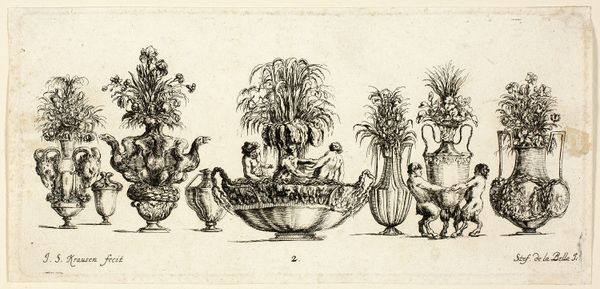
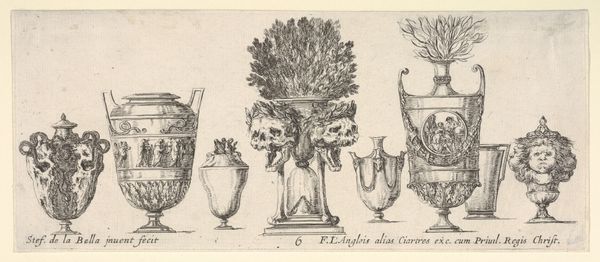
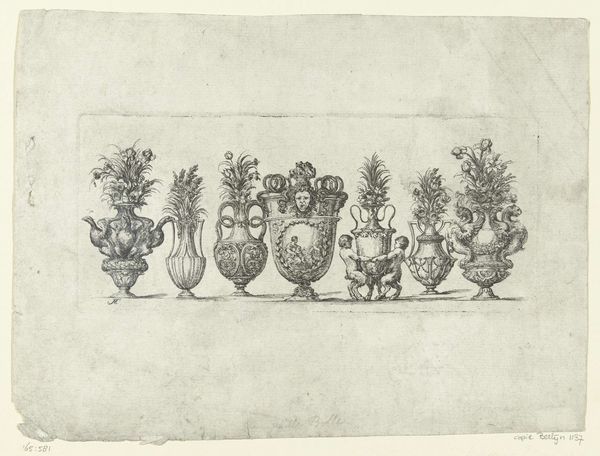
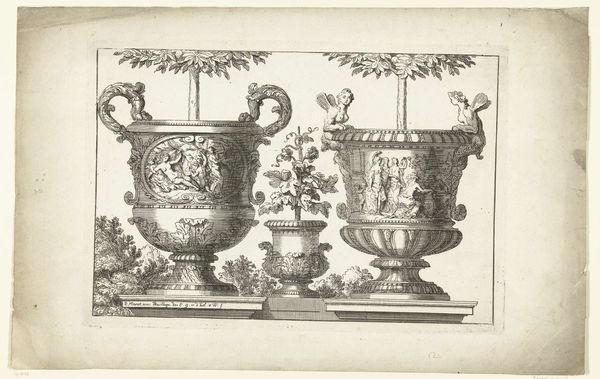
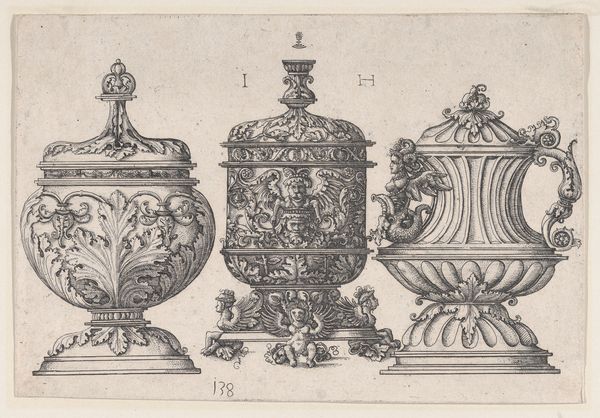
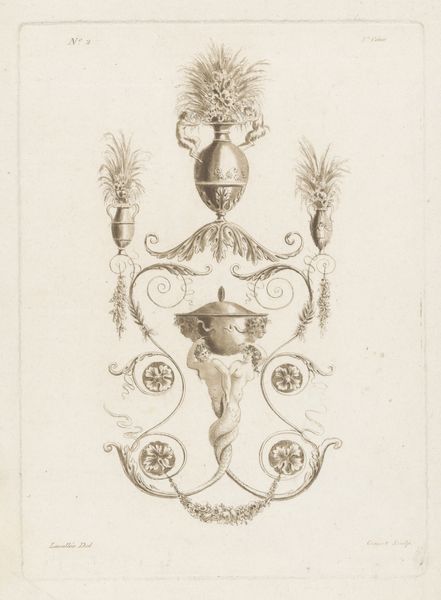
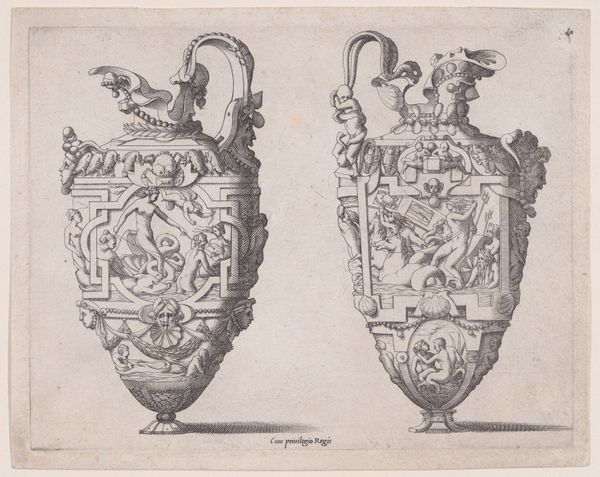
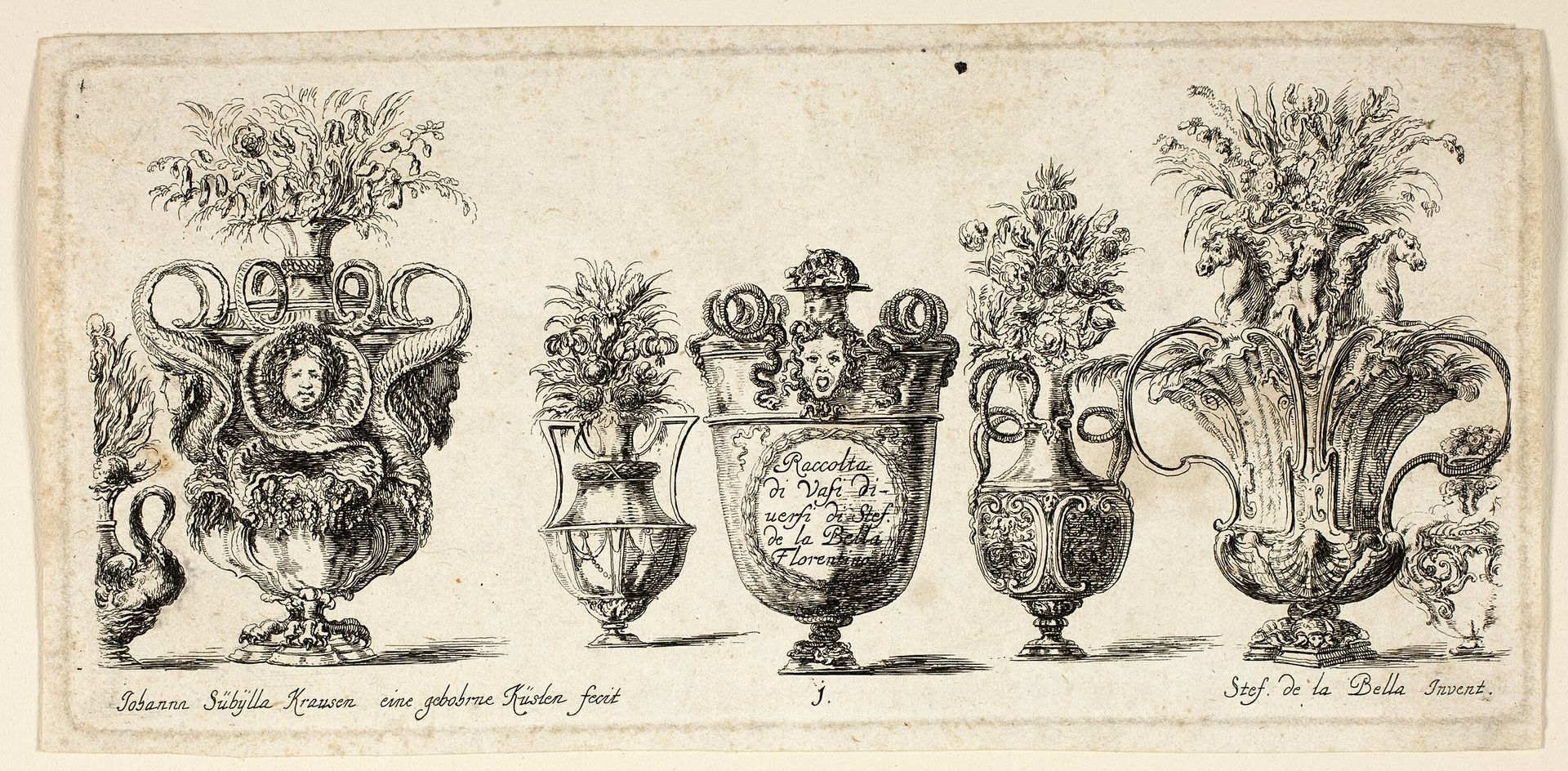
Johanna Sibylla Küsel made this print, “Plate One from Raccolta di Vasi diversi di Stef. de la Bella Fiorentino” sometime in the 17th or 18th century, depicting a series of ornate vase designs. Küsel’s print reproduces a series of images by the Florentine artist Stefano della Bella. During this period, printmaking served as a vital tool for disseminating artistic ideas across Europe. Prints allowed artists and designers to circulate their work to a wider audience and served as a means of artistic training. Manuals and model books like this were common in workshops, providing templates and inspiration for artisans. The inclusion of della Bella's name in the title suggests a marketing strategy, leveraging his reputation to increase the print's appeal and value. By studying such images alongside workshop inventories, guild records, and other historical documents, we can gain a better understanding of the artistic practices, the transmission of knowledge, and the commercial networks that shaped artistic production during this time. This print offers a glimpse into the visual culture of the early modern period, revealing the ways in which art and commerce were intertwined.
Plate One from Raccolta di Vasi diversi di Stef. de la Bella Fiorentino
1646


Artwork details
- Medium
- drawing, print, etching, paper
- Dimensions
- 105 × 215 mm (sheet)
- Location
- The Art Institute of Chicago
- Copyright
- Public Domain
Tags
Comments
Share your thoughts
About this artwork
Johanna Sibylla Küsel made this print, “Plate One from Raccolta di Vasi diversi di Stef. de la Bella Fiorentino” sometime in the 17th or 18th century, depicting a series of ornate vase designs. Küsel’s print reproduces a series of images by the Florentine artist Stefano della Bella. During this period, printmaking served as a vital tool for disseminating artistic ideas across Europe. Prints allowed artists and designers to circulate their work to a wider audience and served as a means of artistic training. Manuals and model books like this were common in workshops, providing templates and inspiration for artisans. The inclusion of della Bella's name in the title suggests a marketing strategy, leveraging his reputation to increase the print's appeal and value. By studying such images alongside workshop inventories, guild records, and other historical documents, we can gain a better understanding of the artistic practices, the transmission of knowledge, and the commercial networks that shaped artistic production during this time. This print offers a glimpse into the visual culture of the early modern period, revealing the ways in which art and commerce were intertwined.
Comments
Share your thoughts