c. 1885 - 1900
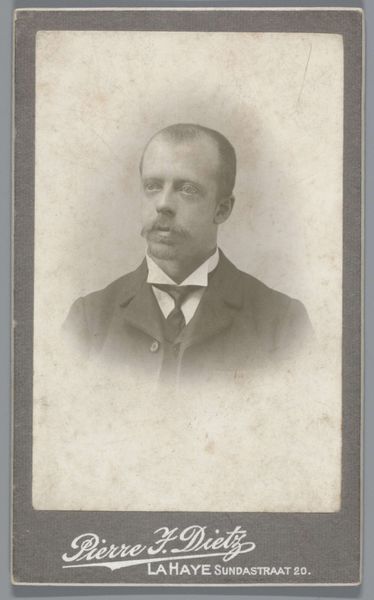
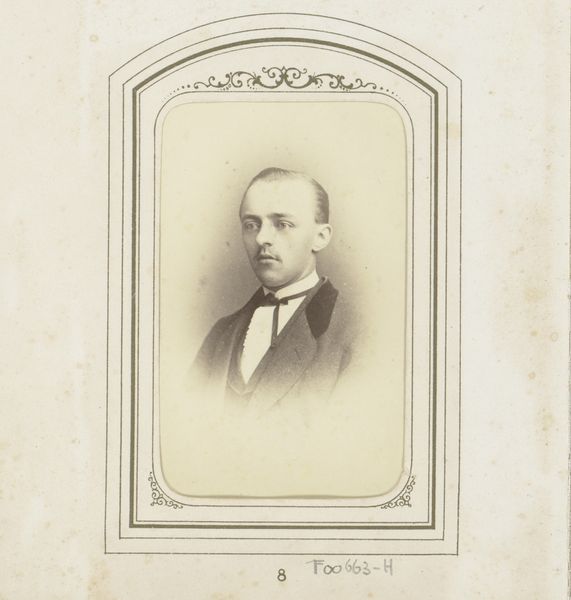
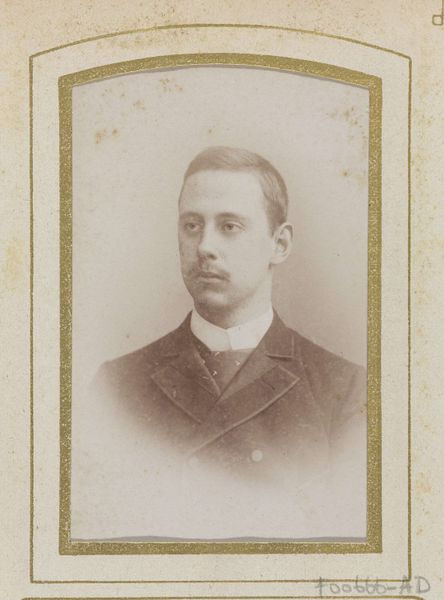
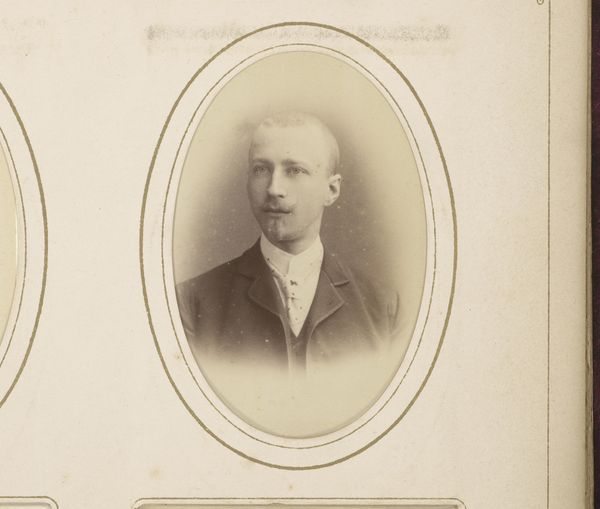
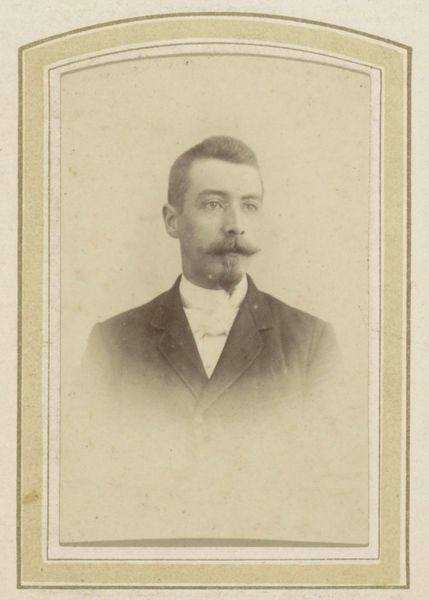
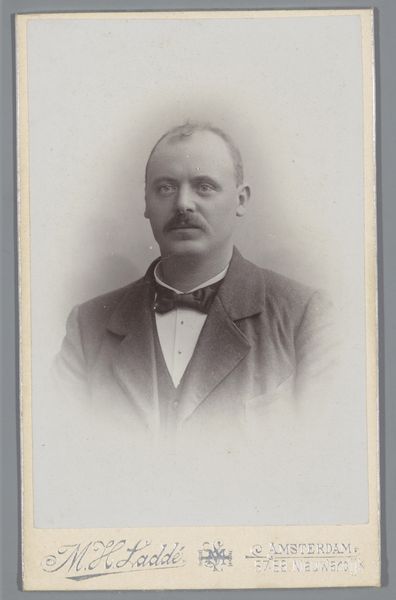
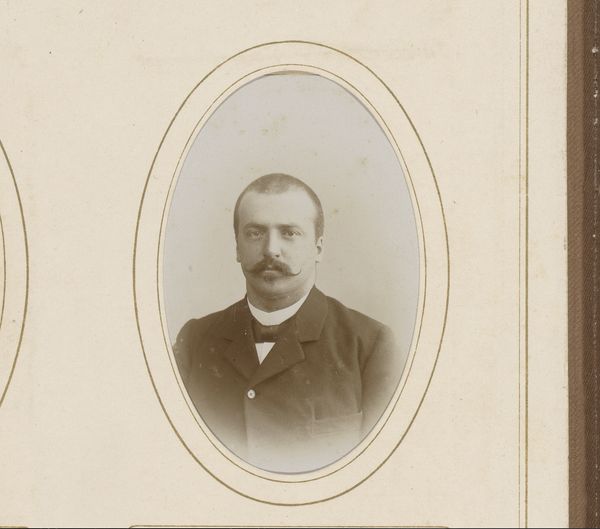
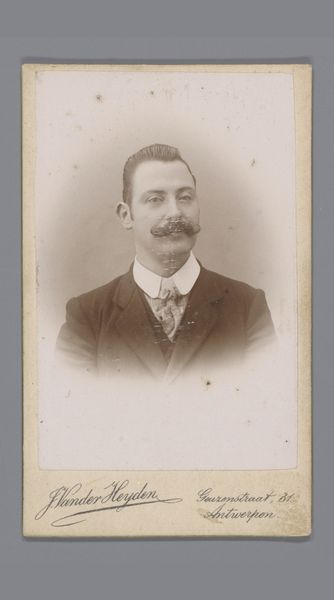
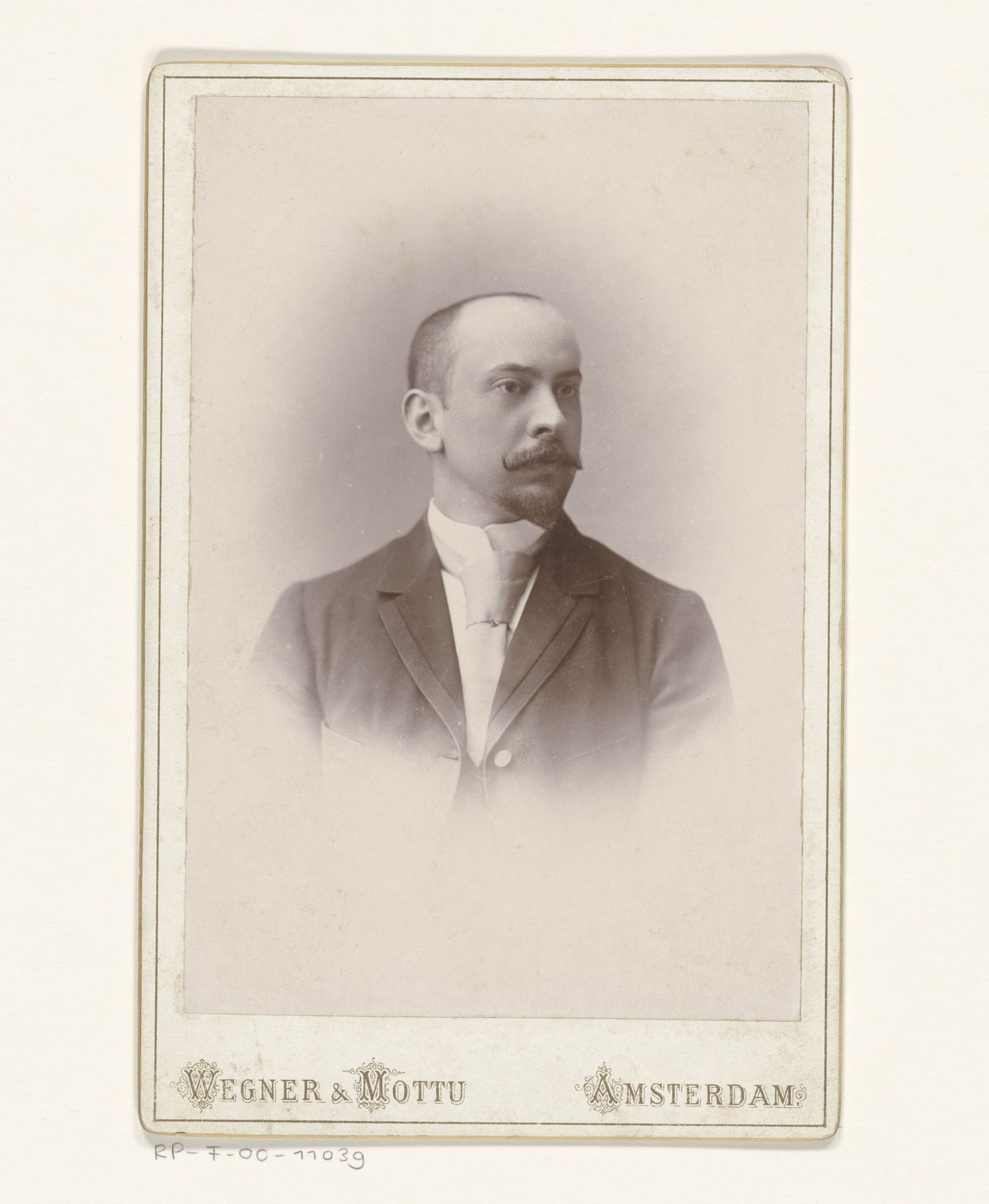
Portret van Louis Couperus

Listen to curator's interpretation
Curatorial notes
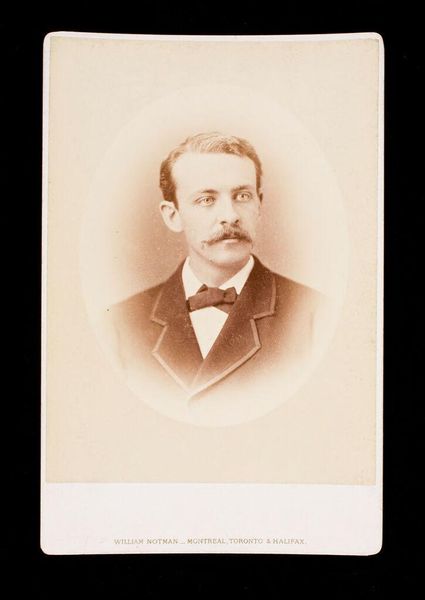
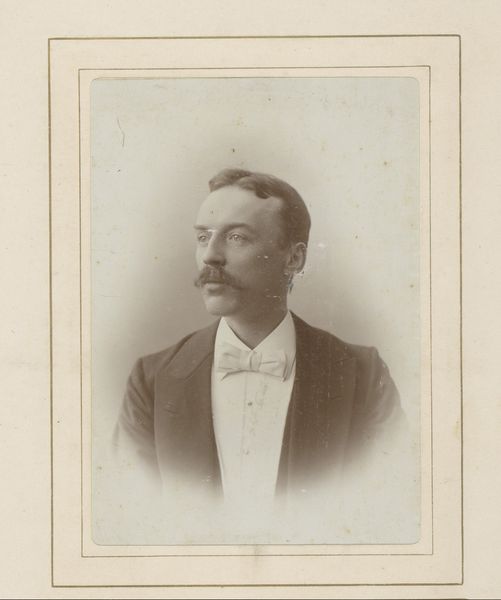
Editor: Here we have a photographic portrait of Louis Couperus, likely taken between 1885 and 1900 by Wegner & Mottu. It has an ethereal quality because of the vignette effect. What can you tell us about this piece? Curator: Let’s consider this photograph not just as a representation of Couperus, but as an object shaped by specific industrial processes. Look at the studio imprint: Wegner & Mottu, Amsterdam. These details are integral. Editor: How so? Curator: Well, understanding the studio’s operation—the labour involved in producing this photograph, the chemicals used, the market it served—tells us much about the photograph's place within broader socio-economic networks. These photographic studios manufactured images for consumption. How did someone like Couperus, likely from a privileged background, engage with that? Was this about carefully constructing an identity for public consumption? Editor: That's a fascinating point! I hadn't considered the studio as part of the artistic statement. Curator: It also prompts us to question the role of photography itself. The development process made the photograph look "soft", almost romantic. Why did Couperus, or the studio, make that choice? This might point to the construction of authorship that considers the photographer's influence just as much as the writer's self-representation. Editor: That's such a different lens for viewing this! I’m going to be thinking about production so much more. Curator: Good. Question everything you see – its materiality and how its historical consumption shapes what we understand about the person being represented.