1900
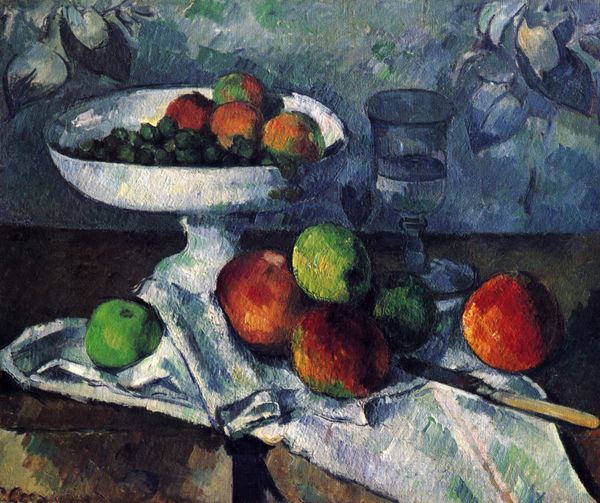
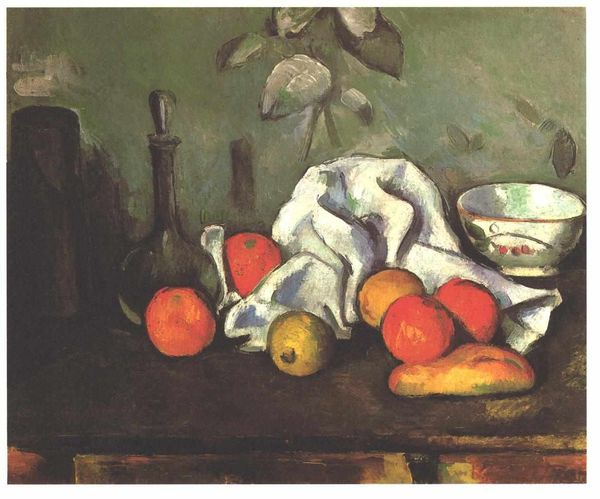
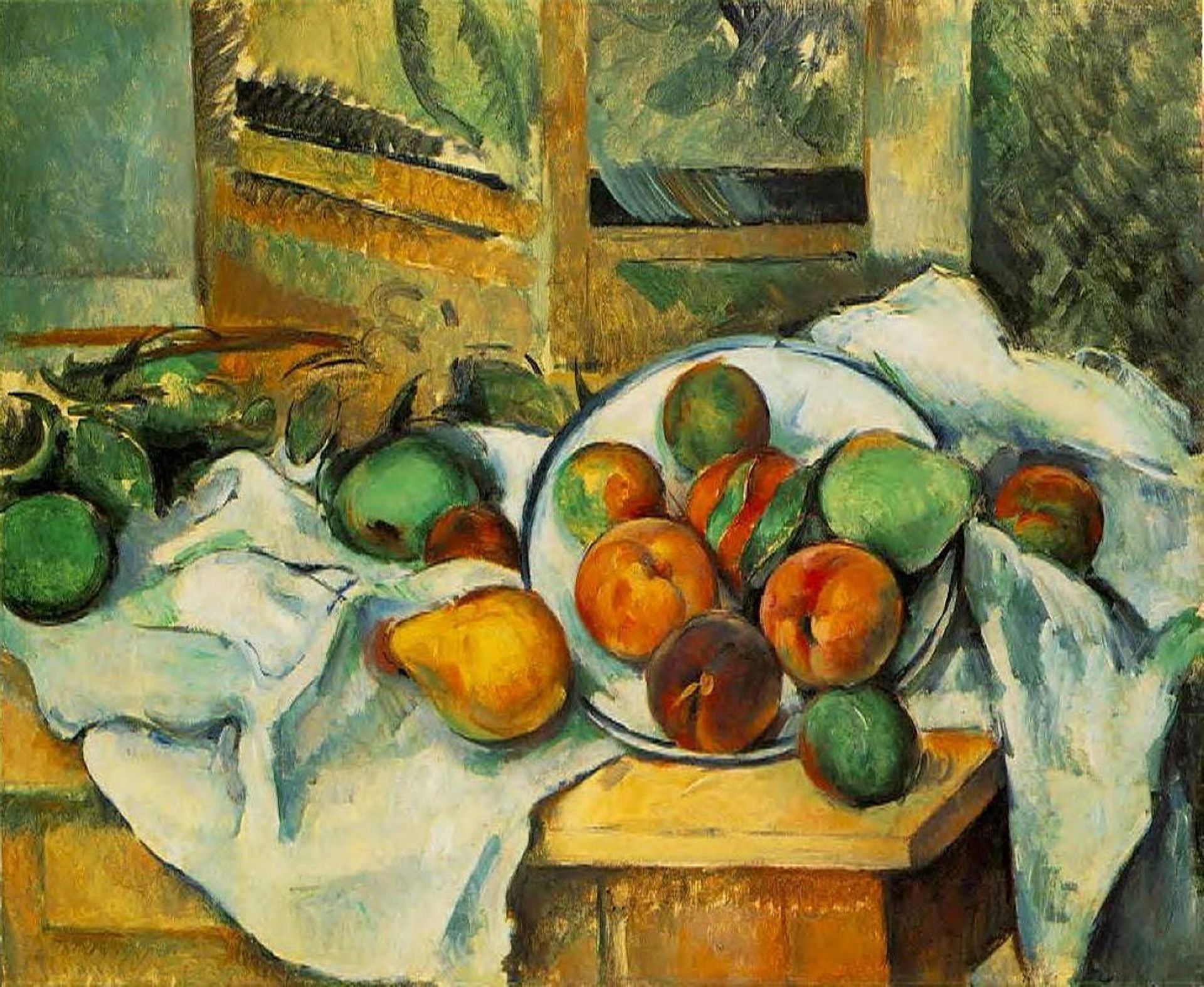
Table, Napkin and Fruit

Paul Cézanne
1839 - 1906Location
Barnes Foundation, Philadelphia, PA, USListen to curator's interpretation
Curatorial notes
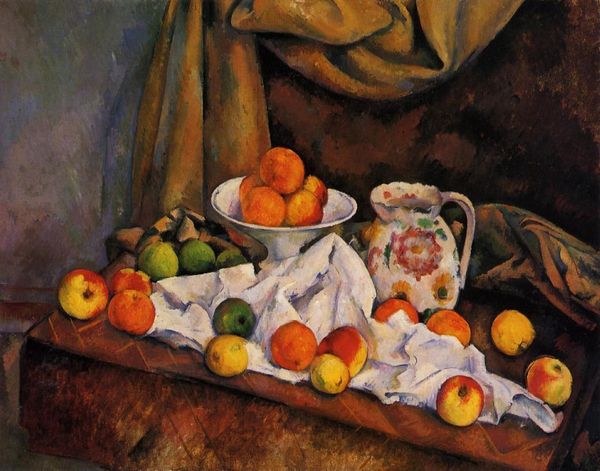
Paul Cézanne’s painting, *Table, Napkin and Fruit* offers us a glimpse into domestic life through a still life, a genre often associated with the feminine sphere. Painted during a period of significant social change in France, Cézanne challenges traditional academic painting through his unique approach to perspective and form. The luscious fruit arranged on the crumpled white cloth speaks to themes of abundance and sensuality, but I think it also hints at the fleeting nature of pleasure, reminiscent of the vanitas tradition. The arrangement of objects invites us to contemplate the artist's personal relationship to the everyday, as he transforms the mundane into something worthy of our attention. As Cézanne once said, "Painting is not just about copying nature; it is about capturing the emotion." This piece embodies that sentiment, inviting viewers to find beauty and meaning in the simplest of scenes. In its quiet way, the painting reflects broader societal shifts towards recognizing the value and beauty inherent in the everyday experiences of life.