1951
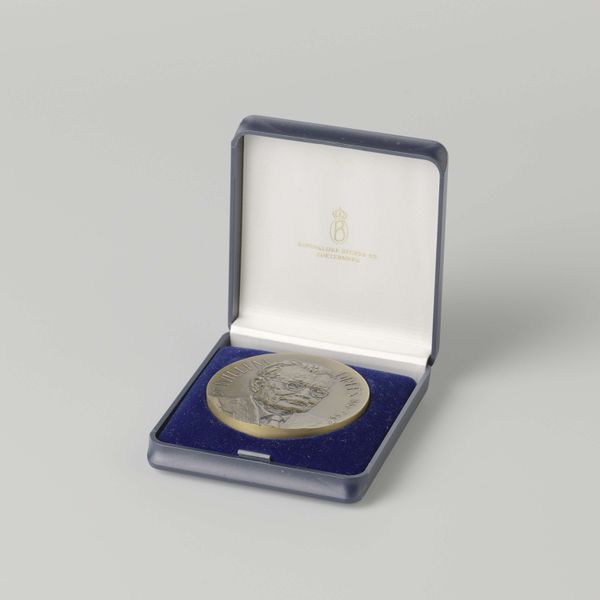
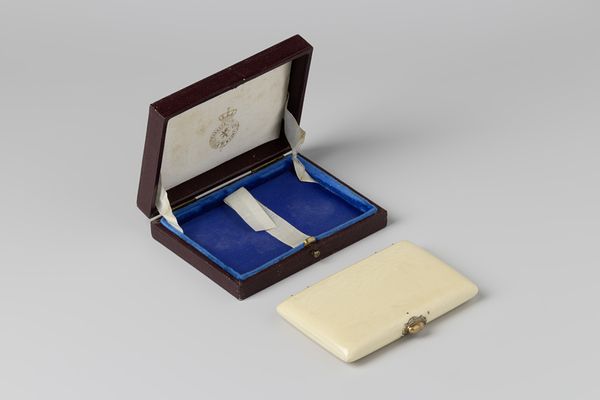
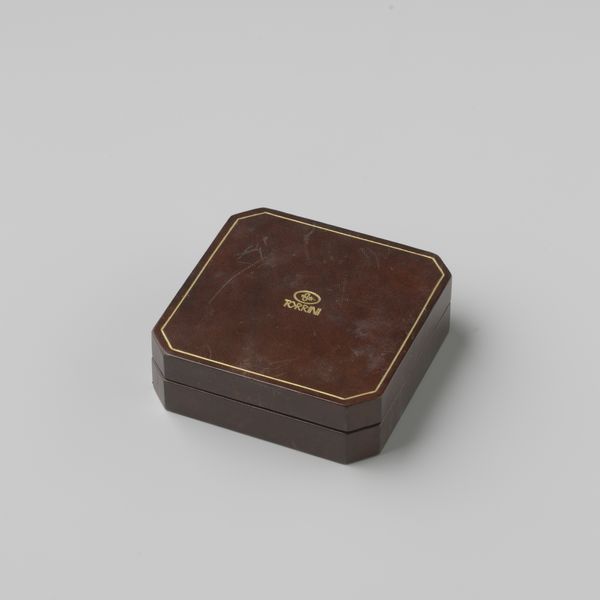
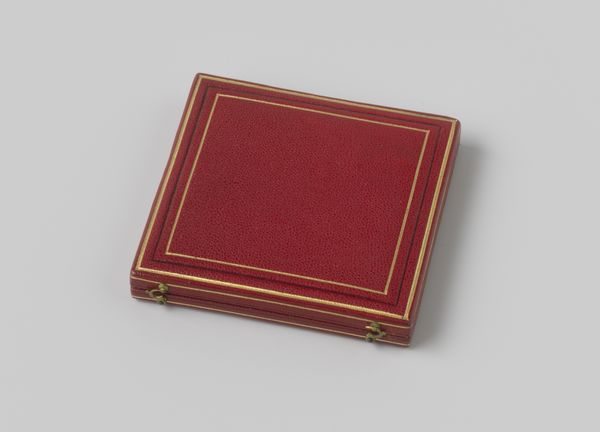
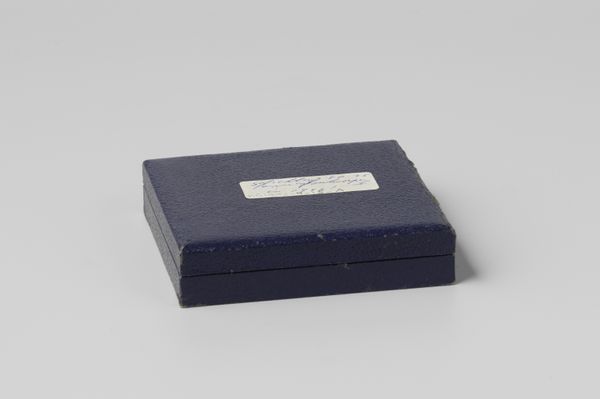
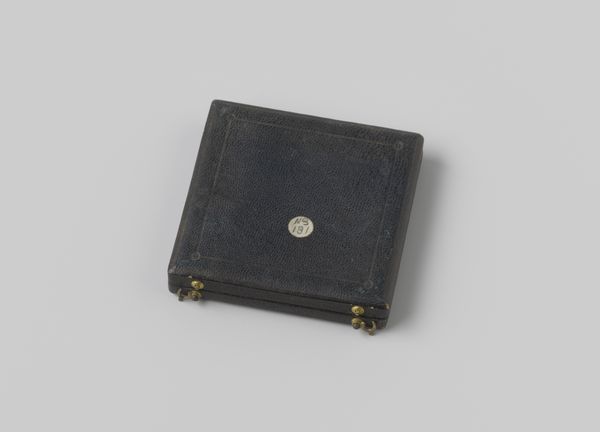
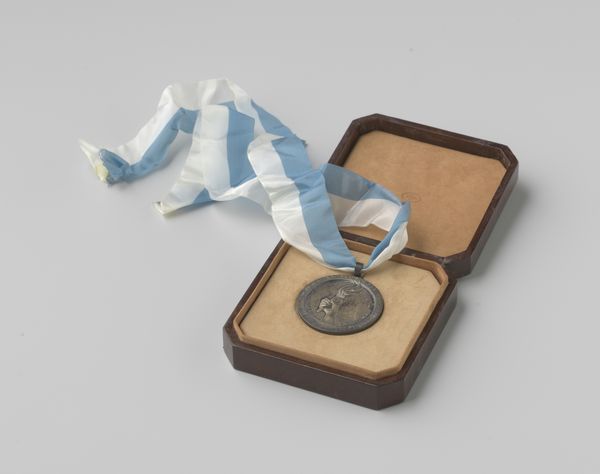
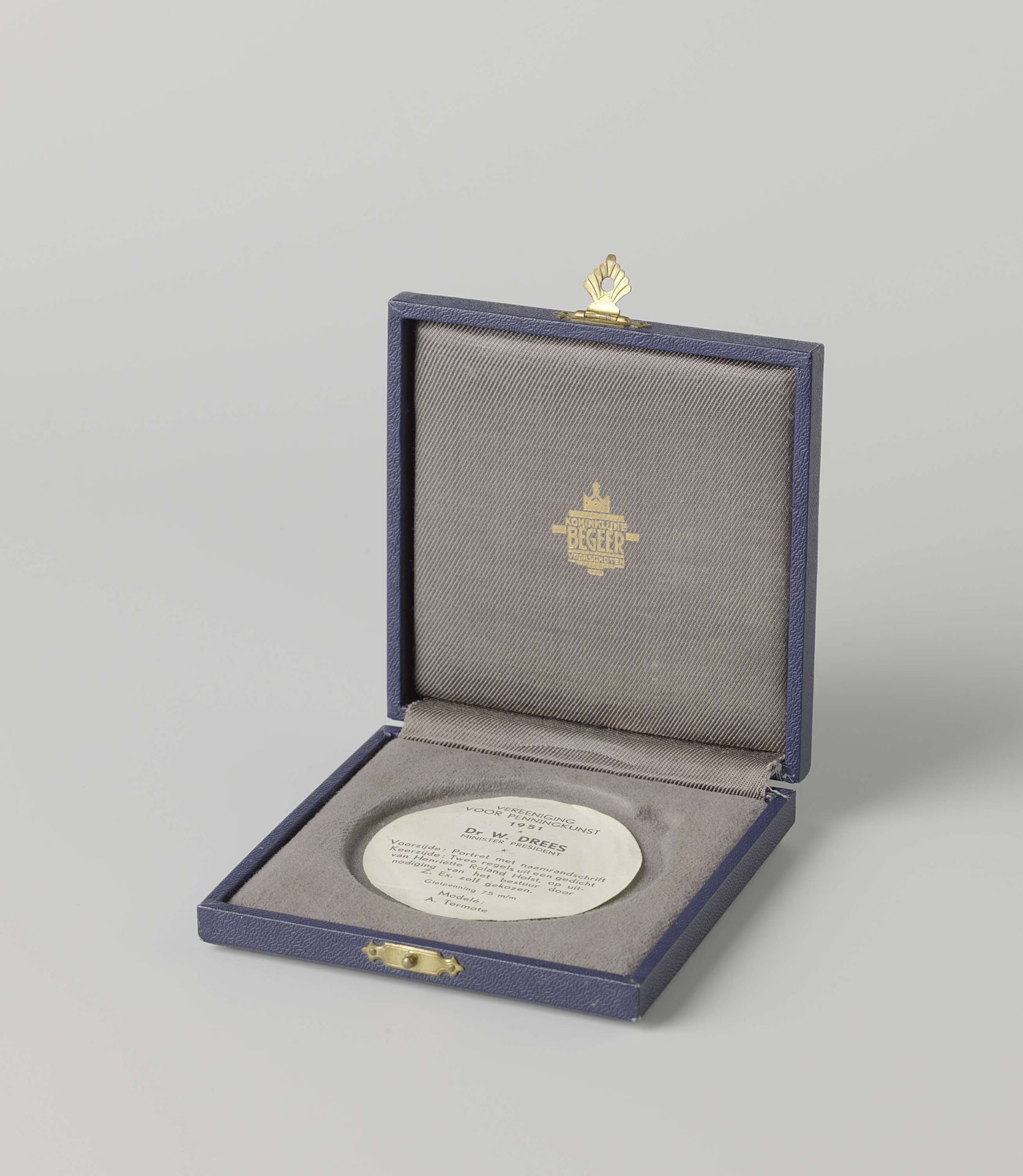
Doos bij penning Dr W. Drees, minister president

Koninklijke Utrechtsche Fabriek van Zilverwerken van C.J. Begeer
@koninklijkeutrechtschefabriekvanzilverwerkenvancjbegeerLocation
RijksmuseumListen to curator's interpretation
Curatorial notes
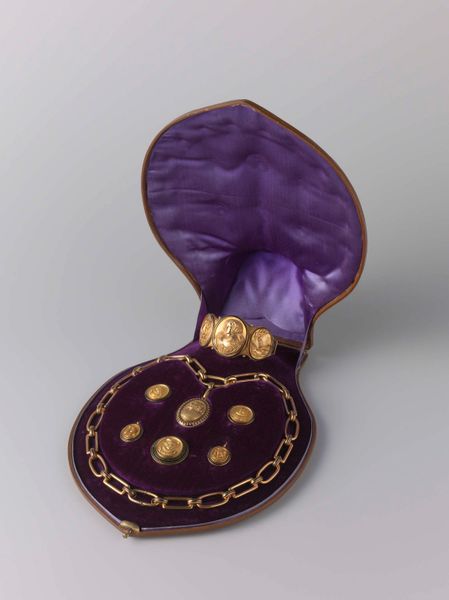
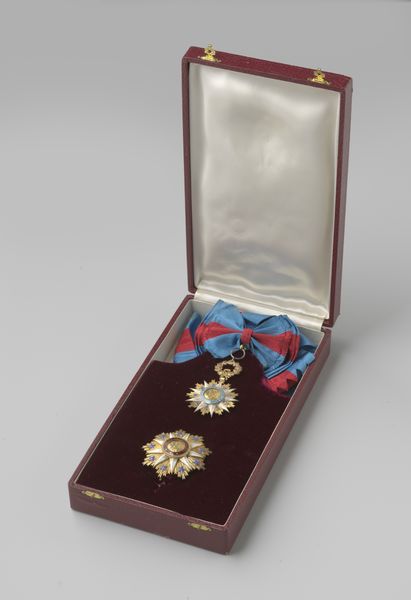
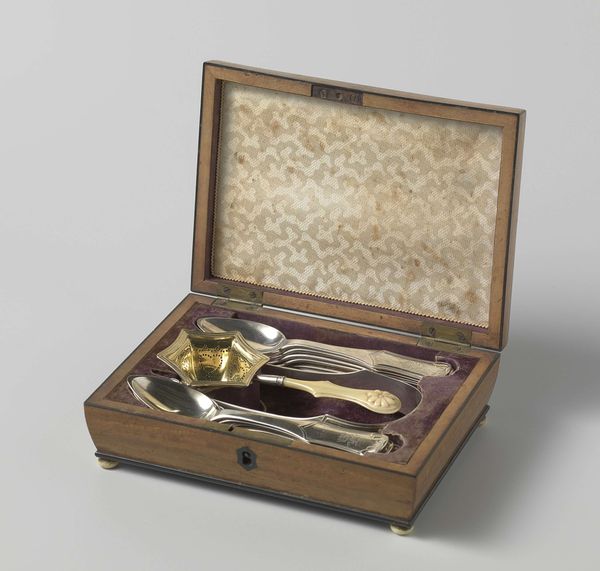
Curator: Here we see a photograph of a commemorative box from 1951, titled "Doos bij penning Dr W. Drees, minister president," attributed to the Koninklijke Utrechtsche Fabriek van Zilverwerken van C.J. Begeer. Editor: It presents such a formal, almost solemn, presence, doesn’t it? The muted tones, the deliberate arrangement—it all speaks of a carefully constructed significance. Curator: Indeed. It contains a medallion dedicated to Dr. W. Drees, who was a prominent figure in Dutch politics. Medallions, throughout history, serve as potent symbols. What significance might this object carry, given the time and figure involved? Editor: I'm drawn to the materials, the crafting of the box itself. The precision evident in the photography hints at larger questions about Dutch silverwork practices: Who were the laborers crafting these objects, and how were these tokens disseminated? Curator: Silverwork does bring in other levels of meaning, and it is certainly possible that the metal of this particular example would act as a statement of national strength and virtue during the postwar years in the Netherlands, embedding certain ideologies into an everyday item. Editor: Absolutely. These are not accidental details. Consider the company logo prominently displayed— it's a statement about quality and provenance. This medallion and its presentation speak volumes about branding and consumerism even in supposedly high minded tokens. Curator: Precisely, branding allows it to acquire associations beyond just pure aesthetics, which makes this image a fascinating historical capsule for material and immaterial cultural expressions. Editor: It shows how deeply symbols were embedded in economic and manufacturing processes. It is fascinating to remember those levels today.