About this artwork
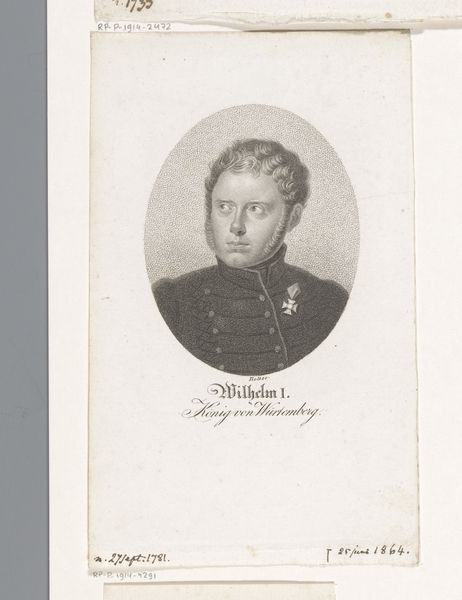
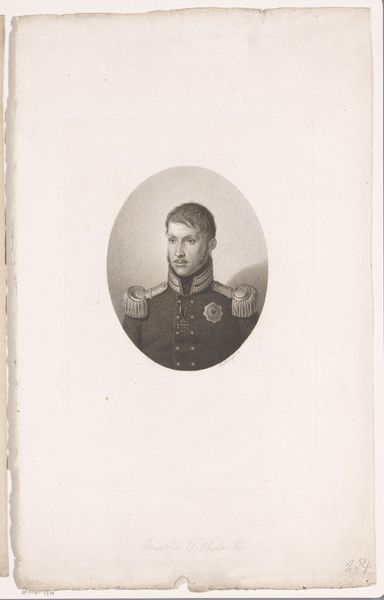
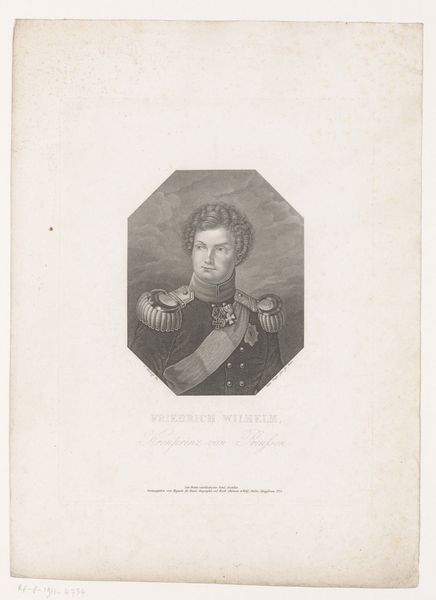
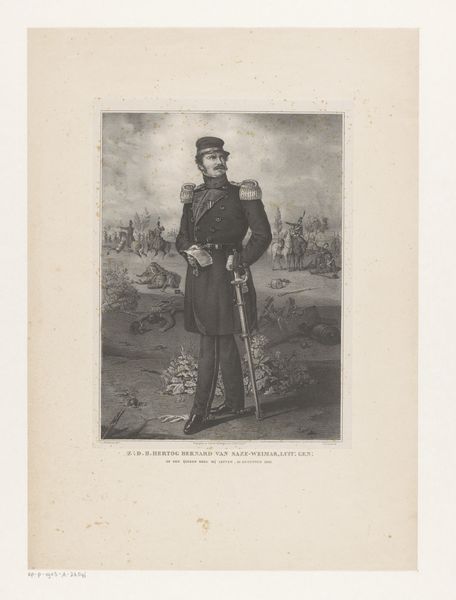
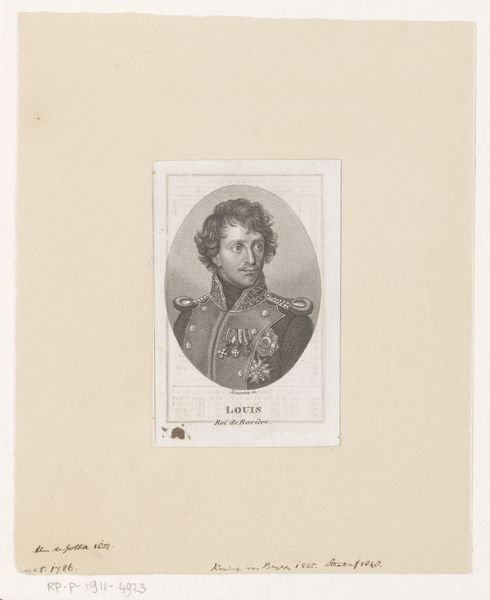
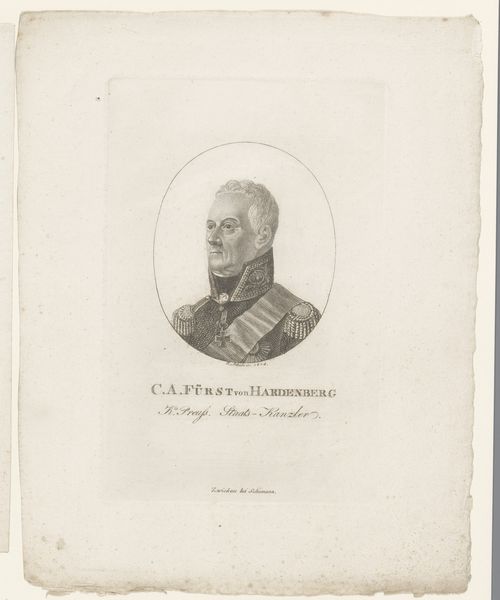
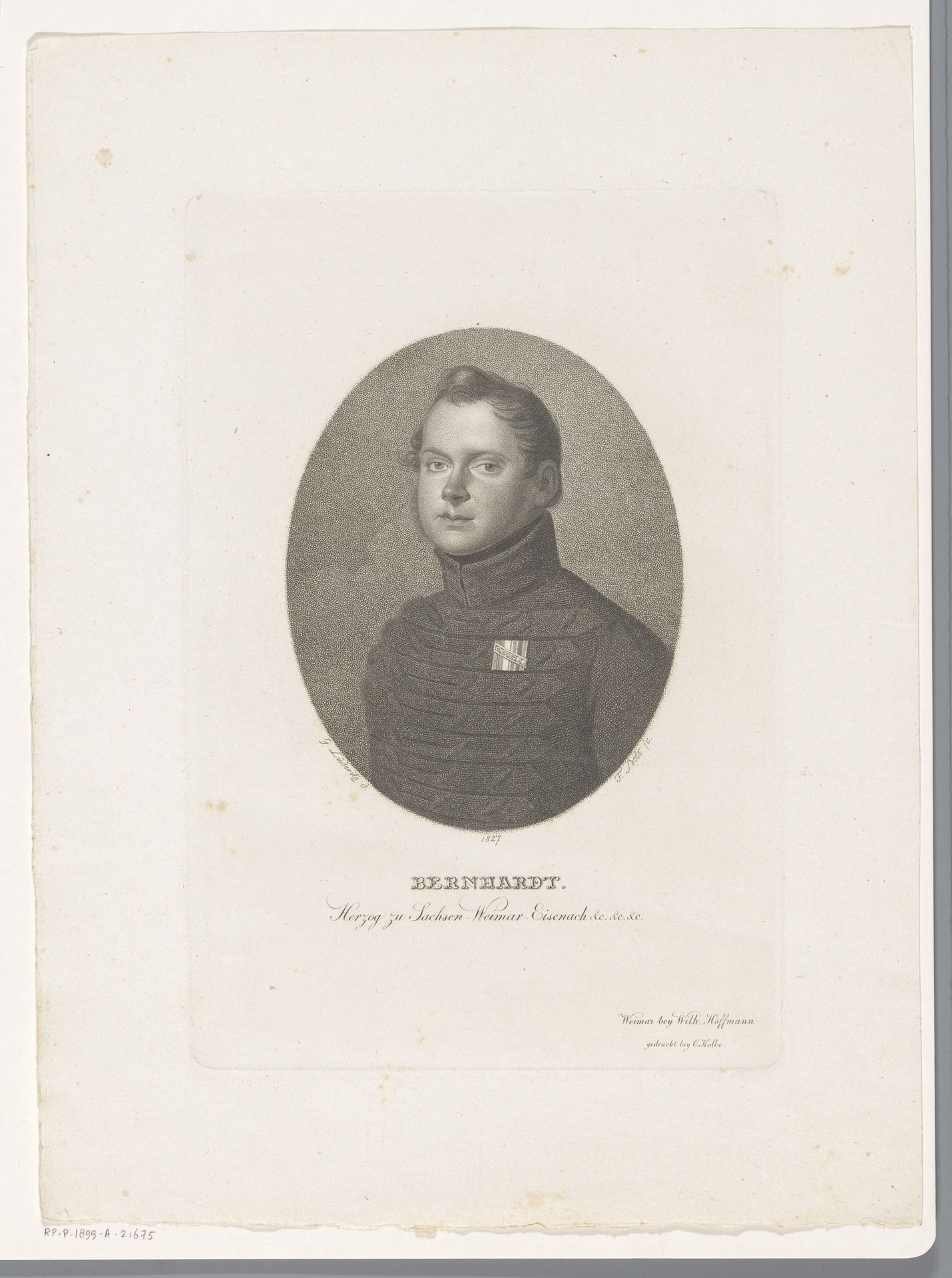
Johann Friedrich Bolt made this print of Karl Bernhard von Sachsen-Weimar-Eisenach using etching techniques. The image presents an oval portrait of a young man in military attire. Prints like these had a vital public role in disseminating images of political and military leaders in Europe. This portrait participates in the creation of a cult of personality around Bernhard. We can see this in the formality of the pose, the way it imitates aristocratic portrait painting, and in the emphasis on his military decorations. Prints were key to creating a shared sense of identity. Institutions like the military and the aristocracy relied on portraiture to convey power and status. They are valuable source material for understanding social and political conditions of the time. To fully understand it we must research the historical context of 19th-century Europe, and consider how people consumed images of their leaders. The meaning of this print lies in its circulation and reception as much as its formal qualities.
Portret van Karl Bernhard von Sachsen-Weimar-Eisenach
1827

Johann Friedrich Bolt
1769 - 1836Location
RijksmuseumArtwork details
- Medium
- drawing, print, engraving
- Dimensions
- height 231 mm, width 155 mm
- Location
- Rijksmuseum
- Copyright
- Rijks Museum: Open Domain
Tags
Comments
Share your thoughts
About this artwork
Johann Friedrich Bolt made this print of Karl Bernhard von Sachsen-Weimar-Eisenach using etching techniques. The image presents an oval portrait of a young man in military attire. Prints like these had a vital public role in disseminating images of political and military leaders in Europe. This portrait participates in the creation of a cult of personality around Bernhard. We can see this in the formality of the pose, the way it imitates aristocratic portrait painting, and in the emphasis on his military decorations. Prints were key to creating a shared sense of identity. Institutions like the military and the aristocracy relied on portraiture to convey power and status. They are valuable source material for understanding social and political conditions of the time. To fully understand it we must research the historical context of 19th-century Europe, and consider how people consumed images of their leaders. The meaning of this print lies in its circulation and reception as much as its formal qualities.
Comments
Share your thoughts