drawing, ink, pen
#
portrait
#
drawing
#
ink drawing
#
pen sketch
#
figuration
#
ink
#
pen
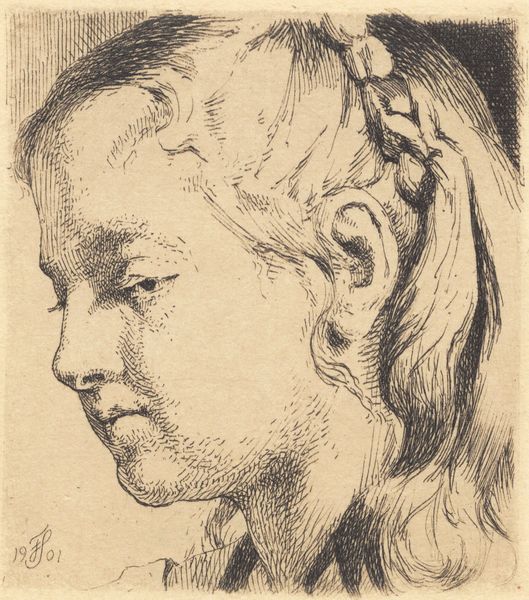
Dimensions: 216 mm (height) x 172 mm (width) (bladmaal)
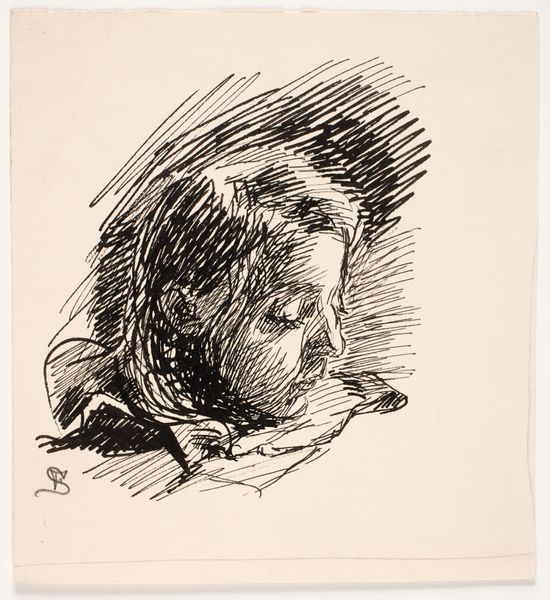
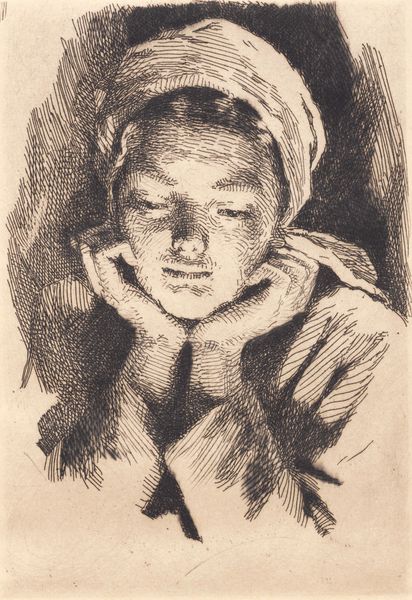
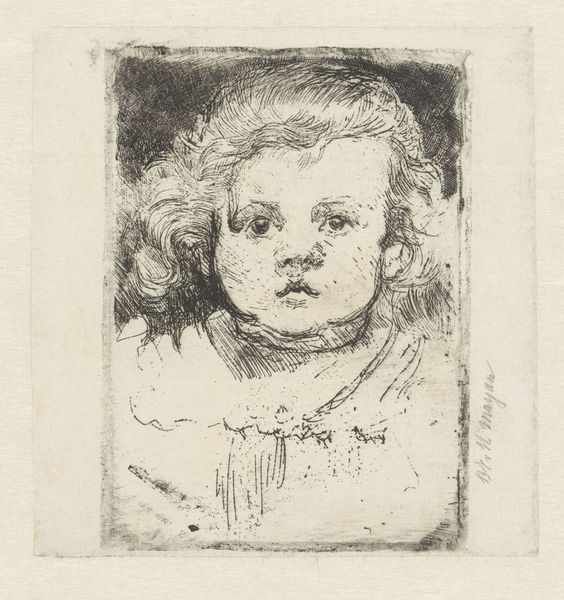
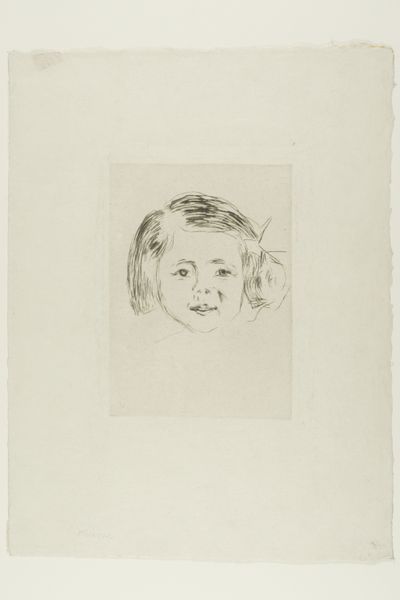
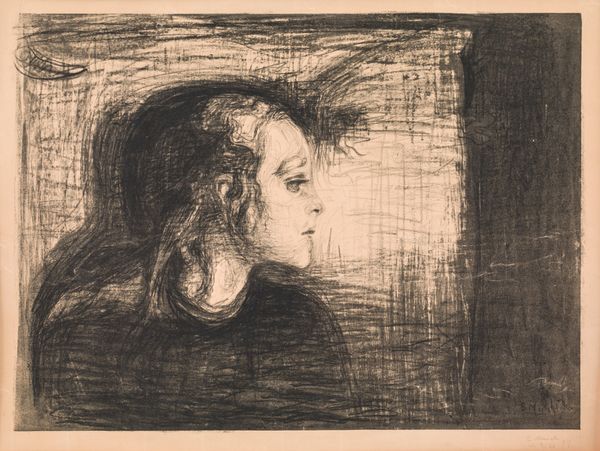
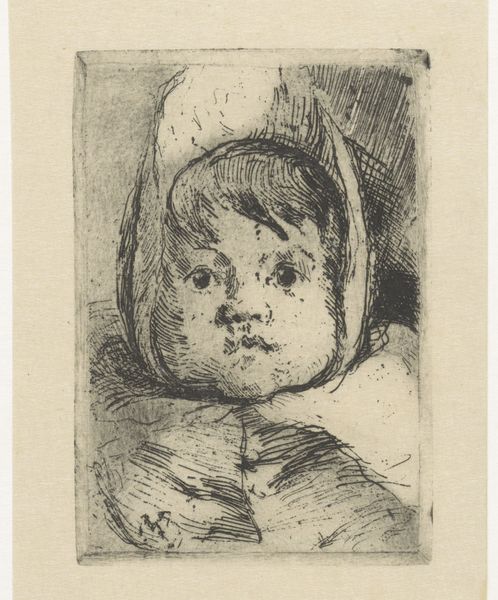
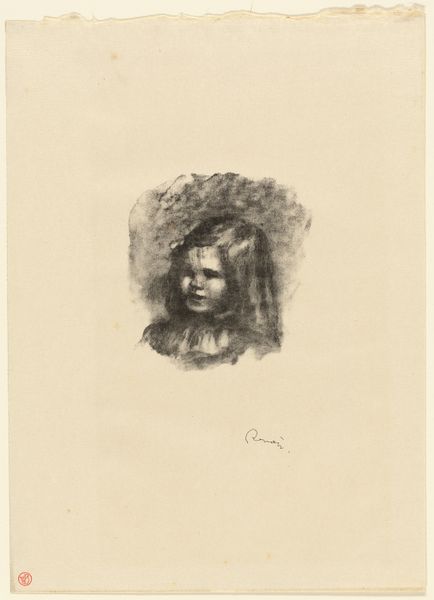
Curator: This work, residing here at the SMK – Statens Museum for Kunst, is titled "Profilportræt af kunstnerens datter 'Bimse'". It’s an ink drawing, seemingly a pen sketch, created sometime between 1868 and 1928 by Peter Hansen. Editor: The stark black ink against the paper's warmth gives it an immediacy, doesn’t it? Raw and very intimate. Curator: Yes, that rawness speaks volumes. Portraiture has always served as a powerful vehicle for exploring not only likeness but also the deeper psychological landscape of the sitter. Given it's his daughter, the artist seems to have sought to immortalize a fragment of time. Consider how fatherhood, the artist, the sitter's story all mingle into a new personal icon. Editor: The repetitive, almost scribbled lines forming her cheek, for instance. Notice the lack of meticulous blending – it emphasizes form through contrast, a dialectic tension between light and dark. Curator: That’s a striking observation. This could represent the artist’s personal symbolism of the familial connection - seeing one's child and seeing part of oneself simultaneously. Or even Hansen trying to depict the transitory, ineffable quality of youth, capturing Bimse before time transformed her, hence a sketch, and not a definitive oil painting. Editor: Exactly. The heavy shading around her hair creates a kind of halo effect, even if quite dark, paradoxically obscuring some details while highlighting the precision used to capture her eye or lips. Curator: It is an image imbued with memory; childhood itself rendered as a precious artifact through simple ink and paper. I see also the strong lines and the gaze averted: what this child represents as subject in art. Editor: Well, examining the composition reveals an emphasis not merely on what is present but equally on what's suggested—the untold narratives behind that solemn gaze and subtle half smile. I do agree with that sentiment about fleeting moments—art, after all, is inherently about preservation and reconstruction. Curator: This drawing leaves us to wonder at both the fleeting nature of childhood and the permanence offered by the artist's touch. It is about time. Editor: It speaks about visual experience, materiality, and the conceptual layering within what appears simple and accessible at first glance, like most portraits do, at least formally.
Comments
No comments
Be the first to comment and join the conversation on the ultimate creative platform.
 Collect
 React
React Comment
More like this