print, etching, fresco, watercolor
#
narrative-art
#
baroque
# print
#
etching
#
landscape
#
figuration
#
fresco
#
watercolor
#
genre-painting
#
history-painting
Dimensions: height 570 mm, width 830 mm
Copyright: Rijks Museum: Open Domain
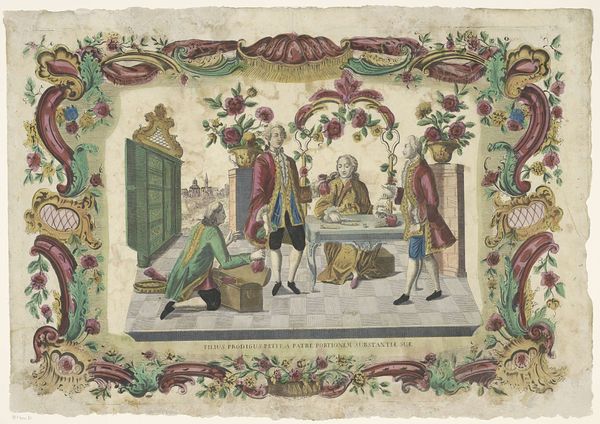
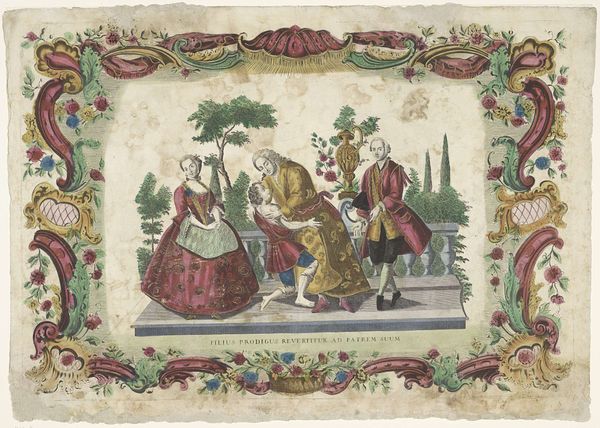
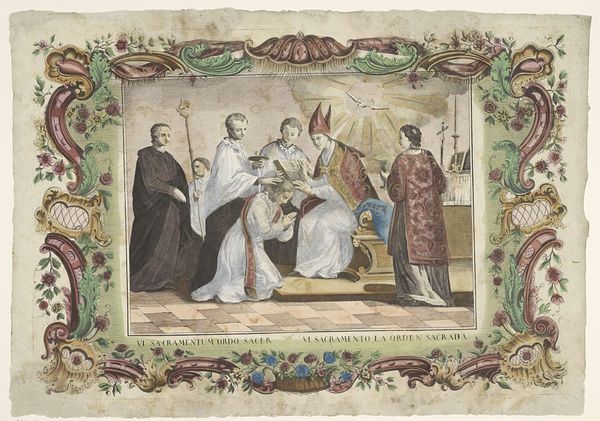
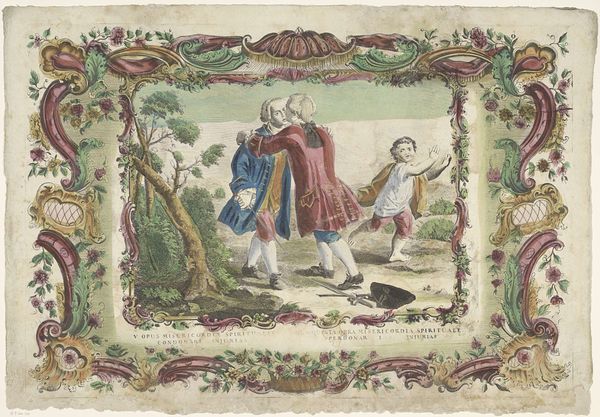
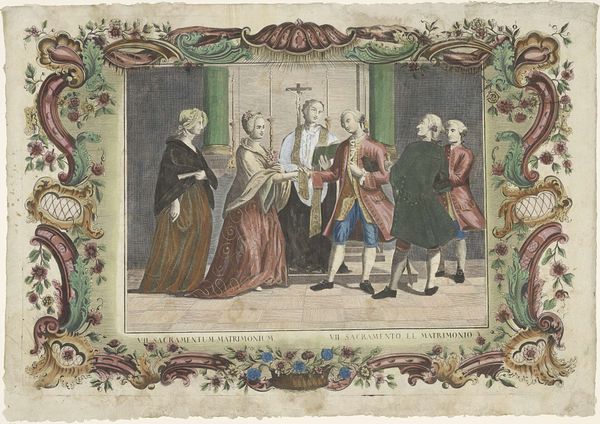
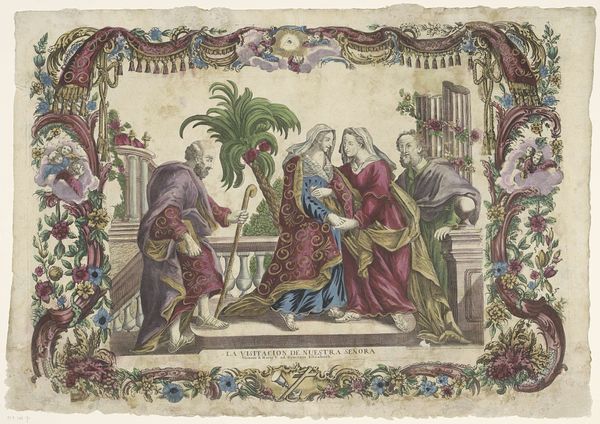
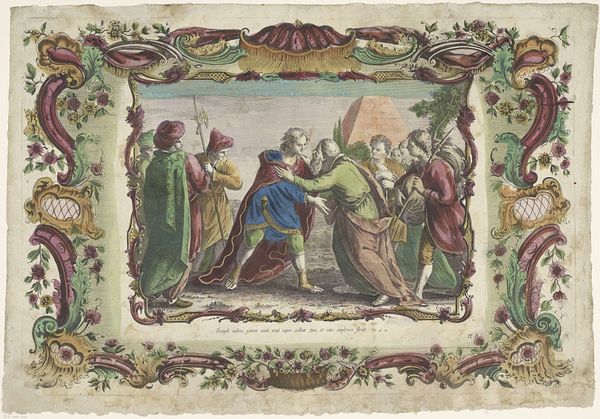
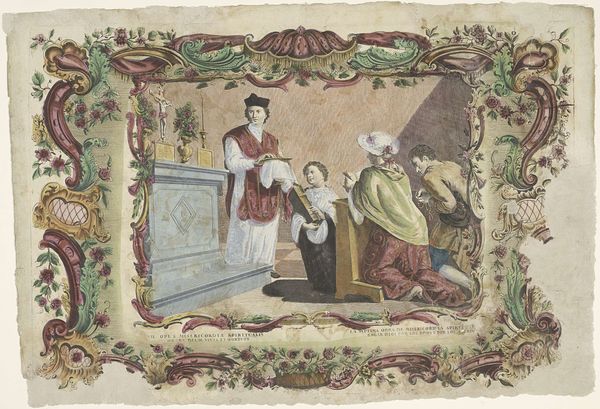
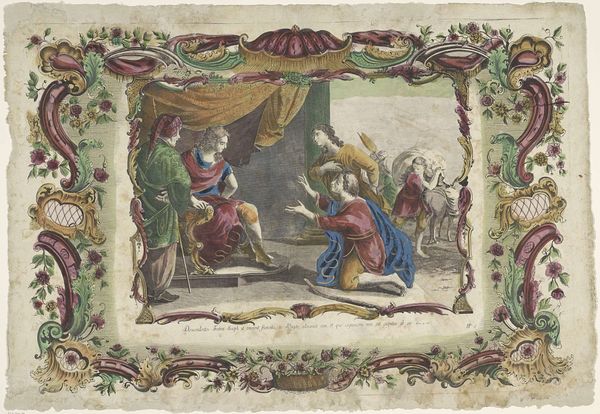
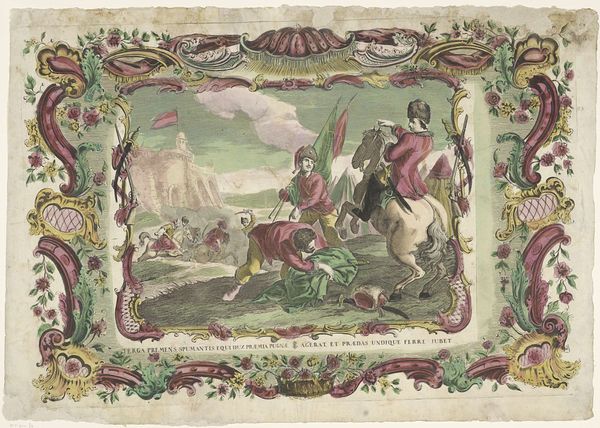
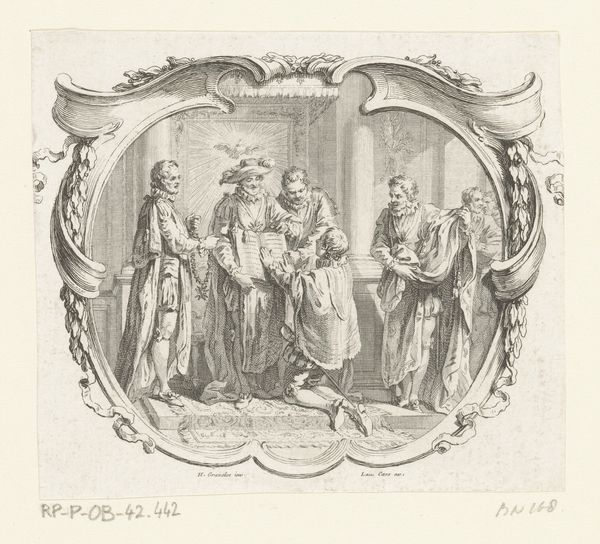
Curator: Before us, we have an 18th-century print by Giovanni Volpato, titled "De verloren zoon neemt afscheid van zijn vader"—"The prodigal son says farewell to his father." It’s currently held here at the Rijksmuseum. Editor: What strikes me first is the hand-painted quality to the print, giving it a freshness that seems at odds with the supposed seriousness of the subject matter. The floral border, like ornate chintz, softens what could be a moment of intense paternal conflict. Curator: Indeed. Volpato's choice to employ etching techniques for wider dissemination makes this parable accessible beyond elite circles. This image serves not just as a visual delight but also as moral instruction in domestic settings. Its medium reveals its socio-cultural role as a tool for instilling values. Editor: I'm drawn to the landscape details – a backdrop indicating class privilege through well-tended grounds. Observe how the fabrics delineate social rank; the father’s luxurious robes and the son’s tailored suit showcase wealth via tangible materials. The labor invested in cultivating status shines through. Curator: Absolutely, and considering Volpato's background as a celebrated engraver who reproduced frescoes, prints such as this catered to a growing demand for accessible art among the middle class. These biblical narratives reinforced social hierarchies, reflecting an established moral framework that promoted social stability. Editor: Yes, while that floral border almost reads as frivolous, it might actually indicate its consumption by middle-class households. Was this framed and displayed within a domestic space, reflecting aspiration via its decorative and material properties? This suggests that it's functioning on several socio-economic registers, not merely as religious iconography. Curator: A keen observation; seeing it as an active cultural agent reveals its purpose far exceeds straightforward visual engagement. Its accessibility made art a talking point—and this print prompted conversations around virtue and proper behavior in burgeoning capitalist societies. Editor: Seeing how the work blends visual narrative with moral teachings alongside domestic aesthetics, I perceive echoes of both personal reflection and societal aspirations of the eighteenth century reflected in each carefully etched and colored line. Curator: A thought-provoking summation, providing vital insight into the cultural ecosystem supporting its emergence. Editor: Quite. An exploration that sheds light on not only the visual presentation of "The Prodigal Son" but also on how material accessibility helped influence social narratives.
Comments
No comments
Be the first to comment and join the conversation on the ultimate creative platform.
 Collect
 React
React Comment
More like this