1893 - 1896
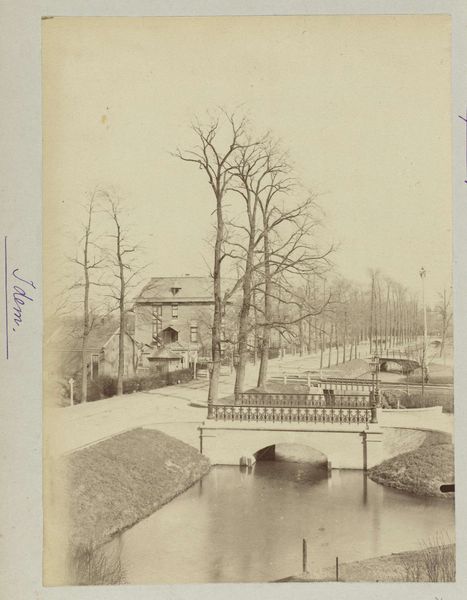
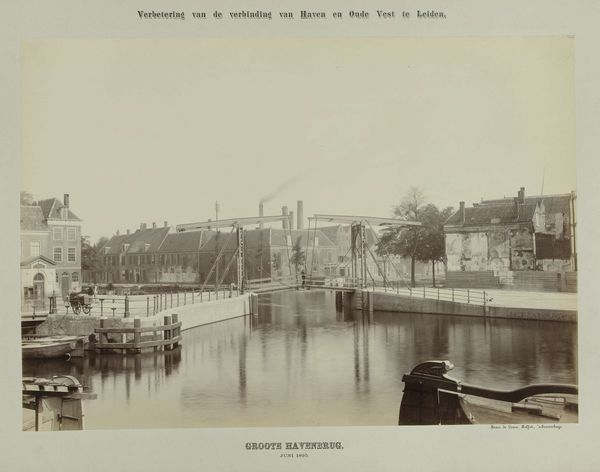
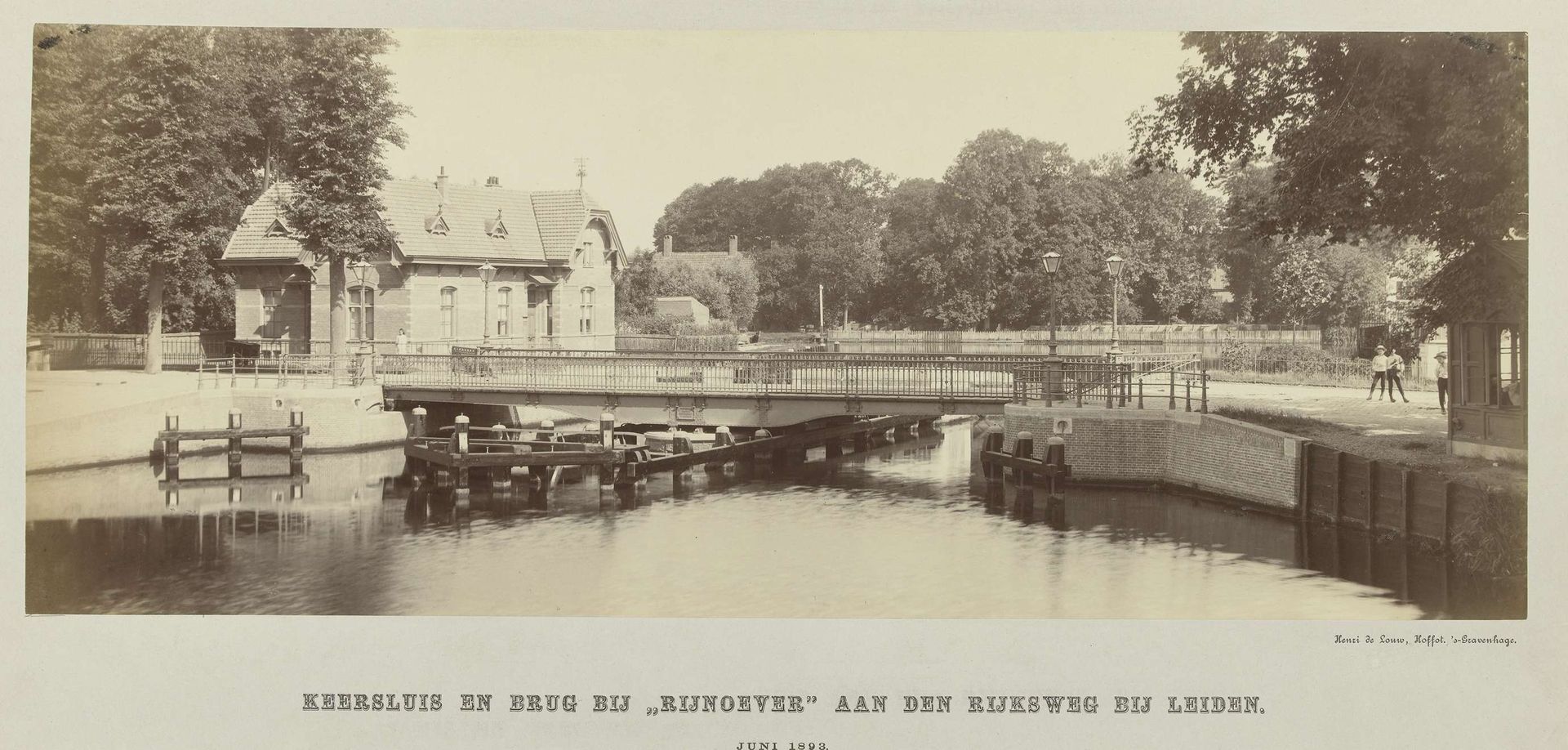
Keersluis en brug bij Rijnoever bij Leiden

Henri de Louw
1851 - 1944Location
RijksmuseumListen to curator's interpretation
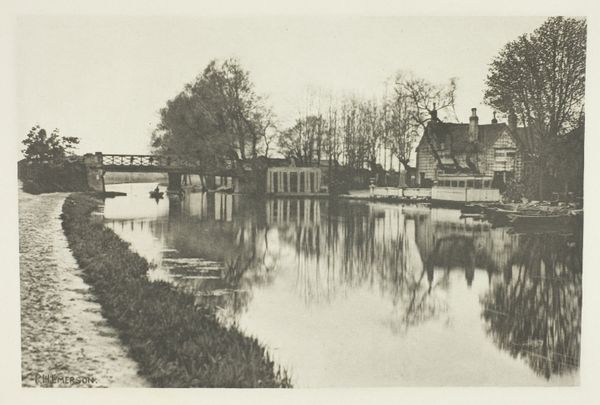
Curatorial notes
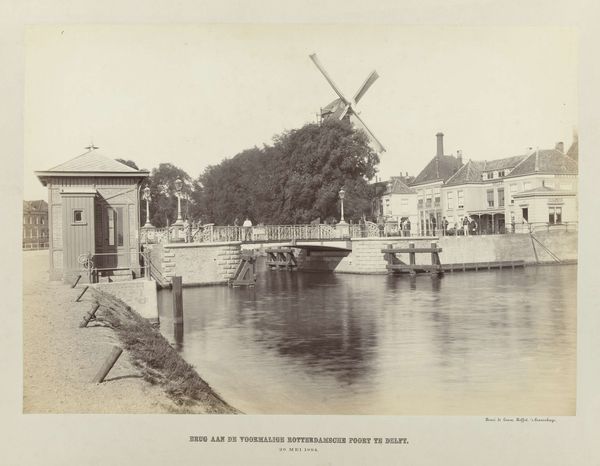
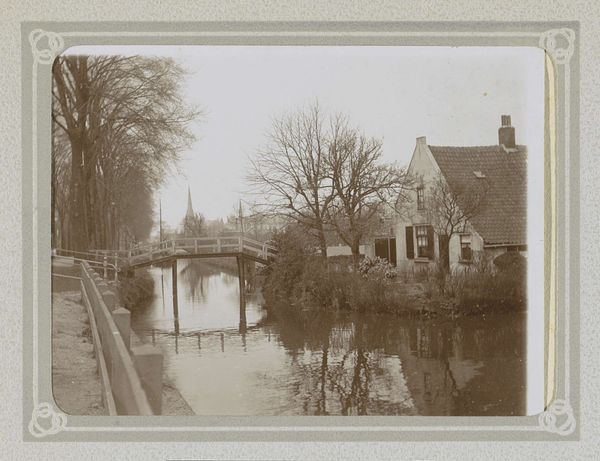
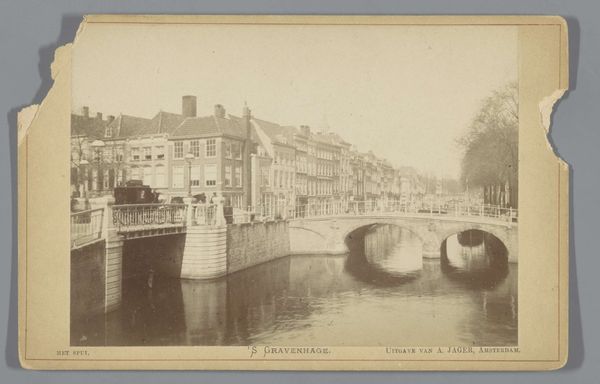
Editor: Here we have Henri de Louw’s “Keersluis en brug bij Rijnoever bij Leiden,” a photograph from between 1893 and 1896. There's such a stillness in the water, it feels like a moment frozen in time. How do you interpret this composition? Curator: What strikes me immediately is the linear perspective. The bridge, the lock, the buildings all recede into the distance, drawing the eye along a very deliberate path. The contrasts between light and shadow are also significant, particularly in the way they define the architectural forms and create a sense of depth. The formal organization invites close scrutiny. Do you see the repeated horizontal lines and their contribution to the overall stability? Editor: I do, the horizontal lines almost create a grid. And I see how the trees act as a backdrop. Is there any deeper symbolism that the rigid horizontal composition suggests, given that the image depicts elements of urbanization? Curator: It is less about inherent symbolism, and more about how the photographer creates formal harmony. De Louw seems focused on capturing a sense of order and clarity. Notice how the bridge, for example, is not just a bridge but a geometric form elegantly placed within the landscape. There’s a precision here, an almost scientific observation translated into art. What are your thoughts? Editor: That’s fascinating. I was so caught up in the initial mood that I hadn’t fully appreciated the geometric structures within the piece, and the significance of light in shaping forms. I see so much more in the contrasts and construction of the artwork now. Curator: Indeed. It’s about understanding how these elements contribute to the artwork's formal integrity, it becomes apparent that De Louw uses composition to present an enduring image.