1720 - 1728
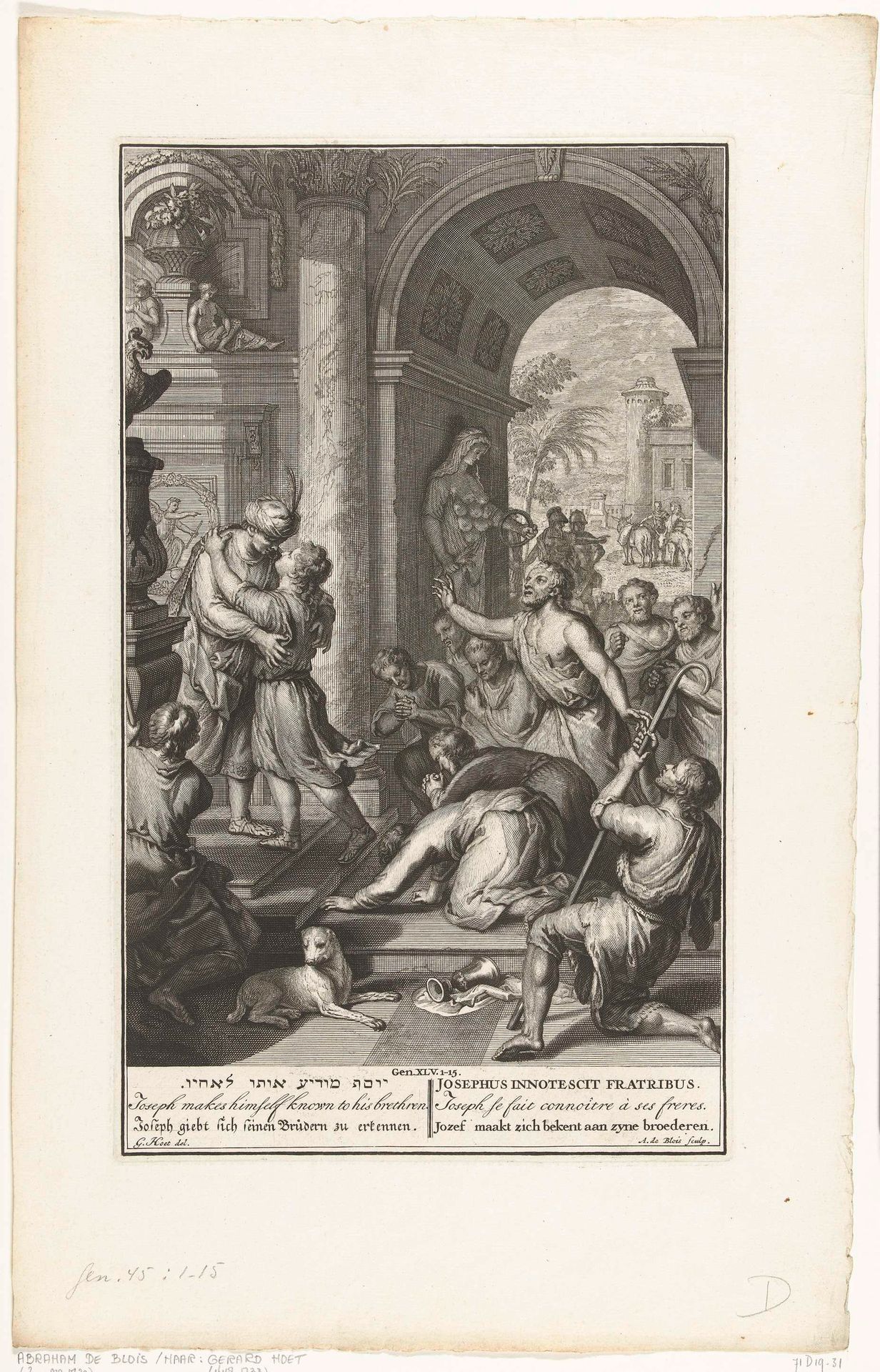
Jozef maakt zich bekend aan zijn broers

Abraham de Blois
1679 - 1717Location
RijksmuseumListen to curator's interpretation
Curatorial notes
Editor: Here we have Abraham de Blois’ engraving, “Jozef maakt zich bekend aan zijn broers,” created sometime between 1720 and 1728. It’s striking how theatrical it feels, like a scene pulled straight from the stage. So much dramatic action, but also really curious architecture. What do you make of it all? Curator: It's fascinating how de Blois uses this biblical scene to explore enduring themes of recognition and reconciliation through very deliberate symbolism. The architecture, while grand, feels almost… borrowed, echoing classical ideals while housing this intimate, emotionally charged moment. Editor: Borrowed how? Curator: Notice the statue in the archway, classical, idealized. Juxtapose that against the raw emotion displayed by Joseph and his brothers. What do you feel that contrast conveys about memory and identity? The embrace suggests forgiveness, but the varied reactions – shock, supplication – point to a complex history, don't they? Each brother carries the weight of shared cultural narratives and individual transgressions. Even the dog seems to echo their watchfulness! Editor: That's true! I was focused on the overall chaos of the figures, but now I see the contrast. Is that why there are specific props as well? Curator: Precisely! The discarded staffs and hats speak to shifts in power and status, all signifiers ripe with psychological implications about family and forgiveness. What's especially telling is de Blois’ choice to portray the precise moment of unveiling, loaded with cultural memory, but made uniquely personal. Editor: It is amazing to see that this print, though static, is capturing a potent turning point. It shows so much about that period, but really remains relatable today! Curator: Absolutely. De Blois gives us not just a biblical scene but a lens through which to view our own relationships and the burdens – and potential – of our shared histories.